
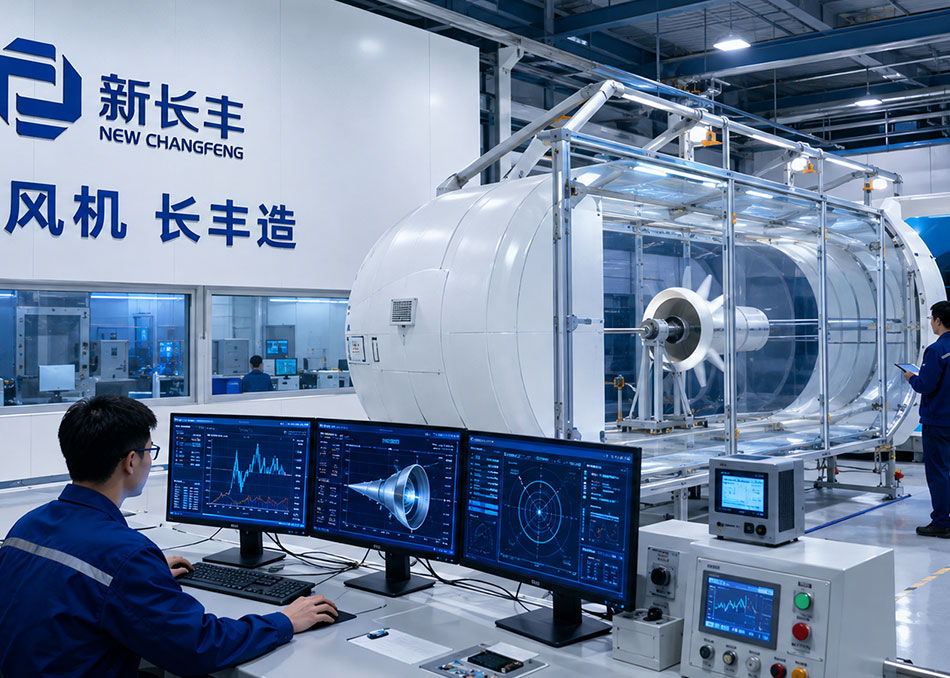
Commercial kitchens face a familiar set of exhaust challenges: grease-laden air escaping into dining areas, sluggish smoke removal, oil buildup inside ductwork, noise complaints from neighbors, and rising energy bills. Many operators focus on the fume purifier but overlook the system's heart — the fan. The cabinet centrifugal fan, with its compact design, moderate pressure capability, and controllable noise, has become a workhorse for kitchen exhaust and make-up air. This article explains how it works and what to consider when selecting, installing, and maintaining one.
How a Cabinet Centrifugal Fan Works
A cabinet centrifugal fan is a type of centrifugal fan that houses the motor, impeller, and volute inside a single enclosure (the cabinet). The motor drives a multi-blade centrifugal impeller at high speed. Air between the blades is thrown outward by centrifugal force toward the volute's outer edge, creating a stream with usable static pressure that exits through the discharge outlet. Simultaneously, a negative pressure forms at the impeller's center, drawing outside air continuously through the inlet. This produces a steady exhaust or supply airflow.
Unlike a standard axial fan, a centrifugal fan changes the airflow direction from axial inlet to radial discharge. After passing through the impeller, the air gains a more pronounced static pressure increase. This makes centrifugal fans better suited to overcoming the resistance of long duct runs, elbows, and purification equipment in kitchen exhaust systems. The cabinet design encloses the fan body and often includes sound-absorbing material on the inner walls. This reduces operating noise and helps prevent grease from directly coating the motor, improving safety and service life.
In a commercial kitchen exhaust system, the cabinet centrifugal fan is typically installed after the fume purifier or at the end of the exhaust duct. It draws the cleaned air and discharges it to the outdoors. In make-up air applications, a similar fan can supply filtered outdoor air into the kitchen to balance pressure and improve comfort.
Why Cabinet Centrifugal Fans Suit Kitchen Exhaust and Make-Up Air
Kitchen exhaust systems are rarely a straight run. Grease filters, fire dampers, silencers, long horizontal ducts, and multiple bends all add resistance. A fan must deliver enough static pressure to keep air moving at the required velocity — too low a velocity allows grease to condense and accumulate inside ducts, creating fire hazards and odor issues. Cabinet centrifugal fans are designed to handle this kind of system resistance while maintaining stable airflow.
The enclosed cabinet also addresses two common pain points: noise and grease contamination. The cabinet's inner acoustic lining helps dampen the fan's operating sound, which matters for restaurants in mixed-use buildings or near residential areas. By keeping the motor separated from the airstream, the cabinet reduces the risk of grease fouling motor windings and bearings, extending maintenance intervals and improving reliability.
For make-up air, a cabinet centrifugal fan can be paired with filtration to supply clean outdoor air. This helps prevent negative pressure from starving the exhaust hoods, which can cause smoke to spill into the dining room and make doors hard to open. Properly balanced exhaust and make-up air also reduce energy waste from conditioned air being pulled out of the building.
Key Selection and Installation Considerations
Choosing the right fan starts with understanding the system's airflow and pressure requirements. These should be calculated based on hood size, duct layout, and the pressure drop of the fume purifier and other components. The fan's performance curve should be matched to the system's operating point, ideally near the peak efficiency range. Oversizing wastes energy and increases noise; undersizing leads to poor capture and grease buildup.
Installation location matters. The fan should be accessible for cleaning and service. It should be mounted on a stable base with vibration isolation to prevent noise transmission through the building structure. Duct connections should be airtight and properly supported. For grease-laden airstreams, the fan should be positioned after the fume purifier so that the impeller handles the cleanest possible air. If the fan must handle grease, choose a model with easy-access cleaning features and schedule regular inspections.
Electrical safety and code compliance are essential. In many regions, kitchen exhaust fans must meet specific requirements for motor enclosure, wiring methods, and fire safety. Reference applicable standards such as GB 19761 for fan energy efficiency and GB 51251 for smoke and heat exhaust ventilation design where relevant. Local codes may also require grease-tight construction and provisions for duct cleaning access.
- Match airflow and pressure: Base selection on calculated system resistance, not guesswork.
- Consider the airstream: Place the fan after purification when possible; choose cleanable designs if grease exposure is unavoidable.
- Plan for noise control: Use vibration isolators, flexible connectors, and acoustic cabinets where needed.
- Ensure service access: Leave room for inspection, cleaning, and belt or bearing maintenance.
- Verify compliance: Check energy efficiency, fire safety, and electrical requirements with local authorities.
Maintenance Practices for Reliable Operation
Even the best fan will lose performance if neglected. Grease and dust can build up on impeller blades, causing imbalance, vibration, and reduced airflow. A regular maintenance schedule should include inspecting and cleaning the impeller, checking belt tension and bearing condition (for belt-driven models), and verifying that the motor is free of grease and moisture. Ductwork should also be inspected for grease accumulation and cleaned according to a risk-based schedule.
Listen and feel for changes. Increased noise, vibration, or a drop in exhaust capture often indicate a problem such as a dirty impeller, worn bearings, or a loose belt. Addressing these early prevents costly downtime and extends equipment life. Keep maintenance records to demonstrate due diligence and support insurance or regulatory compliance.
For make-up air units, replace filters as recommended and ensure that intake louvers are free of debris. In cold climates, consider freeze protection for any coils or water lines associated with the make-up air system.
Frequently Asked Questions
Q: Can a cabinet centrifugal fan be used for both exhaust and make-up air?
A: Yes. The same basic fan type can serve either duty, but the selection must be based on the specific airflow, pressure, and airstream conditions. Make-up air units often include filtration and may require different materials or coatings if outdoor air is corrosive or dusty.
Q: How do I know if my fan is properly sized?
A: Proper sizing means the fan's operating point falls on its performance curve at the required airflow and static pressure for your system. Signs of undersizing include weak hood capture and persistent grease buildup. Oversizing can cause excessive noise and energy use. A qualified ventilation contractor can perform the calculation.
Q: What maintenance does a cabinet centrifugal fan need?
A: Typical tasks include cleaning the impeller and cabinet interior, checking and adjusting belts, lubricating bearings where applicable, and inspecting electrical connections. The frequency depends on operating hours and grease loading. In heavy-use kitchens, monthly or quarterly inspections are common.
Q: Is a cabinet centrifugal fan noisy?
A: Noise levels vary by model and operating point. The cabinet's acoustic lining helps reduce noise compared to an unenclosed fan, but proper installation with vibration isolation and correct duct design is also important. If noise is critical, consider additional silencers or a fan selected for lower sound power.
Conclusion
Cabinet centrifugal fans play a vital role in commercial kitchen exhaust and make-up air systems. Their ability to handle system resistance, their enclosed construction, and their noise-control features make them a practical choice for restaurants, school canteens, hotels, and similar facilities. By understanding how they work and paying attention to selection, installation, and maintenance, operators can achieve better smoke capture, lower fire risk, and a more comfortable kitchen environment.
For specific guidance on choosing the right cabinet centrifugal fan for your kitchen exhaust or make-up air project, consult a ventilation professional or contact a reputable manufacturer. XCFFJ offers a range of industrial and commercial ventilation equipment, including cabinet centrifugal fans, to support reliable kitchen ventilation solutions.