
Back-of-house heat is one of the most persistent challenges in foodservice operations. Open flames radiate continuously from the range, combi ovens and fryers release steam and hot air, and the kitchen itself is often compact and densely staffed. The result is a work zone that runs noticeably hotter than the dining room. Cooks who spend hours in that environment tire faster, lose focus, and are more likely to make mistakes during peak service. Getting cool air to the actual cooking positions — not just to the pass or the prep area — is the central problem in kitchen cooling design. Meanwhile, factories, workshops and warehouses are pursuing their own ventilation and cooling upgrades, and procurement teams frequently compare commercial kitchen cooling equipment with general factory ventilation quotations. The two applications have different requirements, different selection logic and different cost structures. This article focuses on back-of-house cooling for restaurants and explains how to specify a commercial kitchen air conditioner, while outlining what typically drives factory ventilation equipment pricing.
Why Standard Comfort Air Conditioning Falls Short in a Commercial Kitchen
A common first instinct is to install a conventional split system or run a ducted diffuser into the kitchen. In practice, results are often disappointing: grease-laden air recirculates, filters clog within weeks, and cooling capacity drops off noticeably. The reason is that a kitchen's air is fundamentally different from that of an ordinary room.
Commercial kitchens contain high concentrations of cooking oil aerosol, water vapor and suspended particulate matter. Standard evaporator coils and filters are quickly coated with grease, which insulates the heat exchange surface and reduces capacity. Over time, the unit must work harder, energy consumption rises, and the coil may become a hygiene concern.
There is also the question of air balance. A kitchen requires effective exhaust to remove smoke and odors, and that exhaust must be replaced by makeup air. If the makeup air is not conditioned, the cooling effect of any air conditioner is immediately diluted. In many poorly performing kitchens, the real issue is not a lack of refrigeration capacity but an unbalanced exhaust and makeup air strategy.
For these reasons, back-of-house cooling should be treated as a dedicated engineering problem rather than an extension of the dining room HVAC system. The goal is to deliver cool, clean air to the worker — the cook at the wok station, the grill operator, the plating station — while managing grease, moisture and air pressure.
How a Commercial Kitchen Air Conditioner Works
A commercial kitchen air conditioner is designed specifically for the grease, heat and humidity loads found in foodservice environments. Unlike a residential split unit, it typically incorporates filtration stages that capture oil mist and particulate matter before air reaches the cooling coil, and its cabinet and coil materials are selected for resistance to corrosion and frequent cleaning.
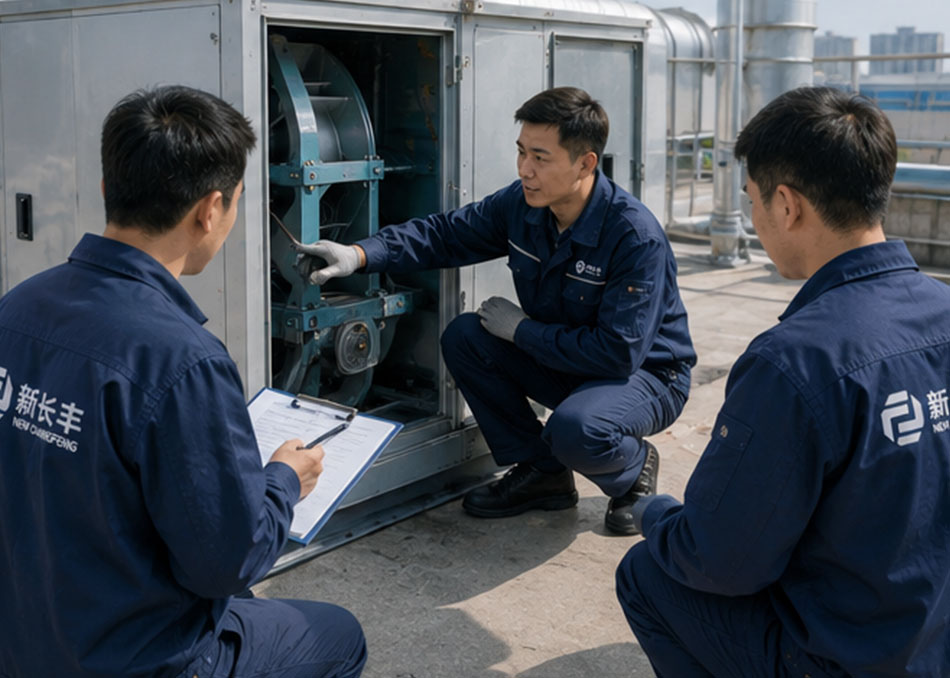
Many units are configured as self-contained or packaged systems that can be ducted to discharge cool air directly at specific workstations. This is important because cooling the entire kitchen volume is often impractical and energy-intensive. Spot cooling — directing conditioned air to the positions where staff actually stand — delivers a more noticeable improvement in comfort per unit of energy consumed.
Some commercial kitchen air conditioners also integrate with the kitchen's exhaust and makeup air system. When the air conditioner's outdoor-air intake is coordinated with the exhaust hood, the kitchen maintains a slight negative pressure relative to the dining area. This prevents cooking odors and grease from migrating into guest spaces, a requirement that becomes especially important in open-kitchen concepts and hotels with adjacent banquet facilities.
Evaporative cooling is another option for hot, dry climates. Evaporative air coolers use the latent heat of water evaporation to reduce supply air temperature and can move large volumes of air at relatively low energy cost. However, their performance depends on ambient humidity, and they are generally less effective in humid coastal climates. In those conditions, a refrigerated commercial kitchen air conditioner is usually the more reliable choice.
Specifying the Right Unit for Your Kitchen
Selection should begin with a clear understanding of the heat sources and the work positions that need relief. A useful approach is to map the kitchen into zones: the cooking line (range, wok, fryer, grill), the prep area, the dishwashing area, and the plating or pass-through zone. Each zone has a different heat and moisture profile.
- Cooking line: Highest radiant and convective heat load. Spot cooling with directed supply air is usually most effective. Consider a unit with robust grease filtration and a coil coating suitable for frequent cleaning.
- Dishwashing: High humidity and steam. Dehumidification or adequate exhaust is as important as sensible cooling. Avoid blowing cold air directly onto wet floors where it may create slip hazards.
- Prep and plating: Lower heat load but often where staff stand for long periods. Comfort cooling here can improve productivity and reduce fatigue.
- Makeup air: If the kitchen exhausts large volumes of air, the air conditioner must be sized to handle the outdoor-air load, or a separate tempered makeup air unit should be considered.
Noise is another practical consideration. Kitchen staff work in close proximity to equipment, and an excessively loud unit can make verbal communication difficult during service. Look for equipment designed with low-noise centrifugal fans and vibration isolation. Cabinet centrifugal fans and multi-wing centrifugal fans are commonly used in these applications because they can deliver stable airflow against the static pressure of ductwork and filtration while keeping sound levels manageable.
Energy efficiency also matters. Fan energy efficiency is regulated under standards such as GB 19761, and performance testing follows GB/T 1236. Specifying equipment that meets these benchmarks helps control operating costs over the life of the installation. For kitchen exhaust purification, GB 18483 sets emission requirements that may influence the overall system design, including the choice of fume purifier and the associated airflow balance.
What Drives Factory Ventilation Equipment Pricing
Although this article focuses on kitchen cooling, many procurement teams evaluate kitchen and factory ventilation projects together. Understanding the cost drivers on the factory side helps buyers interpret quotations and avoid comparing dissimilar items.
Factory ventilation and cooling equipment pricing is influenced by several factors:
- Airflow and static pressure requirements: Larger volumes and higher resistance systems require more powerful fans and motors, which increases cost.
- Equipment type: Negative pressure fans, axial fans, roof turbo ventilators, cabinet centrifugal fans and evaporative air coolers each have different manufacturing costs and performance characteristics.
- Material and construction: Corrosion-resistant coatings, heavier-gauge steel and specialized bearings add cost but extend service life in harsh environments.
- Control and automation: Variable-frequency drives, sensors and building management system integration increase initial cost but can reduce energy use.
- Installation and ductwork: In many projects, ducting, supports, electrical work and commissioning represent a significant share of the total budget.
- Compliance and testing: Equipment that must meet specific energy efficiency or safety standards may carry a higher price than unregulated alternatives.
For kitchen projects, the same logic applies. A commercial kitchen air conditioner quotation should be evaluated on filtration capability, coil accessibility for cleaning, fan performance, noise level and compatibility with the exhaust and makeup air system — not simply on nominal cooling capacity.
Designing for Compliance and Hygiene
Kitchen ventilation is governed by both fire safety and hygiene considerations. GB 51251 addresses smoke and heat exhaust requirements, which may affect duct routing and the placement of fire dampers. Grease accumulation in ducts is a fire hazard, so exhaust systems must be designed for periodic cleaning and access.
On the supply side, cool air should be introduced in a way that does not interfere with the exhaust hood's capture velocity. Blowing air across the cooking surface can disrupt the thermal plume and allow smoke to escape into the kitchen. Directed, low-velocity supply at the worker position is generally preferred over high-velocity air aimed at the hood.
Hygiene is equally important. Filters and coils must be accessible for cleaning, and surfaces should be smooth and non-porous where practical. In some jurisdictions, kitchen cooling equipment may need to meet food-safety regulations regarding materials in contact with air in food preparation areas. Buyers should confirm that the equipment is suitable for the intended environment and that maintenance procedures are clearly documented.
Frequently Asked Questions
Q: Can I use a residential split air conditioner in my restaurant kitchen?
A: It is generally not recommended. Residential units are not designed for grease-laden air, and their coils and filters can clog quickly, reducing cooling capacity and creating a hygiene issue. A commercial kitchen air conditioner with appropriate filtration and cleanable coils is a better choice.
Q: What is the most effective way to cool the cooking line?
A: Spot cooling is usually most effective. Direct conditioned air to the positions where staff stand, rather than trying to cool the entire kitchen volume. Coordinate the supply with the exhaust hood to avoid disrupting smoke capture, and ensure makeup air is tempered if large exhaust volumes are involved.
Q: How does factory ventilation equipment pricing compare with kitchen cooling equipment?
A: The two categories have different cost drivers. Factory ventilation pricing depends heavily on airflow, static pressure, equipment type and installation scope. Kitchen cooling pricing depends on filtration, cleanability, noise and integration with exhaust and makeup air. It is best to obtain separate, itemized quotations for each application rather than comparing lump sums.
Q: Do I need a fume purifier if I install a kitchen air conditioner?
A: The air conditioner is for cooling, not for fume treatment. Kitchen exhaust purification is typically handled by a dedicated fume purifier, and emissions may be subject to standards such as GB 18483. The cooling system and the exhaust purification system should be designed together to maintain proper air balance.
Back-of-house cooling is not simply a matter of adding refrigeration capacity. It requires a coordinated approach that considers heat sources, air balance, filtration, noise and compliance. A commercial kitchen air conditioner designed for the foodservice environment — combined with well-designed exhaust and makeup air — can deliver meaningful comfort improvements at the cooking positions, helping to retain staff and maintain consistent output during peak hours.
For operators and procurement teams evaluating both kitchen and factory ventilation needs, XCFFJ manufactures a range of industrial and commercial ventilation and cooling equipment, including commercial kitchen air conditioners, cabinet centrifugal fans, negative pressure fans, evaporative air coolers and fume purifiers. To discuss your specific project requirements, visit www.xcffj.com or contact our team for a tailored consultation.