
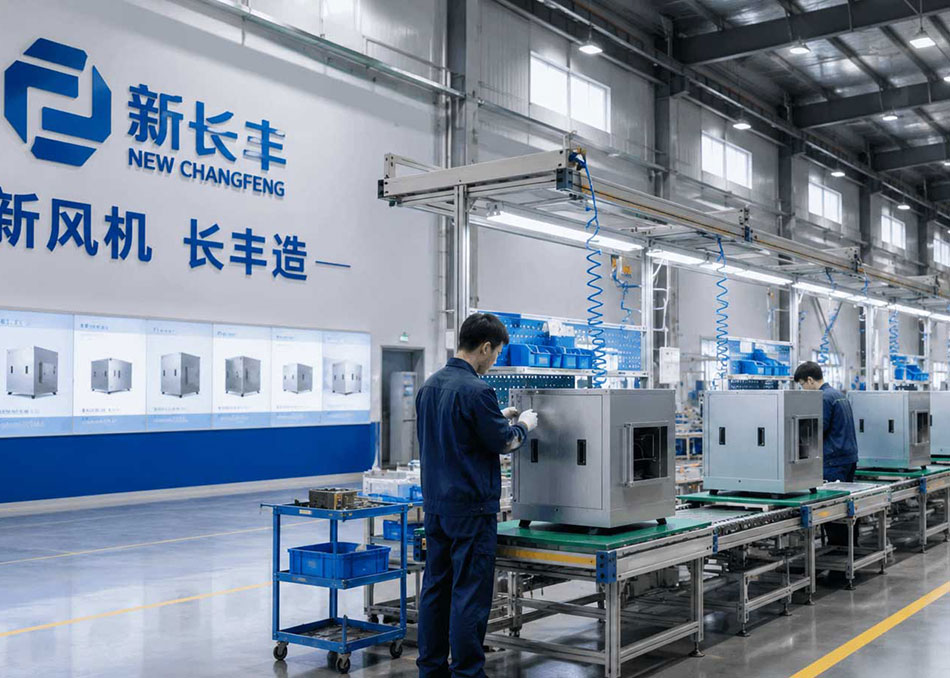
Commercial kitchen exhaust systems operate under some of the harshest conditions in any building: sustained heat, heavy moisture, and airborne grease that coats every surface it touches. Many operators notice the same pattern—exhaust works well at opening, then gradually loses airflow, the kitchen fills with smoke, grease drips from ductwork, noise increases, and motors begin overheating or shutting down. In most cases the fan was sized correctly; the real culprit is deferred maintenance. The DT cabinet centrifugal fan is a workhorse in commercial kitchen exhaust and purification, and its construction—a box-style cabinet with the motor separated from the airstream and a multi-wing centrifugal impeller—gives it strong resistance to grease-laden air while still requiring a targeted service routine. This guide walks through practical maintenance for DT cabinet centrifugal fans in kitchen exhaust applications.
Why DT Cabinet Centrifugal Fans Matter in Kitchen Exhaust
What separates kitchen exhaust from general industrial ventilation is the airstream itself. Cooking produces large volumes of oil mist, water vapor, and volatile organic compounds. Under GB 18483, the Chinese emission standard for cooking fume, food service operations must treat exhaust before discharge—which means the fan typically runs in series with a fume purifier and continues to face residual oil mist even after purification.
The DT cabinet centrifugal fan handles this environment through its cabinet enclosure, which shields the motor from the airstream, and its multi-wing impeller, which maintains stable pressure under the higher system resistance created by duct runs, purifiers, check valves, and elbows. That is why these fans are common in hotel kitchens, school canteens, and the food-service floors of commercial complexes.
Understanding where the fan sits in the system matters for maintenance. A fan placed after the purifier sees relatively cleaner but still oily air; a fan placed before the purifier sees the full grease load. Service intervals and cleaning methods should reflect that position.
Common Failure Patterns and What Causes Them
Most complaints trace back to a small set of mechanical and aerodynamic issues:
- Airflow drop: Grease buildup on impeller blades changes blade geometry and adds rotating mass, reducing efficiency and increasing motor load.
- Kitchen smoke backup: Restricted airflow from clogged filters, fouled impellers, or partially blocked ductwork prevents the system from maintaining negative pressure in the cooking area.
- Grease dripping from ducts: Inadequate exhaust velocity and accumulated deposits allow grease to condense and pool instead of being carried to the discharge point.
- Rising noise and vibration: Unbalanced impellers from uneven grease deposits, worn bearings, or loose mounting hardware.
- Motor overheating and tripping: Increased current draw from a fouled impeller, blocked cooling paths, or failing capacitors and bearings.
Each of these has a maintenance answer. The key is to treat them as symptoms of a system losing balance, not as isolated part failures.
Routine Maintenance Checklist for DT Cabinet Centrifugal Fans
A practical service schedule for kitchen exhaust fans should cover cleaning, mechanical inspection, and electrical checks. Frequency depends on cooking volume and menu type—a deep-fry-heavy operation will need more frequent service than a canteen serving mostly steamed food.
- Impeller cleaning: Remove grease from blades and hub using appropriate degreasers. Keep deposits even; uneven cleaning can itself cause imbalance. Avoid aggressive tools that scratch or deform blades.
- Cabinet and drain inspection: Check the cabinet interior, drain ports, and seals. Standing grease and water accelerate corrosion and can seep toward the motor compartment.
- Motor and bearing checks: Listen for abnormal noise, check for excessive play, and verify that the motor cooling path is clear. Lubricate bearings only per the manufacturer's specification.
- Belt and drive inspection (belt-driven units): Check tension and alignment, look for glazing or cracking, and replace matched sets rather than single belts.
- Electrical connections: Verify terminal tightness, inspect for moisture intrusion, and confirm that overload protection is functioning.
- Vibration and balance: After cleaning, run the fan and check for vibration. Persistent vibration after cleaning points to bearing wear or residual imbalance.
- Ductwork and accessories: Inspect flexible connectors, check valves, and access doors. Leaks here reduce effective airflow and allow grease to escape into ceiling voids.
Logging each service—date, findings, actions—builds a history that makes it easier to spot trends such as gradually increasing current draw or shortening cleaning intervals.
Performance, Standards, and Energy Considerations
Fan performance testing follows GB/T 1236, which defines how airflow, pressure, and efficiency are measured. GB 19761 sets energy efficiency requirements for fans, and GB 51251 governs smoke and heat exhaust systems in buildings. While kitchen exhaust is not the same as emergency smoke exhaust, the principles of maintaining designed airflow and pressure are closely related: a system that cannot move its rated air volume is failing its purpose, whether the goal is comfort, safety, or grease capture.
From an energy standpoint, a fouled impeller is expensive. It reduces delivered airflow while increasing power draw, so the fan runs longer and harder to achieve the same result. Restoring a clean impeller and correct system balance often improves performance more than any control adjustment.
When selecting or replacing a fan, match the unit to the actual system resistance—duct length, number of elbows, purifier pressure drop, and discharge conditions. Oversizing does not guarantee better exhaust and can increase noise and energy use; undersizing guarantees chronic smoke problems.
When to Repair, Rebalance, or Replace
Not every problem requires a new fan. Cleaning and rebalancing solve many airflow and vibration issues. Bearings, belts, capacitors, and seals are replaceable wear items. However, consider replacement when:
- The impeller shows cracking, deformation, or severe corrosion that cannot be corrected safely.
- The cabinet structure has deteriorated to the point that motor isolation is compromised.
- Repeated repairs no longer restore stable performance, or the fan no longer matches the system's requirements.
- Energy consumption remains high after thorough cleaning and adjustment.
In each case, document the condition and compare the cost of continued service against the cost of a correctly sized replacement.
FAQ
Q: How often should a DT cabinet centrifugal fan in a commercial kitchen be cleaned?
A: There is no single interval that fits every kitchen. High-volume deep-frying operations may need impeller and cabinet cleaning monthly or even more frequently, while lighter cooking loads may allow longer intervals. Use airflow readings, visible grease accumulation, and motor current draw as triggers rather than relying on a fixed calendar alone.
Q: Can I clean the impeller without removing the fan from the system?
A: Some cleaning can be done through access panels, but thorough cleaning usually requires removing the impeller or the fan assembly to reach the blade roots and hub. Incomplete cleaning leaves uneven deposits that cause imbalance. Follow the manufacturer's instructions and use appropriate lifting equipment.
Q: Why does my kitchen still feel smoky even though the fan is running?
A: The fan may be running but not moving enough air. Check for grease-fouled impellers, clogged filters or purifier cells, blocked or undersized ductwork, open access doors, and reversed check valves. Also verify that the kitchen is maintaining negative pressure relative to adjacent spaces—if makeup air is insufficient, the fan cannot capture fumes effectively.
Q: Does a DT cabinet centrifugal fan work with an electrostatic fume purifier?
A: Yes. These fans are commonly installed in series with electrostatic and other purifier types. Confirm the fan's pressure capability accounts for the purifier's resistance, and maintain both components—a dirty purifier increases system resistance and reduces fan airflow.
Q: What are the signs that a fan bearing needs attention?
A: Listen for grinding or rumbling, check for excessive shaft play, and monitor temperature. Rising vibration and noise after cleaning often indicate bearing wear. Address bearing issues early to avoid impeller damage and motor failure.
Keeping Kitchen Exhaust Reliable
DT cabinet centrifugal fans are built to handle the demanding conditions of commercial kitchen exhaust, but they perform best when treated as part of a maintained system rather than an isolated piece of equipment. Regular cleaning, mechanical inspection, and attention to system balance protect airflow, control noise and energy use, and keep the kitchen comfortable and compliant.
For operators specifying or replacing equipment, working with a manufacturer that understands kitchen exhaust conditions helps ensure the fan, purifier, and ductwork are matched correctly from the start. XCFFJ supplies DT cabinet centrifugal fans and related ventilation and purification equipment for commercial kitchens, canteens, hotels, and food-service facilities. Visit www.xcffj.com to review product options and discuss your project requirements.