
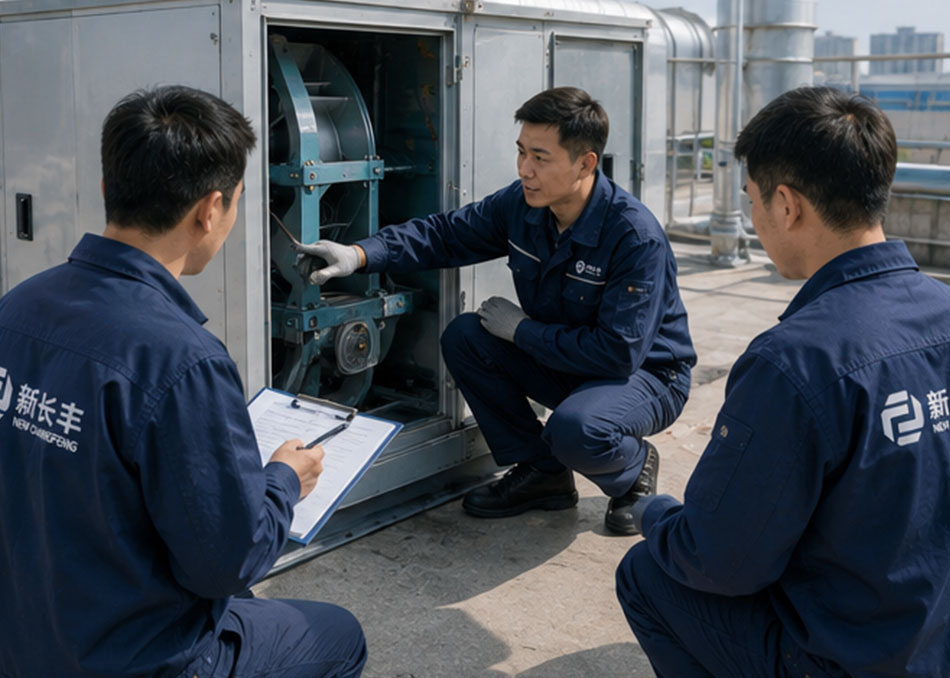
In the heat of summer, factory workshops and large commercial kitchens share a common challenge: hot, stagnant air, lingering odors, and fumes that refuse to clear. Many managers instinctively reach for extra fans or air conditioning units, but the real solution lies in organized ventilation—systematically expelling hot, polluted air while drawing in fresh air. Negative pressure fans are engineered around this principle, and when paired with the right cooling equipment for large kitchens, they create a comfortable, productive environment. This article explores how negative pressure fans work, how to select and install them, and how they can be integrated with kitchen cooling systems for optimal results.
Why Negative Pressure Ventilation Is the First Choice for Workshop Air Exchange
The discomfort in a workshop is rarely just about still air; it's the accumulation of heat, humidity, dust, and odors in an enclosed or semi-enclosed space. Negative pressure fans create an exhaust point on a wall or window, forcibly expelling hot, stale air. This causes the indoor pressure to drop slightly below outdoor pressure, so fresh air naturally flows in through opposite doors, windows, louvers, or dedicated inlets. The result is a continuous "exhaust–supply–flow" ventilation pathway.
This method offers high air exchange rates, wide coverage, and relatively low operating costs, making it ideal for tall factories, warehouses, and processing workshops. Unlike spot cooling with fans, negative pressure ventilation addresses the entire space, improving air quality and reducing heat stress across the board.
Key Selection Criteria for Negative Pressure Fans
Choosing the right negative pressure fan requires matching airflow capacity, static pressure, and energy efficiency to the specific workshop layout and heat load. Consider the following factors:
- Air volume and exchange rate: Calculate the required air changes per hour based on room volume and heat generation. Higher heat loads or more intensive processes demand greater airflow.
- Static pressure: Ensure the fan can overcome resistance from ductwork, louvers, and external wind. Systems with long duct runs or multiple bends need fans with higher static pressure capability.
- Energy efficiency: Look for fans compliant with GB 19761 (fan energy efficiency standards) to minimize power consumption. High-efficiency motors and optimized blade designs can significantly reduce operating costs.
- Noise levels: For workplaces near residential areas or where noise is a concern, select low-noise models or incorporate acoustic attenuation.
- Durability and maintenance: Corrosion-resistant materials and easy-access designs for cleaning and maintenance extend service life.
Additionally, consider the fan type: axial fans are suitable for low-pressure, high-flow applications, while centrifugal fans are better for higher pressure systems. XCFFJ offers a range of negative pressure fans designed for industrial and commercial use, with options to suit various workshop configurations.
Installation Best Practices for Optimal Performance
Proper installation is critical to realizing the benefits of negative pressure ventilation. The goal is to create a uniform airflow pattern that sweeps through the entire space, avoiding dead zones and short-circuiting.
- Strategic placement: Install exhaust fans on the downwind side or at high points where hot air accumulates. Ensure inlet openings are on the opposite side, preferably low or at worker level, to bring in cooler fresh air.
- Seal the building envelope: Uncontrolled leaks can disrupt the pressure differential. Seal unnecessary gaps and ensure doors and windows close properly.
- Use of ductwork: In large or complex spaces, ducting can distribute exhaust points and inlets for more controlled ventilation. However, ductwork increases static pressure, so select fans accordingly.
- Regular maintenance: Clean fan blades and check belts and bearings periodically to maintain performance and energy efficiency.
For workshops with high ceilings, consider using destratification fans in conjunction with negative pressure ventilation to mix warm upper air with cooler lower air, enhancing overall comfort.
Integrating Negative Pressure Ventilation with Kitchen Cooling Equipment
Large commercial kitchens face unique challenges: intense heat from cooking equipment, grease-laden fumes, and high humidity. While negative pressure fans can help remove hot air, they must be part of a comprehensive kitchen ventilation strategy that includes dedicated exhaust hoods and makeup air systems.
In kitchens, negative pressure ventilation should be designed to work alongside kitchen exhaust purification systems, such as electrostatic precipitators, to capture and remove grease and odors before discharging air. The makeup air system should supply filtered, conditioned air to replace exhausted air, preventing negative pressure from causing doors to be hard to open or affecting combustion appliances.
For cooling, evaporative air coolers or dedicated kitchen air conditioners can be integrated. These units should be sized to handle the sensible and latent heat loads, and their operation coordinated with the ventilation system to avoid conflicts. XCFFJ provides a range of solutions for commercial kitchens, including water-cooled fresh air units and kitchen exhaust purifiers, ensuring a comfortable and compliant environment.
FAQ
Q: How do I determine the right size of negative pressure fan for my workshop?
A: Calculate the total air volume required by multiplying the room volume by the desired air changes per hour (typically 5–15 for workshops, depending on heat load). Then select a fan that delivers at least that airflow at the required static pressure. Consult a ventilation engineer for precise sizing, especially for complex spaces.
Q: Can negative pressure fans be used in kitchens with heavy grease?
A: Standard negative pressure fans are not designed for grease-laden air. In kitchens, use dedicated kitchen exhaust fans that are rated for grease and connected to a purification system. Negative pressure ventilation can be applied to non-grease areas or as part of a makeup air strategy.
Q: What maintenance do negative pressure fans require?
A: Regular maintenance includes cleaning fan blades and housing to prevent dust buildup, checking and tightening belts, lubricating bearings as recommended, and inspecting electrical connections. For grease-prone environments, more frequent cleaning is necessary. Always follow the manufacturer's guidelines.
Q: How can I reduce noise from negative pressure fans?
A: Choose low-noise models, install vibration isolators, and use flexible duct connections. Positioning fans away from noise-sensitive areas and using acoustic enclosures can also help. Ensure the fan operates within its optimal range to avoid excessive noise from turbulence.
Negative pressure fans are a cornerstone of effective workshop ventilation and cooling, creating a healthier and more productive environment. By selecting the right equipment, installing it correctly, and integrating it with kitchen cooling solutions, you can tackle heat, fumes, and discomfort head-on. For tailored advice and high-quality ventilation equipment, visit www.xcffj.com to explore XCFFJ's range of negative pressure fans and commercial kitchen solutions.