
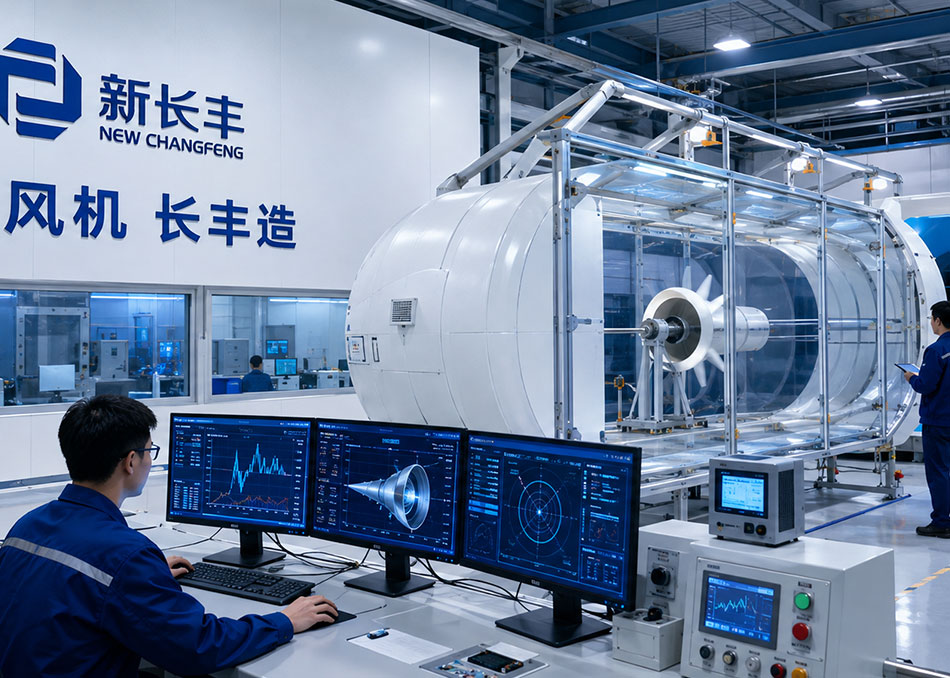
Walk through almost any manufacturing facility in summer and you'll notice the same pattern: machines run hot, workers cluster in pockets of stale air, and the indoor temperature climbs well above what it is outside. The instinct is often to add more floor fans or ceiling fans, but that rarely solves the problem. The root cause isn't simply heat—it's poor ventilation. In high-ceilinged industrial buildings with concentrated heat sources, hot air, fumes, and humidity stratify near the roof, and ordinary fans just stir that layer around without expelling it. Negative pressure fans are designed specifically to address this challenge. By forcefully exhausting air from the building, they create a slight negative pressure relative to the outdoors, causing fresh air to flow in continuously through doors, windows, and dedicated inlets. The result is a complete airflow path—intake, cross-flow, exhaust—that replaces hot, contaminated air rather than merely recirculating it. This is the fundamental logic behind effective workshop ventilation and cooling.
Why Negative Pressure Ventilation Outperforms Simple Air Circulation
Traditional cooling methods in factories often rely on high-volume fans that move air around the workspace. While this can provide a temporary cooling sensation, it doesn't remove the underlying heat load. In fact, without a clear exhaust path, heat generated by machinery and processes continues to accumulate, and humidity from operations or outdoor air can make conditions feel even worse. Negative pressure fans change the equation by prioritizing air exchange. When a fan extracts air from the building, it creates a pressure differential that draws fresh air in through planned openings. This continuous replacement flushes out heat, dust, odors, and moisture, leading to a more comfortable and healthier environment.
From an engineering standpoint, the effectiveness of a negative pressure system depends on proper sizing and installation. The fan must be selected to match the building's volume, heat load, and required air changes per hour. Inlet openings must be adequately sized to avoid excessive negative pressure that could strain the fan or cause uncontrolled infiltration. Additionally, the placement of fans and inlets should encourage cross-ventilation, sweeping air through the occupied zone before exiting. When designed correctly, negative pressure ventilation can significantly reduce indoor temperatures and improve air quality without the energy intensity of air conditioning.
Key Selection Criteria for Industrial Negative Pressure Fans
Choosing the right negative pressure fan for a workshop involves more than comparing prices. Performance, energy efficiency, and reliability are critical. Buyers should look for equipment that has been tested according to recognized standards. In China, fan performance testing methods are outlined in GB/T 1236, which covers airflow and pressure measurement. Energy efficiency requirements are specified in GB 19761, which sets minimum efficiency values for ventilation fans. While these are Chinese standards, they reflect established testing principles that can guide procurement anywhere: insist on verifiable performance data, not just catalog claims.
Beyond standards, consider the specific environment. For dusty or corrosive atmospheres, choose fans with appropriate protection ratings and materials. Noise levels matter, especially in facilities near residential areas or where workers spend long hours. Ease of maintenance—such as accessible motors and bearings—reduces downtime. Also evaluate the fan's ability to handle the required static pressure, as ductwork or louvers can add resistance. A reputable manufacturer will provide technical support to help size the system correctly, ensuring that the installed solution delivers the expected ventilation rate.
Designing an Effective Negative Pressure Cooling System
A successful negative pressure ventilation system is more than a fan in a wall. It requires a holistic approach that considers building layout, heat sources, and worker locations. Start by identifying the hottest zones and the primary sources of heat, fumes, and dust. Determine the required air changes per hour based on the activity level and heat generation. Then, calculate the total exhaust capacity needed and select fans accordingly. Inlet openings should be distributed to provide fresh air where workers are stationed, avoiding dead spots. If the building has multiple floors or partitioned areas, separate systems or strategic fan placement may be necessary.
Installation details also affect performance. Fans should be mounted securely, with weatherproofing for outdoor installations. For roof-mounted units, ensure proper flashing to prevent leaks. Electrical connections must meet local codes, and controls should allow for variable speed or timed operation to match changing conditions. Regular maintenance—cleaning fan blades, checking belts, and lubricating bearings—keeps the system running efficiently. By treating ventilation as an engineered system rather than an afterthought, facilities can achieve consistent cooling and air quality improvements season after season.
Frequently Asked Questions
Q: How many negative pressure fans do I need for my workshop?
A: The number depends on the building volume, heat load, and desired air exchange rate. A common approach is to calculate the total airflow required to achieve a certain number of air changes per hour (ACH). For general manufacturing, 10–20 ACH is often a starting point, but higher heat loads may require more. It's best to consult with a ventilation engineer or a reputable fan manufacturer who can perform a site-specific assessment.
Q: Can negative pressure fans be used in areas with combustible dust?
A: Standard fans are not suitable for hazardous environments. In areas with combustible dust or flammable vapors, you must use explosion-proof fans that meet relevant safety standards. Always consult local safety regulations and choose equipment with appropriate certification.
Q: What maintenance do negative pressure fans require?
A: Regular maintenance includes checking and tightening belts (if belt-driven), cleaning blades and housings to prevent imbalance, lubricating bearings according to the manufacturer's schedule, and inspecting electrical components for wear. In dusty environments, more frequent cleaning may be needed. Establishing a preventive maintenance schedule will extend the fan's life and maintain performance.
Q: How do negative pressure fans compare with evaporative coolers?
A: Negative pressure fans focus on ventilation and heat removal by exchanging indoor air with outdoor air. Evaporative coolers add moisture to the air and provide cooling through evaporation, which can be effective in dry climates but may be less suitable in humid areas. In many industrial settings, a combination of negative pressure ventilation and evaporative cooling can be used, but the choice depends on climate, process requirements, and budget.
Negative pressure fans offer a practical, energy-efficient solution for the ventilation and cooling challenges of industrial workshops. By focusing on air exchange rather than simple air movement, they address the root causes of heat buildup and poor air quality. When selecting equipment, prioritize verifiable performance, energy efficiency, and support from a manufacturer who understands industrial ventilation. For tailored advice on choosing the right negative pressure fan system for your facility, reach out to XCFFJ—our team can help you design a solution that meets your specific needs.