
Commercial kitchen exhaust problems rarely come down to a single piece of equipment. Grease spillover, oil buildup inside ductwork, noisy fans, and black smoke at the rooftop discharge point usually trace back to the same root cause: a mismatch between system selection and installation. Operators tend to focus on the cooking range and the purifier, while the fan — the heart of the system — gets overlooked. This article uses the DT cabinet centrifugal fan as its focus, applies negative-pressure ventilation principles, and explains the installation logic and common pitfalls of commercial kitchen exhaust systems.
Negative-Pressure Fans vs. DT Cabinet Centrifugal Fans: Different Roles
A negative-pressure fan is fundamentally an extractor. It creates a pressure differential that draws air in through doors, windows, and makeup air inlets, carrying heat and odors out of the space. This makes it well suited to large open areas such as factory workshops and warehouse logistics facilities, where the goal is whole-space ventilation and cooling.
Commercial kitchens are a different problem. Kitchen exhaust must overcome duct resistance, purifier resistance, and outdoor wind pressure. This is organized exhaust — air moved through a defined path — and the static pressure requirement is far higher than what general negative-pressure ventilation demands.
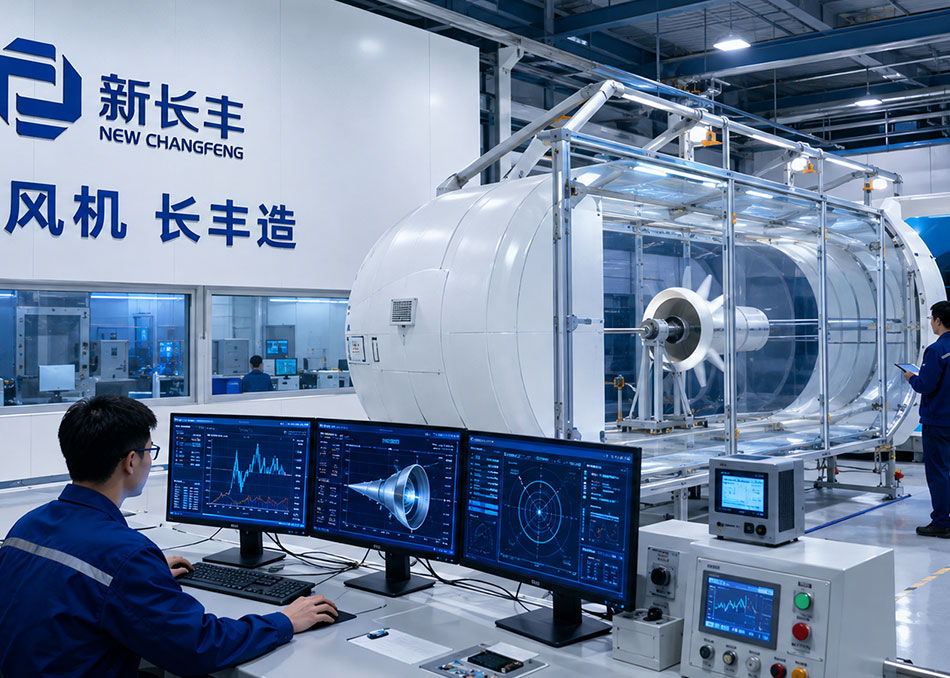
The DT cabinet centrifugal fan is built for exactly this duty. Its cabinet-style housing contains a multi-wing centrifugal impeller. Air is accelerated by the impeller and directed out through the volute casing, producing relatively high pressure output that can push cooking fumes through long duct runs and electrostatic purification equipment. The cabinet structure also provides a degree of sound attenuation, and when paired with vibration isolation, it supports better noise control for the kitchen and surrounding areas.
The correct mental model is this: negative-pressure fans handle space air exchange; DT cabinet centrifugal fans provide the motive power for the exhaust duct network. The two can work together, but they are not interchangeable.
Why the DT Cabinet Centrifugal Fan Fits Kitchen Exhaust and Purification
Kitchen exhaust is not clean air. It carries grease vapor, moisture, and particulate matter. Any fan placed in this airstream must tolerate that environment while maintaining stable pressure. The DT cabinet centrifugal fan's multi-wing impeller design generates the pressure curve needed for systems that include electrostatic precipitators, UV units, or baffle filters — all of which add resistance that a standard axial fan cannot reliably overcome.
From a compliance standpoint, kitchen fume discharge in China is governed by GB 18483, which sets limits on fume concentration and purification efficiency. Meeting those limits depends on the purifier, but the purifier only performs as designed when airflow and pressure are within its operating range. An undersized or poorly matched fan starves the purifier; an oversized fan can push air through too quickly for adequate treatment. The DT cabinet centrifugal fan's selection should therefore be based on the system's total resistance curve, not on a single airflow number.
Fan performance itself should be verified against GB/T 1236, the standard for aerodynamic performance testing of industrial fans, and energy efficiency should be considered under GB 19761. For projects involving fire safety — particularly where exhaust ducts pass through or near fire-rated zones — GB 51251 requirements for smoke and heat exhaust systems may also apply, and the fan selection must account for those conditions.
Installation Logic: Getting the Details Right
Installation quality determines whether a correctly selected fan actually performs. The following points are where most kitchen exhaust projects succeed or fail.
- Mount the fan on a rigid, level base. The cabinet should sit on a concrete plinth or steel frame with sufficient mass. Flexible spring or rubber isolators should be placed between the cabinet and the base, not omitted in the interest of saving time.
- Use flexible connectors at both inlet and outlet. These decouple the fan from the ductwork, preventing vibration from traveling into the building structure and reducing structure-borne noise.
- Keep duct runs as short and straight as practical. Every elbow, transition, and length of duct adds resistance. Where bends are unavoidable, use gradual radius elbows rather than sharp turns.
- Match duct diameter to the fan inlet. Abrupt reductions or expansions create turbulence and reduce effective airflow. Tapered transitions should follow the fan manufacturer's recommendations.
- Provide adequate makeup air. A kitchen exhaust system that removes air without replacing it will struggle. Makeup air inlets should be sized and positioned so the kitchen remains slightly negative relative to adjacent spaces, preventing odors from migrating into dining areas.
- Install the fan downstream of the purification stage. In most kitchen exhaust layouts, the purifier is placed before the fan so that grease loading on the impeller is reduced. Confirm the specific sequence with the purifier and fan suppliers, as some configurations differ.
- Plan for maintenance access. The cabinet should have enough clearance for inspection and cleaning of the impeller and cabinet interior. Grease accumulation is inevitable over time, and inaccessible fans become inefficient fans.
- Check discharge location and orientation. The rooftop discharge should be positioned to avoid recirculation into fresh air intakes or neighboring windows, and should meet local emission and setback requirements.
Common Mistakes and How to Avoid Them
Selecting the fan before the system is defined. The fan is often chosen last, after the hood, duct route, and purifier are already fixed. This forces the fan to compensate for a system it was never matched to. Defining the duct layout and purifier pressure drop first allows proper fan selection.
Confusing airflow with pressure. Two fans may move similar air volumes at free delivery, but behave very differently once duct and purifier resistance is applied. Kitchen exhaust lives in the high-resistance region of the fan curve, so static pressure at the operating point matters more than the free-air rating.
Ignoring noise from the start. Noise complaints often lead to expensive retrofits. Specifying a cabinet centrifugal fan with vibration isolation and flexible connectors from the beginning is more cost-effective than adding silencers later.
Skipping commissioning. After installation, airflow should be measured and compared against design values. If the system underperforms, the cause may be a damper left closed, a blocked filter, or a duct leak — all of which are easier to correct before the kitchen opens.
Frequently Asked Questions
Q: Can I use a negative-pressure fan instead of a DT cabinet centrifugal fan for kitchen exhaust?
A: Generally, no. Negative-pressure fans are designed for whole-space ventilation where resistance is low. Kitchen exhaust must overcome duct, purifier, and wind pressure resistance, which requires the higher static pressure output of a centrifugal fan. Using a negative-pressure fan in this role typically results in weak extraction and grease-laden air escaping into the kitchen.
Q: Where should the DT cabinet centrifugal fan be installed in the exhaust system?
A: In most commercial kitchen layouts, the fan is installed after the purification stage, often on the roof or in a dedicated plant area. This reduces grease loading on the impeller. The exact position depends on the purifier type and duct route, so it should be confirmed during system design rather than assumed.
Q: How do I reduce noise from a kitchen exhaust fan?
A: Start with vibration isolation — spring or rubber mounts under the cabinet and flexible connectors on both duct connections. Ensure the fan is correctly sized so it operates near its best-efficiency point rather than at an extreme of its curve. If noise remains an issue, acoustic lagging on the ductwork or a silencer may be needed, but addressing vibration and selection first is more effective.
Q: What standards apply to kitchen exhaust fan selection and installation?
A: GB/T 1236 covers fan aerodynamic performance testing, GB 19761 addresses fan energy efficiency, and GB 18483 sets kitchen fume emission limits. Where the exhaust system interfaces with fire-rated construction, GB 51251 requirements for smoke and heat exhaust may apply. Local codes should always be checked, as requirements vary by jurisdiction.
Getting commercial kitchen exhaust right means treating the fan as a designed component of the system, not an afterthought. The DT cabinet centrifugal fan provides the pressure and durability that kitchen exhaust and purification demand, but it only delivers those benefits when the duct layout, purifier, makeup air, and installation details are planned together. For projects involving factory ventilation, commercial kitchen exhaust purification, school canteens, hotels, or warehouse logistics, working with a supplier who understands the full system — not just the fan — makes the difference between a system that passes inspection and one that performs every day.