
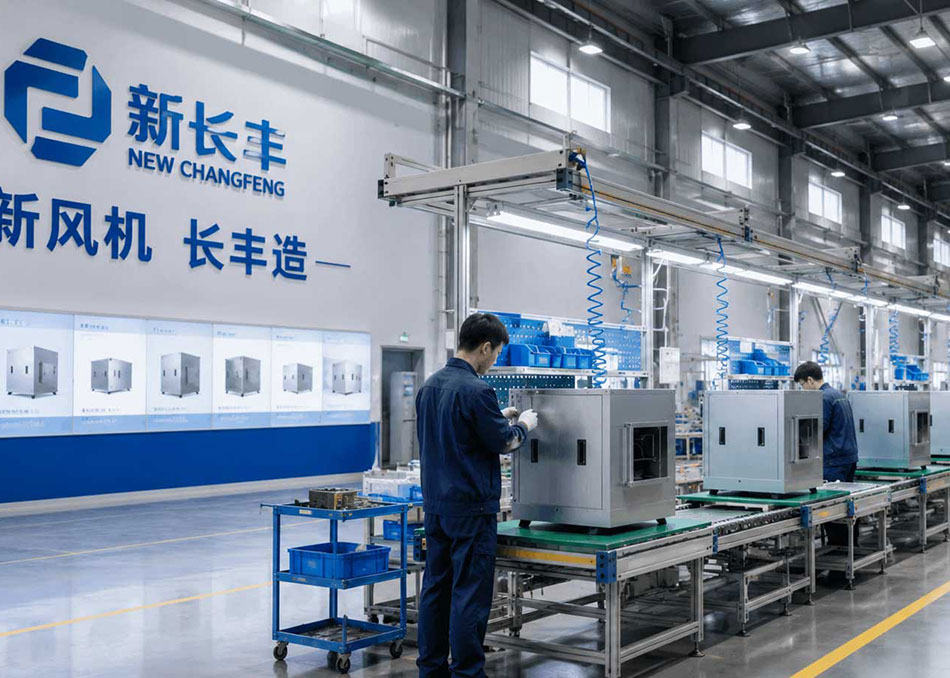
In ventilation and cooling equipment selection, a common mistake is to focus on equipment names rather than the logic of the application. Take the water-cooled fresh air unit: it is often discussed under "kitchen cooling equipment selection," but what truly determines its effectiveness is the airflow organization of the space. Internet cafés are densely occupied, have high heat loads from equipment, and are relatively enclosed with doors and windows kept closed. The core challenge is that heat cannot escape and fresh air cannot enter. Applying a water-cooled fresh air unit here is essentially about coordinating make-up air and cooling—a logic that closely parallels make-up air in negatively pressurized commercial kitchens. Understanding this is key to selecting and using the equipment correctly.
Internet Café Ventilation: The Real Pain Point Is Make-Up Air, Not Just AC Capacity
The spatial characteristics of internet cafés create inherent ventilation difficulties. Monitors, PCs, and lighting generate continuous heat, while high occupant density quickly makes the air stuffy and stale. To control noise and air-conditioning energy use, doors and windows are often kept tightly closed, so natural ventilation is nearly zero. Many operators instinctively increase air-conditioning capacity, but AC only recirculates and cools internal air—it does not introduce fresh air. As a result, CO₂ levels and odors persist, and perceived temperature remains uncomfortable.
This is where the logic of kitchen ventilation can be transferred. Commercial kitchens emphasize balancing exhaust and make-up air because if exhaust exceeds make-up air, flue gases escape, doors become hard to open, and combustion becomes incomplete. Internet cafés have no open flames or grease, but the balance between exhaust and make-up air follows the same principle: exhaust without make-up creates negative pressure, causing whistling at door gaps and backflow of odors; make-up air without exhaust leads to overpressure and energy waste. A water-cooled fresh air unit addresses both by supplying filtered, cooled fresh air to balance exhaust and reduce indoor temperature.
How Water-Cooled Fresh Air Units Work and Why They Fit Internet Cafés
A water-cooled fresh air unit draws in outdoor air, filters it, and cools it using a water-cooled heat exchanger before delivering it indoors. Unlike traditional air conditioners that only recirculate indoor air, this unit continuously introduces fresh air, diluting CO₂ and odors while providing cooling. The water-cooled design is particularly effective in spaces where outdoor air is hot and the cooling load is high, as water cooling can handle large temperature differences efficiently.
For internet cafés, the unit offers several advantages:
- Continuous fresh air supply: Helps maintain acceptable indoor air quality by reducing CO₂ and odors.
- Cooling without recirculation: Delivers cooled fresh air directly, improving perceived temperature without relying solely on AC.
- Balanced ventilation: Works with exhaust systems to maintain slight positive pressure or neutral pressure, preventing infiltration of untreated air.
- Energy efficiency: Water-cooled heat exchange can be more efficient than air-cooled under high ambient temperatures, reducing cooling energy consumption.
- Quiet operation: Many models are designed for low noise, suitable for noise-sensitive environments like internet cafés.
When selecting a unit, consider the fresh air volume required based on occupant density and space volume, the cooling capacity needed to offset the fresh air load, and the static pressure to overcome duct resistance. Compliance with relevant standards such as GB/T 1236 for fan performance testing and GB 19761 for fan energy efficiency ensures reliable performance.
Integrating Water-Cooled Fresh Air Units with Exhaust and Negative Pressure Control
To maximize effectiveness, a water-cooled fresh air unit should be integrated with the exhaust system. Internet cafés typically have some exhaust—from restrooms, smoking areas, or general ventilation. If exhaust volume exceeds make-up air, negative pressure results, causing doors to be hard to open and drawing in unconditioned air from outside or adjacent spaces. The fresh air unit should be sized to provide make-up air slightly less than or equal to exhaust volume, maintaining a slight negative pressure (to prevent odor migration) or neutral pressure.
In kitchen applications, negative pressure is intentionally maintained to prevent grease and odors from spreading. In internet cafés, a slight negative pressure in restrooms and smoking areas is desirable, but the main seating area should be at neutral or slightly positive pressure to avoid drafts and infiltration. A balanced design ensures that the fresh air unit supplies enough cool, clean air to the seating area while exhaust removes stale air from specific zones.
Controls can help: variable frequency drives on fans allow adjustment based on CO₂ sensors or occupancy, optimizing energy use while maintaining comfort. Regular maintenance—cleaning filters, checking water flow, and inspecting coils—ensures consistent performance.
Key Selection and Installation Considerations
Proper selection and installation are critical. The unit should be sized based on a heat load calculation that includes fresh air load (the energy needed to cool outdoor air to indoor conditions) and internal gains. Undersizing leads to inadequate cooling and fresh air; oversizing wastes energy and may cause noise.
Duct design should minimize resistance and ensure even distribution. Supply diffusers should be placed to avoid direct drafts on occupants. The water-cooled unit requires a water source and drainage; ensure proper connection and water quality to prevent scaling. Installation should comply with local codes and standards, including GB 51251 for smoke and heat exhaust ventilation if applicable.
Noise control is important: select low-noise models and use acoustic insulation on ducts if needed. Regular maintenance schedules should be established from the start.
FAQ
Q: Can a water-cooled fresh air unit replace air conditioning in an internet café?
A: Not entirely. While it provides cooled fresh air and can reduce the cooling load on AC, it is not a substitute for a full air-conditioning system, especially in extremely hot climates. It works best as part of an integrated ventilation and cooling strategy, complementing AC by improving air quality and reducing AC energy use.
Q: How does a water-cooled fresh air unit compare to a regular fresh air unit?
A: A water-cooled unit uses water to cool the incoming air, which can be more effective than air-cooled units in high-temperature environments. It typically requires a water connection and drainage, but offers better cooling performance and energy efficiency under certain conditions.
Q: What maintenance does a water-cooled fresh air unit require?
A: Regular maintenance includes cleaning or replacing air filters, checking water flow and quality, inspecting the heat exchanger for scaling or fouling, and verifying fan operation. The frequency depends on usage and outdoor air quality; generally, filters should be checked monthly and coils cleaned annually.
Q: Is negative pressure necessary in an internet café?
A: Not in the main seating area. A slight negative pressure is useful in restrooms and smoking rooms to contain odors, but the main area should be at neutral or slightly positive pressure to prevent drafts and infiltration. The goal is balanced ventilation, not excessive negative pressure.
In summary, water-cooled fresh air units offer a practical solution for internet cafés facing ventilation and cooling challenges. By providing cooled fresh air and balancing exhaust, they improve indoor air quality and comfort while reducing energy waste. For expert guidance on selecting the right unit for your space, consult with ventilation professionals like XCFFJ, who can tailor a solution to your specific needs.