
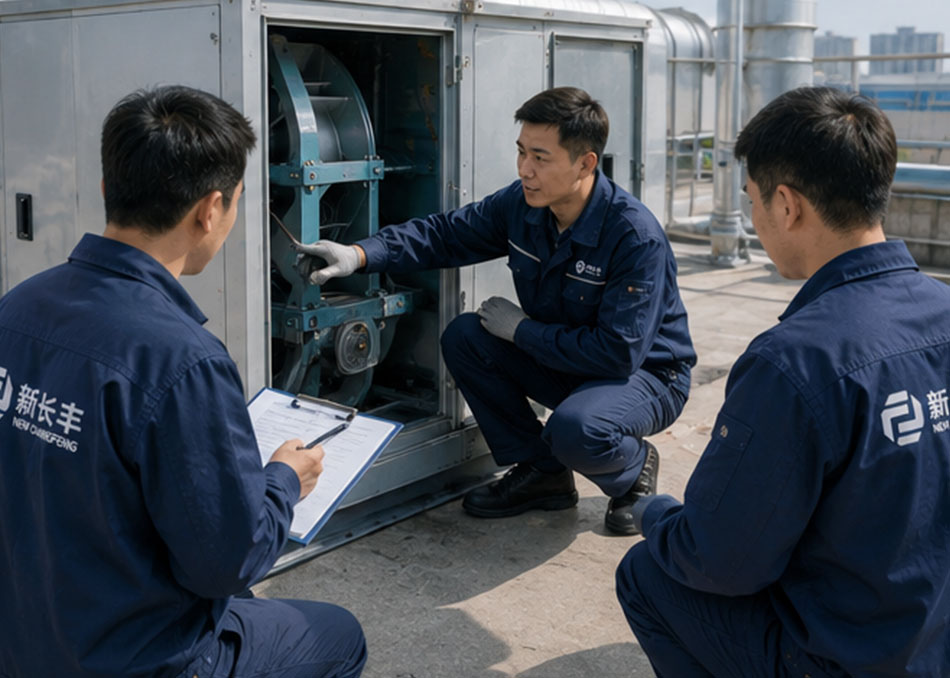
Commercial kitchens face a persistent ventilation paradox: the stronger the exhaust system, the more severe the negative pressure. When powerful exhaust fans extract large volumes of cooking fumes and heat, an equal amount of make-up air must be supplied. Without it, the kitchen develops a continuous negative pressure that causes poor exhaust, fume spillage, difficulty opening doors, incomplete gas combustion, and reduced overall operating efficiency. Compounding this, the kitchen itself is a high-heat environment. With woks, steamers, ovens, and fryers running simultaneously, summer kitchen temperatures often soar well above outdoor levels. Traditional make-up air simply brings in hot outdoor air, which relieves negative pressure but pushes temperatures even higher—creating a vicious cycle of "more make-up air, more heat." Solving kitchen negative pressure and achieving kitchen cooling are two sides of the same coin. Water-cooled fresh air units have emerged as a practical solution that simultaneously addresses both.
Understanding Negative Pressure in Commercial Kitchens
Negative pressure occurs when the volume of air exhausted exceeds the volume of air supplied. In a commercial kitchen, exhaust hoods, fume purification systems, and ventilation fans continuously remove air. If make-up air is insufficient, the kitchen becomes depressurized relative to adjacent spaces. The consequences are immediate and tangible: doors become hard to open, exhaust efficiency drops, and cooking odors migrate into dining areas. In severe cases, gas appliances may experience incomplete combustion, posing safety risks and increasing energy waste.
According to ventilation design principles and standards such as GB 51251 for smoke and heat exhaust, a balanced air supply and exhaust strategy is essential. The make-up air volume should typically match 80–90% of the exhaust volume to maintain a slight negative pressure (around -5 Pa to -10 Pa) relative to the dining area—enough to contain odors without creating excessive negative pressure that impairs exhaust performance.
Simply opening a window or installing a basic supply fan is often inadequate. These measures introduce untreated outdoor air, which in summer can be 35°C or higher, undermining any air conditioning and increasing worker discomfort. A more intelligent approach is needed: one that supplies air while simultaneously cooling it.
How Water-Cooled Fresh Air Units Work
Water-cooled fresh air units combine ventilation and evaporative cooling in a single compact unit. The core principle is evaporative cooling: outdoor air is drawn through a wetted cooling pad or heat exchange medium. As water evaporates, it absorbs heat from the air, lowering the dry-bulb temperature of the incoming air stream. The result is a supply of cooler, fresher air that helps balance kitchen pressure and improves the working environment.
Unlike standard fresh air handling units, water-cooled fresh air units are designed for targeted delivery. They use centrifugal fans or axial fans to push the cooled air through ductwork directly to hot spots—near cooking lines, prep areas, or dishwashing stations. This "spot cooling" approach maximizes comfort where it matters most, rather than cooling the entire kitchen indiscriminately.
The cooling effectiveness depends on ambient humidity. In dry or semi-dry climates, the temperature drop can be significant, often 5–10°C or more. In humid regions, the cooling effect is reduced, but the unit still provides essential make-up air and improves air movement. For year-round performance, some models offer optional heating or bypass modes to avoid over-cooling in winter.
Integrating Water-Cooled Fresh Air Units into Kitchen Ventilation Design
Successful integration requires a holistic view of the kitchen's air balance. The water-cooled fresh air unit should be sized to provide the required make-up air volume while accounting for the pressure drop through ductwork and diffusers. It is typically interlocked with the exhaust system: when exhaust fans run, the fresh air unit operates automatically to maintain pressure balance.
Key design considerations include:
- Air volume matching: Supply air should be slightly less than exhaust air to maintain a controlled negative pressure, preventing odor escape.
- Duct layout: Short, direct duct runs minimize pressure loss and ensure cooled air reaches the kitchen without excessive temperature gain.
- Filtration: Adequate filters protect the evaporative cooling media and ensure supply air cleanliness, especially in dusty environments.
- Control strategy: Variable frequency drives (VFDs) on fans allow modulation based on actual cooking activity, saving energy during off-peak hours.
- Maintenance access: Regular cleaning of cooling pads and water systems is critical to prevent scale buildup and maintain cooling efficiency.
By addressing both negative pressure and heat simultaneously, water-cooled fresh air units reduce the load on separate air conditioning systems and can lower overall energy consumption. They are particularly effective in hot, dry climates and in kitchens where traditional air conditioning is impractical due to grease and moisture.
Benefits Beyond Comfort: Compliance and Efficiency
Proper make-up air is not just about comfort—it is a regulatory and operational necessity. Standards such as GB 18483 for kitchen fume emission require efficient exhaust, which in turn depends on adequate make-up air. Without it, exhaust hoods capture less fume, leading to grease accumulation, fire hazards, and potential violations.
Water-cooled fresh air units also contribute to energy efficiency. By pre-cooling supply air, they reduce the sensible heat load in the kitchen, allowing the exhaust system to operate more effectively. In some configurations, the evaporative cooling process can be combined with heat recovery from exhaust air, further improving overall system efficiency.
For facility managers, the return on investment is clear: improved worker productivity, reduced turnover, fewer complaints, and compliance with health and safety regulations. In schools, hotels, and large canteens, where kitchens operate for extended hours, the benefits are even more pronounced.
Frequently Asked Questions
Q: Can a water-cooled fresh air unit completely replace air conditioning in a commercial kitchen?
A: No. Water-cooled fresh air units are designed for make-up air and spot cooling, not full-space air conditioning. They are most effective when used in conjunction with a balanced ventilation strategy. In extremely hot and humid climates, additional cooling may be required, but the unit significantly reduces the cooling load and improves comfort at a fraction of the energy cost of traditional AC.
Q: How much negative pressure is ideal for a commercial kitchen?
A: A slight negative pressure of about -5 Pa to -10 Pa relative to the dining area is generally recommended. This prevents cooking odors from migrating while ensuring exhaust hoods operate efficiently. Excessive negative pressure (e.g., below -15 Pa) can cause door operation issues and reduce exhaust performance. A properly sized water-cooled fresh air unit helps maintain this balance automatically.
Q: What maintenance does a water-cooled fresh air unit require?
A: Regular maintenance includes cleaning or replacing the evaporative cooling pads, checking the water distribution system for scale or algae, inspecting filters, and verifying fan and pump operation. In hard water areas, a water treatment system may be necessary to prevent mineral buildup. Routine maintenance ensures optimal cooling efficiency and prolongs equipment life.
Q: Is a water-cooled fresh air unit suitable for humid climates?
A: Yes, but with reduced cooling effect. In humid climates, the evaporative cooling process is less effective because the air already contains moisture. However, the unit still provides essential make-up air and air movement, which improves perceived comfort. In such cases, consider a hybrid approach with supplemental dehumidification or a chilled water coil for additional cooling.
Balancing kitchen ventilation is a complex challenge, but water-cooled fresh air units offer a practical, energy-efficient solution. By simultaneously addressing negative pressure and high temperatures, they create a safer, more comfortable, and more productive kitchen environment. For facilities looking to upgrade their ventilation systems, consulting with a qualified HVAC engineer and selecting equipment that meets relevant standards—such as GB/T 1236 for fan performance and GB 19761 for energy efficiency—is essential. XCFFJ provides a range of water-cooled fresh air units and ventilation solutions tailored to commercial kitchens. Contact us to discuss your project requirements.