
Applications of Water-Cooled Fresh Air Units: One Evaporative Cooling Logic, Multiple Scenarios
Water-cooled fresh air units are often labeled as "kitchen equipment." But if you break down their core capabilities — make-up air, cooling, and air exchange — you'll find they are essentially an organized air replacement system. Any space that needs to simultaneously solve three problems — "air can't get in, heat can't dissipate, and stale air can't get out" — is a potential application for water-cooled fresh air units. The kitchen is merely their most demanding proving ground, not their only stage.
Kitchens: The Most Hardcore Starting Point
Commercial kitchens are the most concentrated application scenario for water-cooled fresh air units, for a simple reason: the conflicts here are the most acute.
Radiant heat from open flames, steam from steamers, and grease from frying — three heat sources叠加 — push kitchen temperatures well above 45°C during peak hours. What makes it worse is that the exhaust system continuously extracts air, creating negative pressure, while hot outdoor air rushes back in through door gaps and pass-through windows. The chef stands at the stove with hot air surging from behind and radiant heat from the burners in front — a "pincer" heat trap.
Traditional air conditioning barely survives in this environment. Evaporator fins become clogged with grease, cooling capacity drops rapidly, and compressors trip repeatedly. Fans merely accelerate hot air movement, making the perceived temperature worse.
The approach of a water-cooled fresh air unit is completely different. Rather than circulating and cooling the air inside the kitchen, it introduces outdoor fresh air, cools it through a water-cooled heat exchange medium, and delivers it into the kitchen. Outdoor hot air passes through a wet cooling pad, where water evaporation absorbs heat, lowering the air temperature. A centrifugal fan then delivers it indoors, simultaneously replacing the air extracted by the exhaust system. This process accomplishes three things at once: make-up air to balance negative pressure, cooling to improve comfort, and air exchange to dilute grease concentration.
The industry standard is make-up air at 80% to 90% of exhaust volume, maintaining slight negative pressure to prevent grease spillage. Exhaust system negative pressure is typically 100-150 Pa; adding duct resistance, supply equipment static pressure should reach 300 Pa or more to penetrate the negative pressure zone.
Internet Cafes and Mahjong Parlors: Air Replacement in High-Density Spaces
The air quality problems in internet cafes and mahjong parlors differ from kitchens, but the underlying conflicts are similar.
Mahjong parlors are典型 high-density, long-duration, enclosed commercial spaces. A mahjong table seats four people, a medium-sized parlor accommodates dozens simultaneously, and operations run for over ten hours continuously. Indoor carbon dioxide levels and odors accumulate rapidly. Many operators' first reaction is to install exhaust fans to extract air, but extracting without supplying creates new problems: strong negative pressure forms indoors, odors from corridors and restrooms are drawn back into private rooms, dust enters through door gaps, and exhaust efficiency is actually "choked."
The logic for internet cafes is similar. Dozens or even hundreds of computers generate heat simultaneously, doors and windows are kept closed to maintain air conditioning effectiveness, and air mobility is poor. Ordinary air conditioning is essentially a refrigeration cycle that does not introduce outdoor fresh air — it can only continuously cool the same batch of air, and stuffiness and discomfort remain.
Water-cooled fresh air units play the role of a "respiratory system" here: drawing outdoor air, cooling it, and delivering it into personnel activity zones, with exhaust outlets removing stale air, forming a "supply-exhaust" matched airflow organization. It should be noted that evaporative cooling effectiveness correlates with ambient humidity. The drier the air, the more pronounced the temperature drop; in humid, muggy regions, the cooling sensation diminishes, and the unit should be positioned more as a ventilation and comfort improvement device.
Industrial Workshops: The Most Traditional "Home Turf"
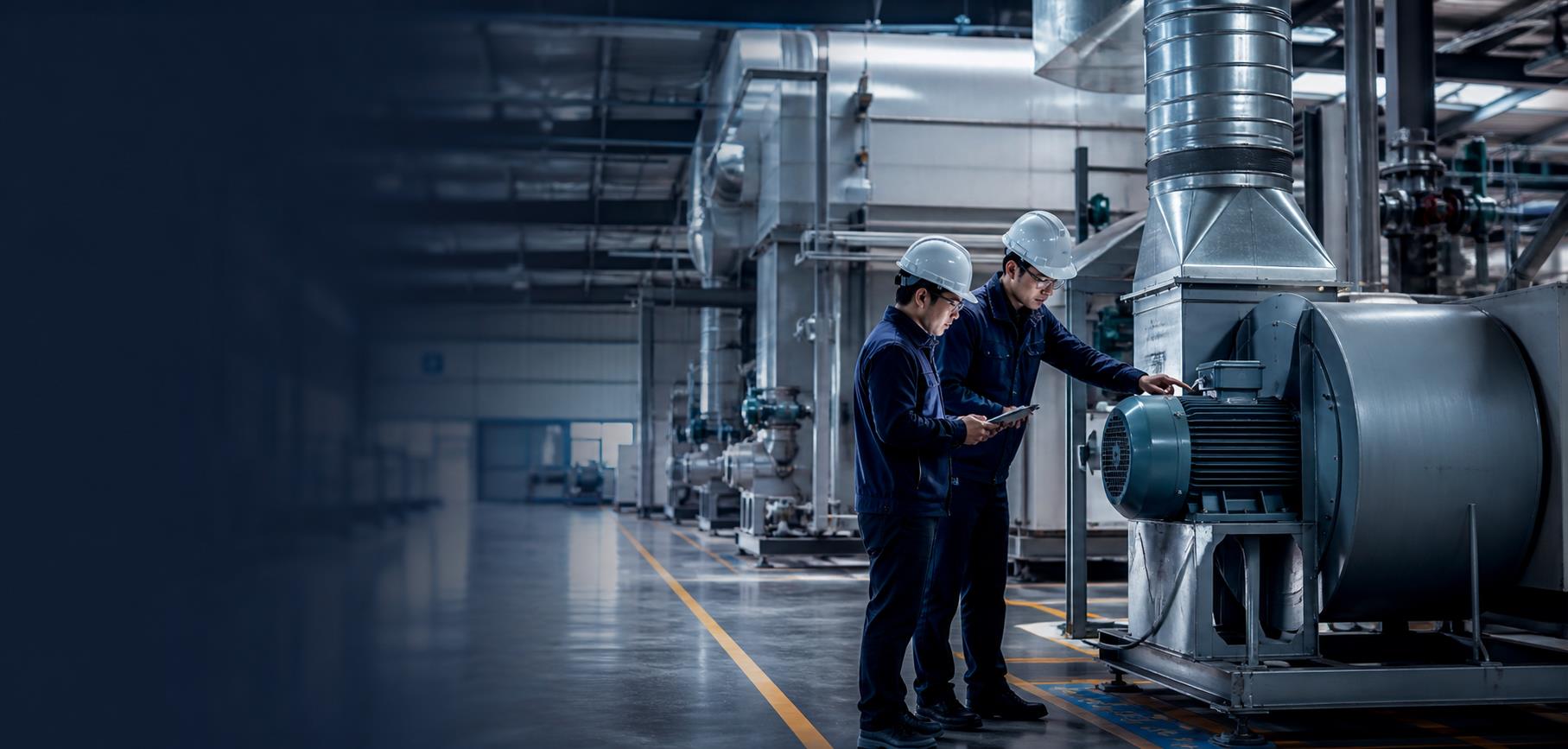
Industrial scenarios are actually the "original home" of water-cooled fresh air units. Industrial evaporative coolers are widely used in workshops, warehouses, and large spaces in electronics, textiles, machinery, chemicals, and food processing industries — the core principle being evaporative cooling.
The common characteristics of these scenarios: large spaces, dispersed heat sources, non-fixed personnel, and low precision requirements for temperature and humidity. Compressor refrigeration is extremely costly in open or semi-open spaces, while water-cooled fresh air units use water as the medium and fans as the power source, with relatively simple structure and operating energy consumption far lower than traditional air conditioning. Product literature shows that some models consume just 1 kWh per hour to cover 100-150 square meters of cooling area, suitable for factory workshops, internet cafes, hotels, and other large venues.
Data Centers: An Unexpected Crossover Application
This is the most "crossover" application of water-cooled fresh air units. Data center computer rooms generate enormous heat, and traditional precision air conditioning consumes staggering amounts of energy. But computer rooms have strict temperature and humidity requirements — can water-cooled fresh air systems be used? The answer is yes, but intelligent control is required.
In core equipment room renovation projects in Liaoning, Shandong, and Fujian, a solution of "evaporative air cooler supplying cold air + negative pressure exhaust fan removing hot air + intelligent control system" was introduced. The system includes three operating modes: in low temperatures, it runs in dry-condition fresh air mode, directly introducing outdoor cold air; in suitable climates, it runs in wet-condition evaporative cooling mode, cooling fresh air before delivery; in hot and humid weather, it coordinates with the original precision air conditioning system.
Measured data is impressive. A 236 m² equipment room in Liaoning saw annual air conditioning system electricity consumption drop from 519,000 kWh to 204,000 kWh — a 60.6% energy savings rate. After renovation of an equipment room in Shandong, PUE dropped from 1.67 to 1.38, with a 56.9% energy savings rate. The core logic: while meeting computer room temperature and humidity requirements, maximize the utilization time of "natural cooling sources" and reduce precision air conditioning operating hours.
Selection Logic: Scenarios Determine Parameter Priorities
Different scenarios have different selection priorities for water-cooled fresh air units. Kitchens prioritize static pressure and oil resistance; internet cafes and mahjong parlors prioritize noise and airflow organization; industrial workshops prioritize airflow coverage and cooling range; data centers prioritize intelligent control and filtration precision.
But the underlying logic is consistent: matching the space's airflow requirements, humidity conditions, and installation constraints to select the appropriate model. Equipment is a tool; the scenario determines the choice. Understanding the essence of water-cooled fresh air units as an "air replacement system" is more practically meaningful than memorizing where they can be used.