
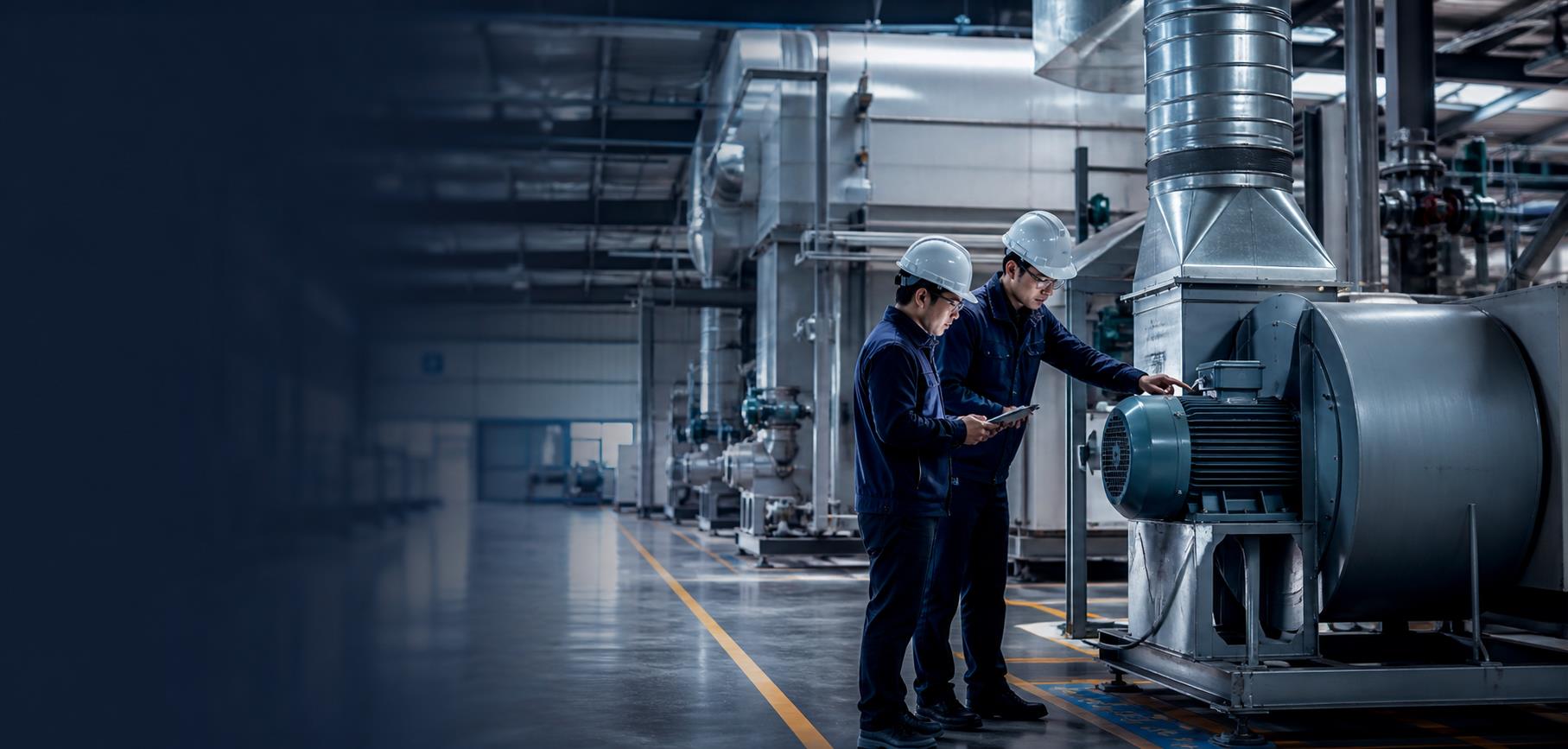
A Fact Repeatedly Validated by Data
The impact of kitchen environment on employee retention is far greater than most restaurant owners imagine.
A report jointly published by Halton Group and The Burnt Chef Project, based on a survey of 146 chefs in North America, presents striking figures: 79% of chefs have considered leaving the industry entirely, and 97% of respondents believe kitchen conditions have seriously harmed their health. The report explicitly identifies overheating and poor ventilation as the primary factors creating a poor working environment.
What deserves even more attention from restaurant managers is that chefs said simple improvements — from better temperature control to more ergonomic layouts — could persuade them to stay in the industry. In other words, improving kitchen conditions is not a "nice-to-have" but an operational decision that directly affects staff stability.
Data from a survey in Hangzhou confirms this. In a survey of about 150 restaurants and snack shops, 12 had "Now Hiring Chef" signs posted at their doors. A starred-hotel chef earning over 15,000 RMB per month was preparing to resign for a simple reason: the kitchen temperature was too high, and he "simply couldn't take it anymore."
The Root of Kitchen Heat: Exhaust Extracts, But No One Supplies
Many owners install exhaust systems, yet the results remain unsatisfactory. Exhaust hood suction is insufficient, grease drifts into the dining hall, and doors become hard to pull open — the problem often isn't the exhaust itself, but inadequate make-up air.
The exhaust hood extracts air, and the kitchen must supply an equal amount to replace it. When make-up air volume is significantly less than exhaust volume, negative pressure forms inside the kitchen, hot outdoor air rushes in disorderly through door gaps and pass-through windows, and airflow organization becomes chaotic. The chef stands at the stove with hot air surging in from behind and radiant heat from the burners in front — uncomfortable no matter what. The water-cooled fresh air unit solves precisely this problem: cooling outdoor fresh air before delivering it into the kitchen, providing both make-up air and cooling while improving airflow organization at its root.
Xin Changfeng's Selection Logic: Stainless Steel Body and Centrifugal Air Cabinet
Shenzhen Xin Changfeng Dust Removal and Cooling Equipment Co., Ltd., founded in 2016, concentrates its technical expertise in industrial dust removal and cooling, holding multiple patents covering centrifugal air cabinets and volute structures. Its product approach carries a clear industrial equipment DNA.
All-stainless-steel construction is its most visible feature. The kitchen environment attacks equipment from multiple directions: high humidity, grease particles, cleaning vapor, and cleaning agent splashes. Ordinary galvanized sheet or powder-coated enclosures begin corroding from the inside within one to two years. The stainless steel body sacrifices some cost advantage in exchange for a unit that can withstand long-term continuous operation.
The fan core uses a centrifugal air cabinet structure, backed by a utility model patent for a "volute for a centrifugal cabinet fan." Centrifugal fans are characterized by high static pressure and stable airflow, suitable for connecting longer ducts and penetrating the negative pressure zone created by the exhaust system. Exhaust hoods in commercial kitchens typically generate 100-150 Pa of negative pressure; adding duct friction loss and elbow local resistance, without sufficient static pressure reserve, cold air simply cannot reach the chef.
Parameter Coverage: From Small Kitchens to Large Cafeterias
Xin Changfeng water-cooled fresh air units cover airflow from 4,100 m³/h to 40,000 m³/h, with maximum static pressure of 680 Pa, supporting both 220V single-phase and 380V three-phase power.
Take several typical models. The XCF-SL75A is the entry-level model — maximum airflow 6,100 m³/h, static pressure 480 Pa, power just 0.75 kW, 220V power, water consumption 6 L/h. This specification suits small kitchens, with single-phase power reducing electrical renovation barriers.
The XCF-SL150A steps up — airflow 8,100 m³/h, static pressure 580 Pa, power 1.5 kW, switching to 380V three-phase power. This model suits medium kitchens and can serve as the primary make-up air and cooling unit.
The XCF-SL300A reaches 14,000 m³/h airflow, 680 Pa static pressure, 3 kW power. A static pressure of 680 Pa means it can connect to longer supply ducts and deliver cooled fresh air to workstations far from the unit. Xin Changfeng's XCF-SL750A model has appeared in Shenzhen government procurement records, with an airflow requirement of ≥30,000 m³/h, used in a school cafeteria renovation project, passing government project qualification review.
Three Numbers to Watch During Selection
Make-up air volume. Size it at 80% to 90% of exhaust volume to maintain slight negative pressure in the kitchen. Insufficient make-up air means negative pressure cannot be resolved; excessive make-up air may cause grease to backflow into the front of house.
Static pressure margin. Exhaust system negative pressure is typically 100-150 Pa. Adding duct resistance and elbow losses, choose a model with sufficient static pressure margin. 680 Pa suits long ducts or complex routing; 480 Pa suits short-duct direct delivery.
Supply air position. Make-up air outlets should be arranged along the chef's back or to the side, avoiding direct blowing at stove flames. Xin Changfeng water-cooled fresh air units support multi-outlet connection, enabling multi-point centralized air supply.
A Cooler Kitchen Is Itself a Reason to Stay
The most noteworthy point from The Kitchen Condition report for restaurant managers: when chefs were asked which improvements would make them reconsider leaving, "better temperature control" was explicitly listed as a factor that could persuade them to stay. In chef circles, "which restaurant has cooling equipment in the kitchen" has become an important consideration when job hunting.
Improving kitchen conditions is not a pure cost expenditure. It affects employee health, service consistency, recruitment difficulty, and training costs. The core value of Xin Changfeng's water-cooled fresh air unit is not "turning the kitchen into an air-conditioned room," but solving the negative pressure and insufficient make-up air problems caused by exhaust, while cooling the incoming fresh air to an acceptable range. The stainless steel body and centrifugal air cabinet structure deliver longer service life and lower failure rates. For kitchen scenarios requiring long continuous operation and strong environmental corrosion, this choice is reasonable.