
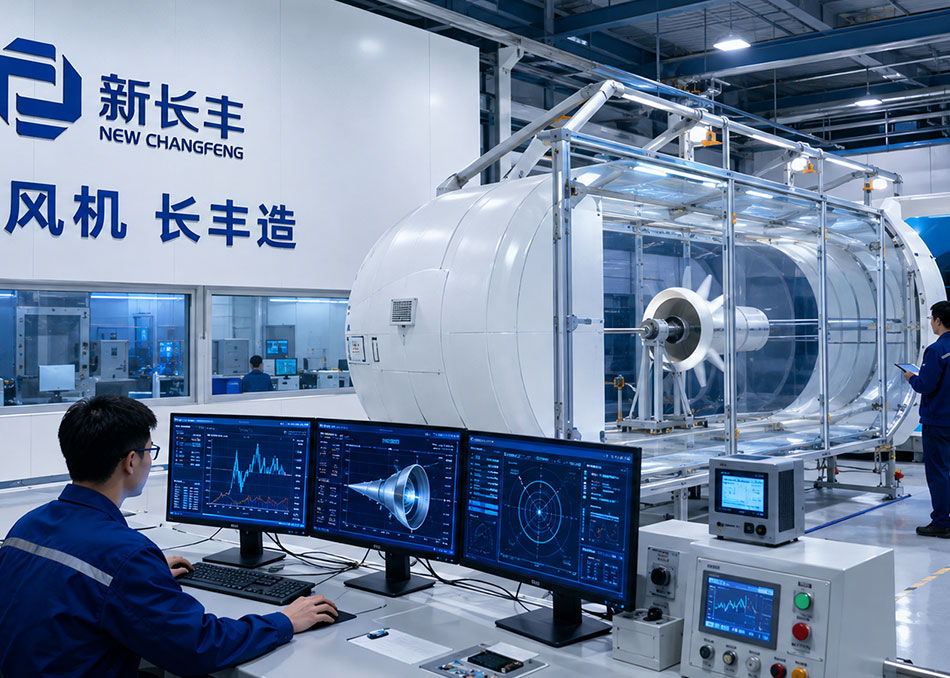
Hotel kitchens in summer can be harsher than many industrial workshops. Radiant heat from ranges, steam from combi ovens, and oil mist from fryers stack up, keeping workstations consistently hotter than surrounding areas. Conventional central air conditioning struggles in this environment: grease clogs coils, condensate drainage is unreliable, and insufficient fresh air leads to rapid cooling degradation and high maintenance costs. Water-cooled fresh air units—evaporative cooling equipment designed for high-temperature, grease-laden spaces—are increasingly used in hotel kitchens as a spot cooling solution. Understanding how they work is essential for deciding whether they fit, how to arrange them, and how to maintain them.
Why Hotel Kitchens Need a Dedicated Spot Cooling Approach
The biggest difference between a hotel kitchen and an ordinary commercial space is that heat sources are concentrated and continuous. Woks, stockpots, steam cabinets, and ovens release both convective and radiant heat while running. At the same time, the exhaust and fume purification system must maintain negative pressure to prevent grease and odors from migrating into dining areas. If cooling relies only on general kitchen supply air, much of the cooling capacity is pulled straight out through the exhaust system, leaving staff in the hot zone.
A more rational approach is "spot supply, local cooling": deliver cooled, clean fresh air near fixed workstations such as the wok station, prep station, and steamer area to create a local comfort zone, rather than trying to cool the entire kitchen to dining-room temperatures. This approach places specific demands on supply air cleanliness, grease resistance, and installation flexibility.
- The exhaust system maintains negative pressure, so whole-room cooling loses substantial capacity.
- Workstations are fixed, making directional, close-range cooling effective.
- Grease and steam require equipment that resists fouling and is easy to clean.
Working Principle of the Water-Cooled Fresh Air Unit
A water-cooled fresh air unit combines evaporative cooling with a water loop to handle the sensible and latent heat of hot, humid kitchen air. The core process is evaporative cooling: as air passes through a wet cooling pad or spray zone, water absorbs heat and evaporates, lowering the dry-bulb temperature of the air. The water loop then carries absorbed heat away to a cooling tower or external heat rejection source, rather than relying solely on refrigerant-based DX coils.
This configuration offers practical advantages in kitchen environments. Because the cooling process is water-based, the unit can be designed with fewer exposed finned surfaces, reducing grease clogging compared with conventional fin-and-tube coils. The continuous water flow also helps maintain stable performance when incoming air is hot and grease-laden. The unit draws in outdoor fresh air, filters it, cools it, and supplies it directly to workstations, creating a positive local pressure zone that helps keep fumes from reaching the breathing zone.
Key components typically include:
- Intake and filtration stage to capture coarse dust and grease aerosols.
- Evaporative cooling pad or spray chamber where water and air contact.
- Water circulation pump and heat rejection loop (cooling tower or dry cooler).
- Supply fan and directional air outlet for targeted delivery.
- Controls for water flow, fan speed, and optional temperature monitoring.
Why It Fits Hotel Kitchen Spot Cooling
Hotel kitchens often cannot shut down for major HVAC renovations. Water-cooled fresh air units are modular and can be installed close to workstations, with duct runs kept short. This reduces pressure losses and allows the cooled air to reach the chef before it mixes with hot room air. Because the unit supplies fresh air rather than recirculating room air, it also supports kitchen ventilation requirements and helps maintain a healthier working environment.
Compared with traditional central air conditioning, a water-cooled fresh air unit avoids the problem of condensate drainage in grease-rich areas. The water loop is separated from the air path, and the cooling pad or spray section can be designed for periodic cleaning. This makes maintenance more predictable, especially in operations where daily grease buildup is unavoidable.
It is important to note that spot cooling does not aim to cool the entire kitchen to 24°C. Instead, it lowers the temperature and humidity of the air delivered to specific positions, improving thermal comfort for the people who stand there for hours. This targeted approach uses less energy and avoids fighting the exhaust system.
Design and Installation Considerations
Proper sizing and layout determine whether a water-cooled fresh air unit performs as intended. The unit should be selected based on the heat load at the workstation, the distance from the supply outlet to the person, and the kitchen's negative pressure level. Supply air velocity should be high enough to reach the workstation but not so high that it disrupts burner flames or causes drafts.
Installation location matters. The unit should draw outdoor air from a clean area away from exhaust discharges and grease plumes. The water loop should be routed to avoid long horizontal runs that can trap air or promote scale. If a cooling tower is used, its placement must comply with local noise and water treatment regulations.
- Position supply outlets at or slightly above head height, directed toward the workstation.
- Keep duct runs short and sealed to prevent grease ingress.
- Provide accessible drains and cleanouts for the water system.
- Coordinate with the kitchen exhaust system to maintain proper pressure balance.
In many hotel projects, the water-cooled fresh air unit is integrated with the kitchen's negative pressure exhaust and fume purification system. The supply air helps offset exhaust volume, reducing uncontrolled infiltration from dining areas. This balance is critical for both comfort and odor control.
Maintenance and Performance Monitoring
Even the best-designed unit requires regular maintenance in a kitchen environment. Grease and scale are the two main enemies. Cooling pads or spray nozzles should be inspected and cleaned on a schedule based on cooking intensity. Water quality should be monitored to prevent scale buildup in the heat rejection loop. Filters should be replaced or cleaned before they become clogged, as restricted airflow reduces cooling capacity and increases fan energy use.
Performance monitoring can be as simple as checking supply air temperature and airflow at each outlet. If the temperature rises or airflow drops, it is a sign that maintenance is due. In larger kitchens, differential pressure sensors across filters and temperature sensors in the supply duct can provide early warning.
From an energy efficiency standpoint, water-cooled fresh air units can be evaluated under relevant fan energy efficiency standards, such as GB 19761, and performance testing methods like GB/T 1236. When specifying equipment, ask for test data that follows these standards so you can compare options fairly.
FAQ
Q: Can a water-cooled fresh air unit replace a kitchen's exhaust system?
A: No. It is a supply air and spot cooling device. The kitchen still needs a properly designed exhaust and fume purification system to remove heat, grease, and odors. The fresh air unit works alongside the exhaust system to improve comfort and air quality.
Q: How does it handle grease in the air?
A: Water-cooled fresh air units typically include filtration stages and are designed to minimize exposed finned surfaces where grease can accumulate. The evaporative cooling section can be cleaned periodically. However, regular maintenance is still required to prevent grease buildup from reducing performance.
Q: Is it suitable for all hotel kitchens?
A: It is most suitable for kitchens with fixed workstations, high heat loads, and limited space for conventional ducted air conditioning. Kitchens with very low ceilings or no access to water and heat rejection may need alternative solutions. A site assessment is recommended before selection.
Q: What about noise? Will it affect the kitchen environment?
A: Fan and water pump noise can be controlled through selection and installation. Units can be placed away from workstations or fitted with acoustic attenuation. Noise levels should be checked against local workplace regulations.
Conclusion
For hotel kitchens, spot cooling at workstations is a practical and energy-conscious way to improve staff comfort without fighting the exhaust system. Water-cooled fresh air units combine evaporative cooling with a water loop, offering a grease-resistant, flexible solution for hot, humid, and fume-laden environments. Understanding the working principle helps facility managers and kitchen designers specify the right equipment, install it correctly, and maintain it for reliable performance.
If you are planning a hotel kitchen cooling upgrade, XCFFJ offers a range of commercial kitchen air conditioners and water-cooled fresh air units designed for high-temperature, grease-laden environments. Contact us to discuss your project requirements and find the right spot cooling solution for your kitchen.