
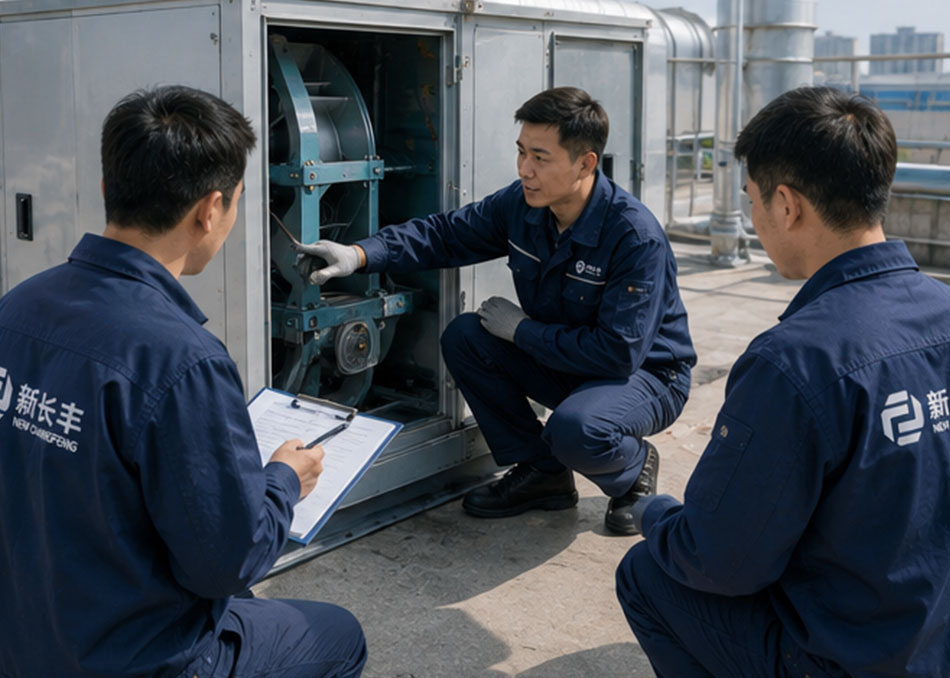
In small restaurants, the kitchen is often the hardest-working space in the building. Once the stove is lit, grease-laden fumes, steam, and heat are generated simultaneously. If the exhaust system cannot keep up, problems quickly spread: odors drift into the dining area, grease coats walls, smoke rolls back over the cooking surface, and staff work in uncomfortable heat. Among the many exhaust and makeup air devices available, axial fans are widely used in small restaurants for kitchen exhaust and makeup air because of their compact structure, flexible installation, and direct airflow. However, what determines whether an axial fan will run reliably over the long term is not the test run on installation day, but consistent day-to-day maintenance. Axial fans move air along the axis of the impeller; their structure is relatively simple, but that does not mean they are maintenance-free. Grease buildup, impeller imbalance, bearing lubrication loss, damper jamming, and electrical moisture damage can all reduce airflow, increase noise, and even burn out the motor. This article focuses on the small restaurant kitchen exhaust scenario, covering working principles, maintenance essentials, scheduling, common mistakes, and FAQs, to help kitchen operators manage the chain of exhaust purification and ventilation makeup air.
The Role and Operating Conditions of Axial Fans in Small Restaurant Kitchen Exhaust
A small restaurant's exhaust system typically consists of a stove hood, exhaust duct, purification device, and exhaust fan, while the makeup air system supplies fresh air to the kitchen to maintain airflow balance. Axial fans are commonly found at the exhaust end or the makeup air inlet: the former discharges purified air outdoors, while the latter brings outdoor air into the kitchen. Their axial airflow characteristics make duct layout more direct, which suits space-constrained street-front shops and community restaurants. In these settings, the fan must handle continuous operation during peak hours, high humidity, and grease-laden air. Over time, these conditions take a toll on fan performance.
Unlike large commercial kitchens, small restaurants often lack dedicated maintenance staff. The fan may be tucked away on a roof, in a ceiling void, or on a back wall, making it easy to forget. Yet the consequences of neglect are immediate: reduced exhaust capacity leads to smoke accumulation, increased noise disrupts neighbors, and motor failure can force the kitchen to close during peak business. Understanding the operating conditions helps operators appreciate why a proactive maintenance routine is essential.
Key Maintenance Points for Axial Fans in Kitchen Exhaust Applications
Effective axial fan maintenance in small restaurants focuses on several critical areas: cleaning, lubrication, inspection of mechanical components, and electrical safety. Because grease and moisture are ever-present, cleaning is the first line of defense. The impeller, casing, and protective grille should be cleaned regularly to prevent grease buildup that can cause imbalance and reduce airflow. Use appropriate degreasers and ensure thorough rinsing and drying to avoid corrosion. While cleaning, inspect the impeller for damage or deformation and check that all fasteners are tight.
Bearings require periodic lubrication according to the manufacturer's recommendations. In kitchen environments, heat and moisture can degrade lubricant more quickly, so the interval may need to be shortened. Listen for unusual noise during operation; a squealing or grinding sound often indicates bearing wear. Also check the damper (if fitted) for free movement—jammed louvers can block airflow or prevent proper closure when the fan is off. Electrical components, including wiring, terminal blocks, and capacitors, should be inspected for signs of moisture, corrosion, or loose connections. Ensure the motor's IP rating is suitable for the environment and that the fan is properly grounded.
Recommended Maintenance Schedule
Establishing a maintenance schedule is crucial for small restaurant operations. A practical approach is to divide tasks into daily, monthly, quarterly, and annual activities. Daily checks can be as simple as observing the fan's operation: listen for abnormal noise, feel for unusual vibration, and verify that airflow is consistent. These quick checks can be performed by kitchen staff at the start of each shift.
Monthly tasks include cleaning the impeller and casing, checking the damper operation, and inspecting the motor for overheating. Quarterly maintenance should cover bearing lubrication, tightening of electrical connections, and a thorough inspection of the fan mounting and duct connections for leaks. Annually, consider a comprehensive service that includes motor insulation testing, professional cleaning of the entire exhaust system, and replacement of worn components. Keep a maintenance log to track activities and identify recurring issues. Adjust the schedule based on usage intensity—a restaurant operating two shifts may need more frequent attention than one open only for dinner.
Common Maintenance Mistakes to Avoid
Many maintenance efforts fail because of avoidable mistakes. One common error is neglecting the fan until it fails—reactive maintenance often leads to more costly repairs and downtime. Another is using harsh chemicals that damage fan components or leave residue. Always follow the manufacturer's cleaning guidelines and use suitable cleaning agents. Over-lubricating bearings can be as harmful as under-lubricating; excess grease can attract dirt and cause overheating. Follow the recommended quantity and type of lubricant.
Another mistake is ignoring the entire exhaust system. A clean fan cannot compensate for clogged ducts or a saturated filter. Ensure that the purification device (such as an electrostatic precipitator or baffle filter) is cleaned regularly and that ductwork is inspected for grease accumulation. Also, avoid makeshift repairs—using incorrect parts or bypassing safety features can create hazards. When in doubt, consult a qualified technician.
FAQ
Q: How often should I clean the axial fan in my restaurant kitchen?
A: In most small restaurants, cleaning the impeller and casing monthly is a good starting point. However, if your kitchen operates long hours or produces heavy grease, you may need to clean every two weeks. Inspect the fan regularly and adjust the frequency based on visible buildup.
Q: What are the signs that the axial fan needs maintenance?
A: Watch for reduced exhaust airflow, increased noise or vibration, smoke rollback at the hood, and unusual odors. These signs indicate that the fan or the exhaust system requires attention. Addressing them early can prevent motor failure.
Q: Can I perform maintenance myself, or should I hire a professional?
A: Basic cleaning and visual inspections can be done by trained staff, but tasks involving electrical components, bearing replacement, or internal motor work should be handled by a qualified technician. Always disconnect power before cleaning or inspection.
Maintaining axial fans in small restaurant kitchen exhaust systems is not complicated, but it requires consistency. By understanding the operating conditions, focusing on key maintenance points, following a practical schedule, and avoiding common mistakes, you can ensure reliable exhaust and makeup air performance. This not only keeps the kitchen comfortable and compliant but also extends the life of your equipment. For more information on selecting and maintaining axial fans for commercial kitchen applications, explore our resources or contact our team for guidance.