
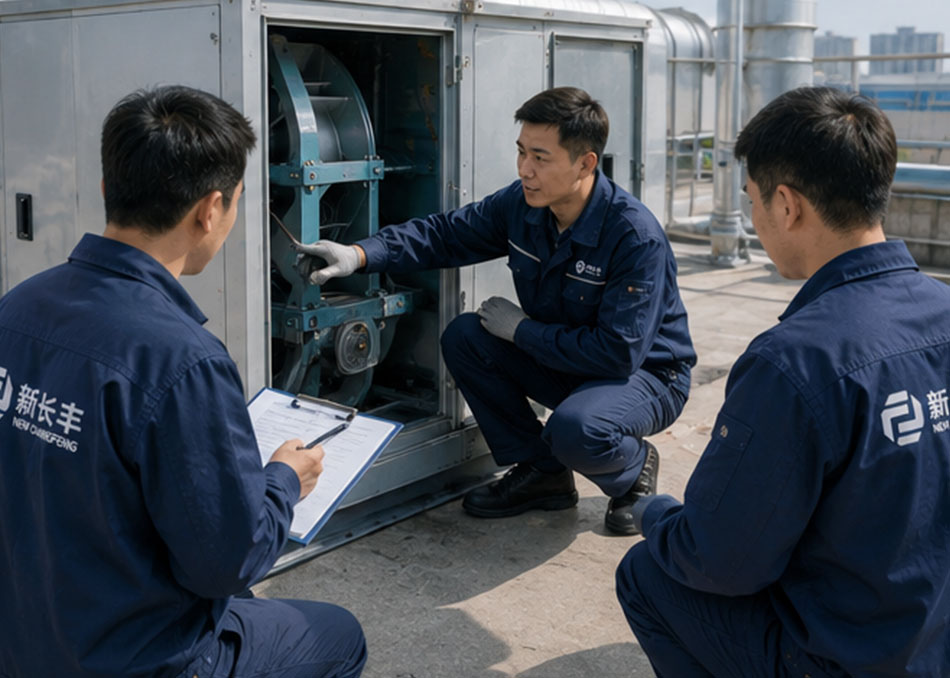
Cooling a hotel back-of-house kitchen is never as simple as hanging a split-system air conditioner on the wall. With open flames on the range, steam billowing from combi ovens and steamers, and oil-laden fumes rising from fryers — often all at the same time — the kitchen environment runs hotter and more humid than the outdoor air for most of the working day. Conventional comfort air conditioning struggles badly under these conditions: cooling capacity drops off, filters clog within weeks, and breakdown rates climb. That is why installing a commercial kitchen air conditioner should be treated as a systems engineering task built around one goal — cooling the people at their workstations, not just lowering the average room temperature. This guide walks through the practical installation logic for hotel kitchen cooling, from heat-source analysis and air distribution to equipment selection and installation details.
Start With the Workstation, Not the Floor Plan
The defining characteristic of a hotel kitchen is that heat sources are concentrated and fixed in place. The range section, the steaming and boiling section, the fryer section, and the dishwashing area each generate different amounts of sensible heat and convective steam. If you size cooling capacity by dividing total kitchen floor area evenly, you typically end up with the worst of both worlds: the cook still swelters at the wok station while the dry storage room is over-cooled and wasteful.
The correct sequence is to zone by workstation first, then determine supply air points. A practical division for most hotel kitchens looks like this:
- High-heat workstation zone: wok ranges, clay-pot stations, deep fryers — radiant and convective heat is intense and continuous.
- Medium-heat work zone: prep, plating (pass), and pastry areas — moderate heat gain, often with some steam exposure.
- Low-heat auxiliary zone: cold kitchen, dry store, corridors — cooling demand is minimal and should not be over-served.
Installation effort and cooling capacity should be concentrated in the high-heat workstation zone, directing cool air onto the operator's standing position rather than attempting to chill the entire room volume. At the range station, for example, the supply air outlet is best positioned to the operator's side-rear or overhead-rear, angled so the cool air sweeps across the body without blowing directly into the flame or disturbing the burner. This localized approach is far more energy-efficient than whole-room cooling and matches how professional kitchen ventilation is designed in practice.
Air Distribution: The Detail That Decides Whether It Works
Air distribution is where most kitchen cooling projects succeed or fail. A commercial kitchen air conditioner installed without regard to the interaction between supply air, exhaust hoods, and make-up air will fight the exhaust system — cool air gets pulled straight up into the hood before it ever reaches the cook.
Key principles for supply air organization in hotel kitchens:
- Coordinate with the exhaust hood: the exhaust hood captures heat and fume at the source; supply air should be delivered low and directed at the occupant, not dumped into the hood's capture zone.
- Use directed, low-velocity supply: high-velocity jets create draughts and disrupt burner flames; the goal is a gentle, directed airflow at the workstation.
- Maintain a slight negative pressure in the kitchen relative to the dining area so odors and grease do not migrate into guest spaces — this is also a requirement under good kitchen ventilation practice.
- Separate the make-up air path from the cooling air path where possible, so the air conditioner is not forced to condition the large volume of make-up air required by the exhaust hoods.
Because kitchen exhaust systems are governed by codes such as GB 51251 (smoke and heat exhaust) and GB 18483 (kitchen fume emission), the cooling design must be integrated with the exhaust and fume purification layout rather than added on afterward. In many hotel projects, the most effective configuration pairs a dedicated kitchen air conditioner with a matched make-up air unit, so the cooling equipment handles occupant comfort while the make-up unit handles pressure balance.
Equipment Selection for Hot, Humid, Greasy Kitchens
Standard comfort air conditioners are not built for kitchen duty. The combination of high ambient temperature, high humidity, and airborne grease degrades evaporator coils, blinds filters, and shortens compressor life. When specifying a commercial kitchen air conditioner for hotel back-of-house use, several selection criteria matter more than nominal capacity.
Heat resistance and wide operating envelope. The unit should be rated to operate reliably when return air is significantly above normal comfort conditions. A unit that performs well at 35°C may derate heavily at the temperatures found above a bank of woks.
Grease-tolerant filtration and easy cleaning. Filters must be removable and washable, and the coil should be accessible for periodic degreasing. In practice, maintenance access is as important as the equipment's rated performance — a unit that cannot be cleaned will lose capacity within a season.
Corrosion-resistant construction. Steam and cleaning chemicals accelerate corrosion; components and coatings should be selected accordingly.
Condensate management. High humidity means high condensate production. Drainage must be sized, trapped, and routed so it cannot back up or drip into food preparation areas.
Where the kitchen also requires fume treatment, it is common to combine the cooling installation with an electrostatic fume purification stage and a matched exhaust fan, ensuring the exhaust, purification, and cooling systems are hydraulically and electrically coordinated. Fan performance for the associated exhaust and make-up equipment should be verified according to GB/T 1236 (fan performance testing) and selected with attention to GB 19761 (fan energy efficiency) so the whole system does not become an energy liability.
Installation Details That Prevent Callbacks
Even correctly selected equipment fails if installation details are neglected. The following checklist reflects common failure points in hotel kitchen cooling projects:
- Mounting height and location: position the indoor unit so supply air reaches the workstation but does not blow into the exhaust hood or across open food.
- Condensate drainage: slope the drain line continuously, install a proper trap, and provide a cleanout; never rely on a short horizontal run that can pool water.
- Electrical protection: kitchen environments require appropriate IP-rated enclosures and protection against grease ingress and washdown water.
- Service access: leave sufficient clearance for filter removal, coil cleaning, and fan service; document the maintenance schedule for kitchen staff.
- Coordination with hood and make-up air: verify airflow balance after commissioning, not just at design stage.
- Noise control: kitchen staff work long shifts; excessive noise at the workstation is a genuine health and retention issue, so fan selection and mounting should consider sound levels.
A commissioning check should confirm that the cool air actually reaches the cook's position, that the exhaust hood still captures fume effectively, and that the kitchen remains at the intended pressure relative to adjacent spaces. Adjustments after the first week of operation are normal and should be planned for.
Frequently Asked Questions
Q: Can I just install a regular split-system air conditioner in a hotel kitchen?
A: It is possible but rarely advisable. Standard comfort units are not designed for the sustained high temperature, high humidity, and grease loading of a commercial kitchen. They tend to lose cooling capacity quickly, clog filters rapidly, and suffer higher failure rates. A commercial kitchen air conditioner designed for these conditions will perform more reliably over its service life, even if the initial cost is higher.
Q: Should the air conditioner cool the entire kitchen or only the workstations?
A: In most hotel kitchens, targeted workstation cooling is more effective and more energy-efficient. Heat sources are concentrated, so cooling the whole room evenly wastes capacity on areas that do not need it and still leaves the hottest stations uncomfortable. Directing cool air at the operator positions — especially the wok, fryer, and steaming stations — delivers better comfort per unit of energy.
Q: How does the kitchen exhaust hood affect air conditioner performance?
A: Significantly. Exhaust hoods remove large volumes of air, and if make-up air is not properly provided, the air conditioner's cool air can be pulled directly into the hood before reaching anyone. The cooling design must be coordinated with the exhaust and make-up air systems so that supply air is delivered at the workstation and the kitchen maintains the correct pressure balance. This is why installation should be planned as an integrated ventilation and cooling system, not as separate add-ons.
Q: What maintenance does a commercial kitchen air conditioner need?
A: Expect more frequent service than a comfort unit. Filters typically need cleaning or replacement on a short cycle, and the evaporator coil should be inspected and degreased periodically. Condensate drains must be checked for blockage. Establishing a written maintenance schedule with the kitchen manager — and ensuring service access was designed in from the start — is the most effective way to protect equipment life and cooling performance.
Summary
Cooling a hotel back-of-house kitchen is a workstation problem before it is an equipment problem. By zoning the kitchen by heat load, directing supply air at the people who need it, selecting equipment rated for hot, humid, greasy conditions, and coordinating the installation with the exhaust and make-up air systems, a commercial kitchen air conditioner can deliver reliable comfort where it matters most. For hotel operators and HVAC contractors planning a kitchen cooling project, working with a supplier experienced in commercial kitchen ventilation and cooling — and integrating the cooling design with fume purification and exhaust from the outset — is the surest route to a system that performs in real operating conditions. To discuss equipment selection for your hotel kitchen project, visit www.xcffj.com.