
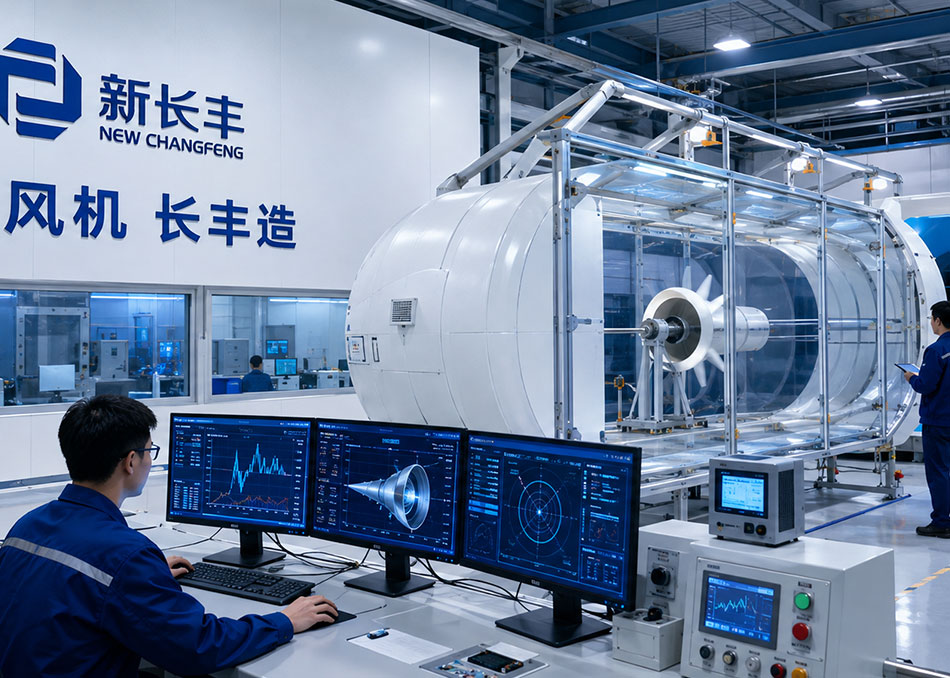
In ventilation and air exchange scenarios—factory workshops, commercial kitchens, warehouses, and logistics facilities—axial fans are a common choice for exhaust purification and supply air systems. Their compact structure, flexible installation, high airflow, and suitability for direct discharge through ducts or wall openings make them popular. However, many users treat axial fans as maintenance-free equipment that can run continuously once installed. Only when airflow drops, noise increases, impeller fouling occurs, the motor overheats, or the fan stops working do they realize the importance of maintenance. This article focuses on maintenance essentials for axial fans in ventilation and air exchange applications, covering both exhaust purification and supply air uses, and provides actionable inspection and maintenance recommendations.
1. Clarify the Role of Axial Fans in Ventilation and Air Exchange
Axial fans move air parallel to the fan axis, making them suitable for delivering large air volumes through relatively straight ducts or wall openings. In ventilation systems, they typically serve two functions: exhaust—removing residual heat, odors, and purified cooking fumes from the workshop to the outdoors; and supply—drawing fresh air into the room to balance airflow organization and prevent excessive negative pressure. Exhaust purification and supply air often work in tandem; relying solely on exhaust can lead to excessive negative pressure, difficulty opening doors, and backdraft from combustion equipment.
From a system perspective, axial fan maintenance goes beyond wiping the blades. It involves the impeller, motor, bearings, casing, protective grille, vibration-damping components, and electrical controls. Maintenance intervals should be determined by the operating environment: commercial kitchens have heavy cooking fumes with low dust but high stickiness; factory workshops may have dust, fibers, or corrosive gases; warehouses are relatively clean but may have high humidity. Regular inspections and adjustments based on actual conditions are essential.
2. Key Maintenance Points for Axial Fans
To ensure reliable operation and extend service life, establish a maintenance schedule that covers the following areas:
- Impeller and blades: Check for dust, oil, or debris buildup. Clean regularly with a soft brush and mild detergent. Inspect for cracks, deformation, or imbalance, and replace if damaged. Ensure the impeller rotates smoothly without obstruction.
- Motor and bearings: Listen for abnormal noise, check for overheating (using a temperature gauge or infrared thermometer), and verify that the motor current is within the rated value. Lubricate bearings according to the manufacturer's instructions (sealed bearings generally do not require additional lubrication).
- Casing and protective grille: Inspect for corrosion, loose fasteners, or deformation. Clean the grille to prevent blockage. Ensure the casing is properly grounded.
- Vibration-damping components: Check rubber pads or springs for aging or damage, and replace if necessary to reduce vibration and noise.
- Electrical connections: Verify that wiring is secure, insulation is intact, and control components function correctly. For variable frequency drives, check parameter settings and cooling.
- Duct and damper: Ensure ducts are free of leaks and blockages, and that dampers operate smoothly. For exhaust systems, check that purification equipment (e.g., electrostatic precipitators) is functioning and not causing excessive resistance.
In commercial kitchen exhaust systems, grease accumulation is a major concern. Clean the impeller and casing more frequently—at least monthly—and consider installing grease filters upstream. In dusty factory environments, check and clean the impeller weekly. Always disconnect power before maintenance and follow lockout/tagout procedures.
3. Troubleshooting Common Issues
When performance degrades, identify the root cause before taking action:
- Reduced airflow: Check for impeller fouling, duct blockage, damper position, or belt slippage (if belt-driven). Clean or adjust as needed.
- Excessive noise or vibration: Inspect impeller balance, bearing wear, loose mounting, or resonance. Tighten fasteners, replace bearings, or add vibration isolation.
- Motor overheating: Verify voltage and current, check for obstructed airflow around the motor, and ensure the motor is not overloaded. Clean cooling fins and ensure proper ventilation.
- Fan not starting: Check power supply, fuses, control circuits, and motor windings. For three-phase motors, verify phase sequence and absence of phase loss.
For exhaust systems with fume purification, also monitor the pressure drop across filters and clean or replace them as needed. Refer to standards such as GB/T 1236 for fan performance testing and GB 19761 for energy efficiency to ensure the fan operates within design parameters.
4. Seasonal and Long-Term Maintenance
In addition to routine checks, perform seasonal maintenance: before peak summer or winter, inspect and clean the entire system. For intermittent operation, run the fan periodically to prevent bearing seizure and dust accumulation. Keep maintenance records to track performance trends and plan replacements. When replacing components, use original parts or equivalent specifications to maintain balance and safety.
For supply air systems, ensure that intake louvers and filters are clean to maintain air quality. In areas with poor air quality, consider adding filtration. For exhaust systems in commercial kitchens, comply with GB 18483 for fume emission and GB 51251 for smoke and heat exhaust where applicable.
Frequently Asked Questions
Q: How often should I clean the axial fan impeller?
A: The frequency depends on the environment. In commercial kitchens with heavy grease, clean at least monthly. In dusty workshops, weekly inspections and cleaning may be necessary. In clean warehouses, quarterly cleaning is often sufficient. Always monitor airflow and noise as indicators.
Q: Can I adjust the fan speed to save energy?
A: Yes, if the fan is equipped with a variable frequency drive (VFD) or speed controller. Reducing speed can significantly cut energy use, but ensure that the airflow meets ventilation requirements. Avoid running at excessively low speeds that may cause motor overheating.
Q: What are the signs that the fan needs professional service?
A: Persistent abnormal noise, vibration, overheating, or a significant drop in airflow despite cleaning may indicate bearing failure, impeller damage, or motor issues. In such cases, contact a qualified technician. Do not attempt repairs unless you have proper training.
Q: How do I prevent negative pressure problems in supply and exhaust systems?
A: Balance exhaust and supply air volumes. Install adjustable dampers and controls to maintain slight positive pressure or neutral pressure. Consider a demand-controlled ventilation system that modulates fan speed based on sensors.
Proper maintenance of axial fans in ventilation and air exchange systems ensures reliable performance, energy efficiency, and a safe environment. For more information on selecting and maintaining axial fans for your specific application, visit www.xcffj.com or contact our technical team.