
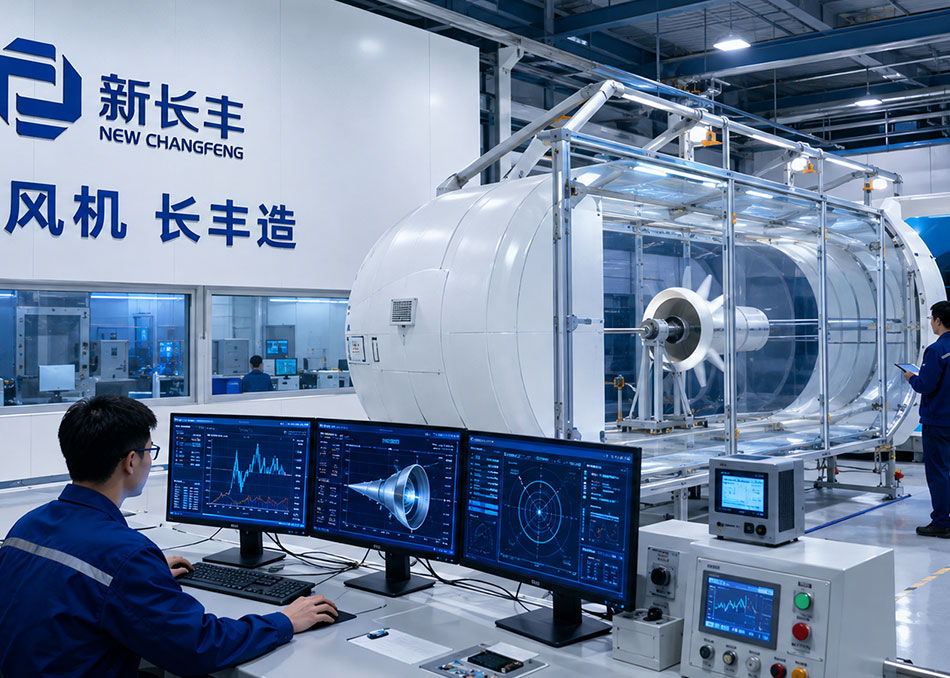
The negative pressure fan is a common device for whole-space air change in plants, workshops and warehouses. It forces air outdoors to create a pressure difference indoors, and outdoor air is drawn in through doors, windows or dedicated inlets. Its strength is moving a large airflow to exchange the whole space, but good results require the number of fans, the inlet area and the installation position to match.
Start sizing from space volume and air-change needs. First calculate the workshop's length, width and height to get the total volume, then choose a sensible air-change rate from staff density, equipment heat, odor and the production process. A general warehouse clearly differs from a hot production workshop, so no single formula applies. If the workshop also has welding smoke, dust or process exhaust, set up local capture first rather than relying on general air change to dilute pollutants.
Inlet area is an often-overlooked condition in negative pressure systems. After the fans exhaust a large airflow, if doors and inlets are too small, indoor negative pressure becomes excessive, actual airflow falls, and doors become hard to open with high-velocity air and noise at gaps. The inlet area should sit opposite the fans so air travels through the staff and heat-source zones before leaving. That builds a complete air path instead of a local short circuit.
Installation height and spacing also matter. Hot air tends to gather upward, so the exhaust position should be decided from the building structure and main heat sources. When several negative pressure fans are mounted side by side, avoid them interfering with each other and ensure the wall and brackets are strong enough. During operation, clean the louvers, blades and guards regularly, and check the motor, belts or drive parts to avoid airflow loss from dust buildup.
The Xin Changfeng site uses negative pressure fans for whole-space air change in plants, workshops and warehouses, and they can form a cooling plan with evaporative coolers and roof turbo vents. If the workshop's main problem is stuffiness, set up whole-space air change first; if staff need a clearer cooling feel, add evaporative-cooler spot supply. Treat the negative pressure fan as part of the air-organization system, not an isolated device, and large-space ventilation genuinely improves.