
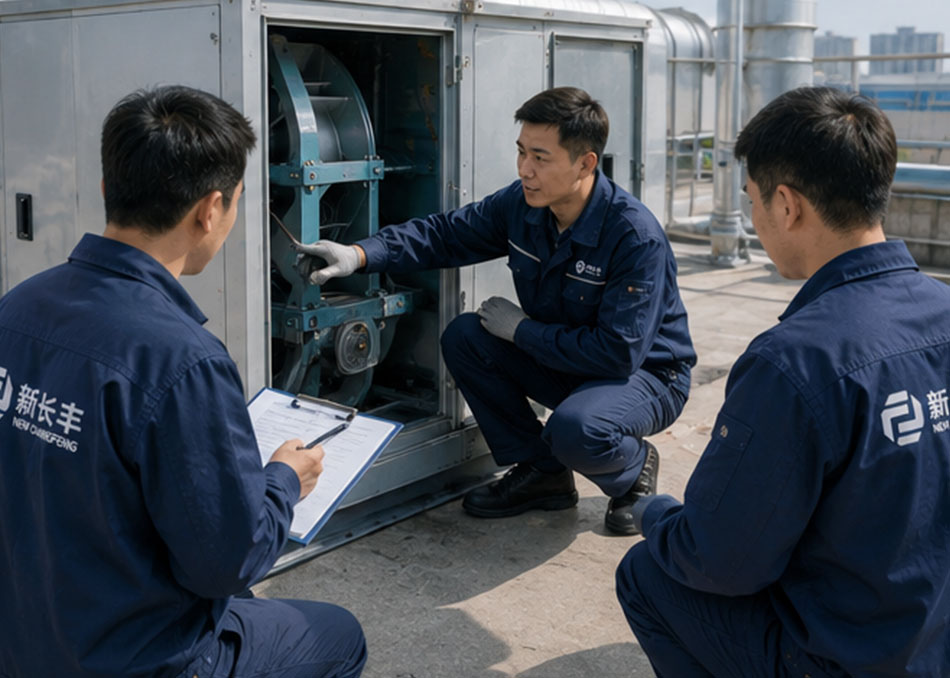
The energy-saving air cooler, often called an evaporative cooler, lowers the temperature of incoming air through water evaporation, then delivers a large volume of fresh air indoors. Its biggest difference from a conventional compressor air conditioner is that it continuously brings in outdoor fresh air rather than mainly recirculating indoor air. So in tall workshops, warehouses and open or semi-open production areas, the evaporative cooler often fits better.
This equipment especially suits large spaces with concentrated staff. For assembly workshops, hardware processing, packaging storage and logistics areas, making the whole space temperature-controlled with conventional AC can be very expensive in both investment and energy. An evaporative cooler can send cooled fresh air through ducts to occupied work zones, forming spot cooling that improves comfort while constantly diluting the stuffy air.
Note that evaporative cooling depends on outdoor humidity. The drier the air, the greater the evaporation potential; in humid weather, the cooling effect is reduced. So when buying, do not focus only on the advertised lowest outlet temperature — combine local climate with the actual goal. If a process demands strict constant temperature and humidity, an evaporative cooler cannot fully replace a central AC system.
System design must also solve the exhaust problem. After a large amount of fresh air enters the workshop, there must be a matching air outlet — open doors and windows, negative pressure fans or roof exhaust can establish the flow. If air is supplied but not exhausted, indoor pressure and humidity can rise and the air-change effect falls. The Xin Changfeng site puts evaporative coolers together with negative pressure fans and roof turbo vents in one factory ventilation system, precisely to form a complete supply-plus-exhaust path.
When choosing an energy-saving air cooler, provide the workshop area, ceiling height, staff positions, equipment heat, existing openings and the target cooling zone. Rather than simply asking how many square meters one unit covers, it is more valuable to first decide which stations need coverage, how much supply airflow is required, and where the air exits. A workshop cooling system designed this way balances ventilation, comfort and running cost.