
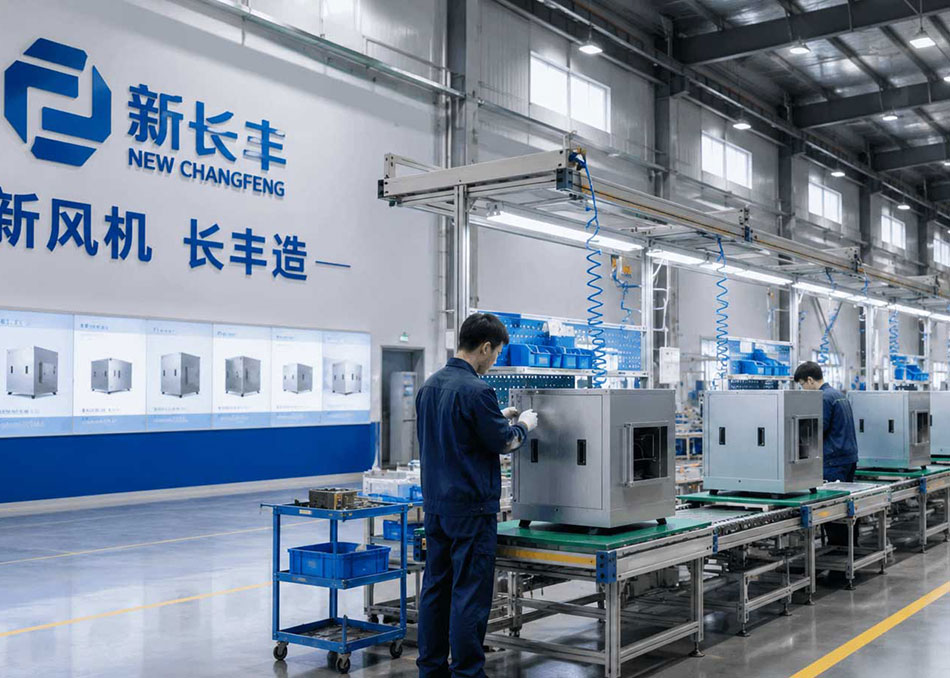
In busy canteen kitchens, fume problems are rarely solved by a single piece of equipment. When the stoves fire up, cooking fumes rise quickly. If the exhaust path is poorly designed or the purification equipment is mismatched, the kitchen becomes hot and stifling, or worse, fume leaks outdoors and triggers complaints. In a canteen fume purification system, the kitchen exhaust purifier captures and cleans the fume, while the negative pressure fan provides the driving force to maintain negative pressure and prevent backflow. How these two work together—and how the negative pressure fan is installed—determines the system's real performance. This article focuses on canteen fume purification, covering system composition, installation positions, duct connections, and commissioning points to help managers and engineers in factory canteens, school canteens, and hotel kitchens get it right.
1. Understand the System: Purifier and Negative Pressure Fan Have Distinct Roles
A typical canteen fume purification system follows a series arrangement: capture hood → exhaust duct → kitchen exhaust purifier → negative pressure fan → discharge outlet. Fume rises from the stove and is captured by the hood, then travels through the duct into the purifier. There, mechanical interception and electrostatic adsorption remove oil mist and particulate matter. Finally, the negative pressure fan draws the cleaned air outdoors.
The key point is that the purifier is a "treatment" device, while the negative pressure fan is a "power" device. They cannot replace each other. A common mistake during canteen retrofits is installing only a purifier without sufficient exhaust power—resulting in fume that cannot move through the duct, making the purifier useless. Alternatively, installing only a negative pressure fan allows untreated fume to discharge directly, which violates emission standards such as GB 18483 and leads to complaints and penalties.
Therefore, the first step in any canteen fume project is to calculate the required exhaust volume based on the number of stoves, cooking style, and hood dimensions. This ensures both the purifier and the fan are sized correctly for the job.
2. Choosing the Right Kitchen Exhaust Purifier
Not all purifiers are suitable for canteen use. Canteen cooking often involves high heat, heavy oil, and large volumes of fume with complex compositions. The purifier must handle continuous operation and resist grease buildup. Common technologies include mechanical baffle filters, electrostatic precipitators, and UV photolysis. For most canteens, a combination of mechanical and electrostatic stages offers reliable performance.
When selecting a purifier, consider the following:
- Fume volume and concentration: Match the purifier's rated airflow to the actual exhaust volume. Undersizing leads to poor purification; oversizing wastes energy.
- Purification efficiency: Look for equipment that meets or exceeds the emission limits in GB 18483. Efficiency should be verified by the manufacturer, not assumed.
- Maintenance access: Canteen purifiers require frequent cleaning. Choose models with easy-access filter panels, removable electrostatic cells, and oil collection trays.
- Safety features: Electrostatic purifiers should have interlock switches, overheat protection, and proper grounding to prevent fire hazards.
Remember that the purifier does not create airflow—it only cleans the air that passes through it. The negative pressure fan must be sized to overcome the resistance of the purifier, ductwork, and hood.
3. Negative Pressure Fan Installation: Location and Mounting
The negative pressure fan is typically installed at the end of the exhaust system, either on the roof, an exterior wall, or a dedicated fan room. Its job is to create negative pressure in the kitchen, ensuring fume flows from the hood to the outdoors and does not leak into adjacent spaces.
Installation location: For canteens, the fan should be placed as close to the discharge point as possible while minimizing duct length and bends. Avoid installing the fan before the purifier, as grease and particulates can clog and damage the fan. The correct sequence is purifier first, then fan. If space constraints force a different layout, consult a ventilation engineer.
Mounting considerations:
- Ensure the mounting surface is structurally sound and can support the fan's weight and vibration.
- Use anti-vibration mounts or spring isolators to reduce noise and vibration transmission to the building.
- For roof installations, provide a weatherproof curb and flashing to prevent water ingress.
- Maintain sufficient clearance around the fan for maintenance and airflow.
- Install a flexible duct connector between the fan and ductwork to isolate vibration.
In some canteens, multiple negative pressure fans are used in parallel to handle large exhaust volumes. In such cases, ensure balanced airflow and avoid recirculation between fans.
4. Ductwork and Electrical Connections
The ductwork connecting the hood, purifier, and fan is critical to system performance. Poor duct design increases resistance, reduces airflow, and causes grease accumulation.
Duct design guidelines:
- Keep duct runs as short and straight as possible. Every bend adds resistance.
- Use smooth, corrosion-resistant duct material, such as galvanized steel, with sealed joints to prevent grease leakage.
- Slope horizontal ducts slightly toward the hood or a grease trap to allow oil drainage.
- Provide access doors for cleaning at regular intervals, especially before and after the purifier and at duct bends.
- Size the duct according to the fan's airflow and the system's static pressure requirements. Undersized ducts increase velocity and noise; oversized ducts may cause grease deposition.
Electrical connections: The negative pressure fan must be wired according to local electrical codes. Use a dedicated circuit with proper overload protection. For three-phase fans, verify rotation direction before operation. All metal ductwork and the fan housing should be grounded. If the purifier uses electrostatic technology, ensure its power supply is interlocked with the fan so the purifier only operates when airflow is present.
5. Commissioning and Ongoing Maintenance
After installation, commissioning ensures the system works as intended. Start by checking that all components are securely installed and electrical connections are correct. Then, turn on the fan and observe airflow at the hood. Use a smoke test or anemometer to verify capture velocity. Adjust fan speed or balance dampers as needed.
Check the purifier's operation: electrostatic cells should be energized, and indicator lights should show normal status. Measure the pressure drop across the purifier; a significant increase over time indicates clogging and need for cleaning.
Regular maintenance is essential for canteen fume systems:
- Clean hood filters and grease trays daily or weekly, depending on usage.
- Clean electrostatic cells and mechanical filters according to the manufacturer's schedule—typically every one to three months.
- Inspect fan blades and motor for grease buildup and wear.
- Check ductwork for leaks, corrosion, and grease accumulation.
- Verify that the system maintains negative pressure in the kitchen, especially during peak cooking hours.
Neglecting maintenance leads to reduced airflow, higher energy consumption, and potential fire hazards. A well-maintained system not only complies with regulations but also provides a safer, more comfortable kitchen environment.
Frequently Asked Questions
Q: Can I install just a kitchen exhaust purifier without a negative pressure fan?
A: No. The purifier does not generate airflow; it only cleans the air passing through it. Without a negative pressure fan, fume cannot be drawn from the hood through the duct and purifier to the outdoors. The system would fail to capture and exhaust fume effectively.
Q: Where should the negative pressure fan be installed relative to the purifier?
A: The fan should be installed after the purifier, drawing air through the purifier and discharging it outdoors. This prevents grease and particulates from entering and damaging the fan. Installing the fan before the purifier can lead to clogging, reduced performance, and increased maintenance.
Q: How often should I clean the kitchen exhaust purifier in a canteen?
A: Cleaning frequency depends on cooking volume and grease production. In busy canteens, mechanical filters may need daily or weekly cleaning, while electrostatic cells typically require cleaning every one to three months. Always follow the manufacturer's recommendations and local regulations. Regular cleaning maintains purification efficiency and reduces fire risk.
Q: What are the signs that my negative pressure fan is undersized?
A: Common signs include fume escaping from the hood, slow exhaust, kitchen doors being hard to open (excessive negative pressure), and grease accumulating in the ductwork. If the fan cannot maintain capture velocity at the hood, it may be undersized or the duct system may have excessive resistance.
Designing an effective canteen fume purification system requires careful integration of the kitchen exhaust purifier and negative pressure fan. By understanding their roles, selecting the right equipment, and following proper installation and maintenance practices, you can ensure a clean, safe, and compliant kitchen environment. For more information on selecting and installing commercial kitchen ventilation equipment, visit www.xcffj.com.