
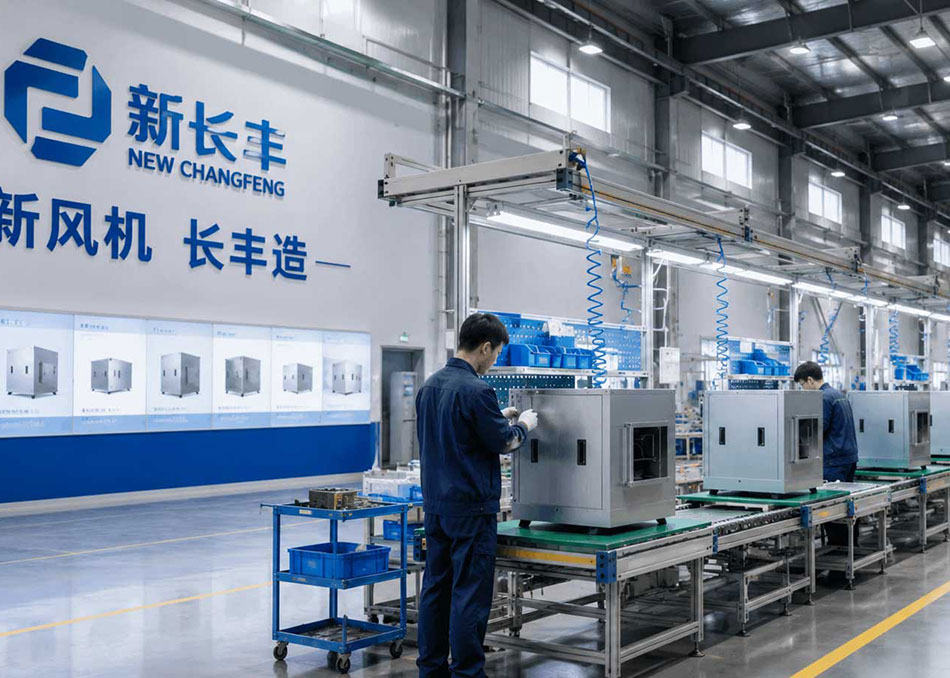
Internet cafes and commercial kitchens may seem like different worlds, but they share strikingly similar ventilation challenges: enclosed spaces, concentrated heat sources, high occupant density, and rapidly deteriorating air quality. In an internet cafe, dozens or even hundreds of computers run simultaneously, generating substantial heat, raising CO₂ levels, and trapping smoke and odors. In a kitchen, open flames constantly radiate heat, and cooking fumes mix with steam. If exhaust and makeup air are not balanced, excessive negative pressure can cause grease-laden air to leak into dining areas, incomplete combustion, and unbearable working conditions. The solutions for these two scenarios differ: internet cafes benefit from a cooling and makeup air strategy centered on water-cooled fresh air units, while kitchens must first get the negative pressure and makeup air balance right before selecting cooling equipment. This article focuses on both scenarios, with emphasis on how water-cooled fresh air units apply to internet cafe ventilation and cooling, and the key points for solving negative pressure and ventilation makeup air in kitchens.
Internet Cafe Ventilation and Cooling: Why Water-Cooled Fresh Air Units Are the Better Path
Internet cafes are typical high-density heat load environments. With dense occupancy and continuous equipment heat dissipation, doors and windows stay closed for long periods. If only recirculating air conditioners are used, indoor air is not exchanged, and stuffiness and odors accumulate. The traditional approach is to install exhaust fans or negative pressure fans to extract air outward, but extraction only removes hot air; the replacement air is still hot outdoor air. In summer, the cooling effect is limited, and a noticeable intrusion of hot air often forms at the entrance.
Water-cooled fresh air units work differently. They draw outdoor fresh air into the unit, cool it through water-cooled evaporative treatment, and then supply it indoors. At the same time, a well-designed supply and return air organization creates a slight positive pressure, allowing stale indoor air to exit through designated exhaust openings or gaps. This approach not only improves air quality but also effectively lowers the perceived temperature. Because evaporative cooling consumes less energy than traditional compression-based cooling, operating costs are lower—an important advantage for internet cafes that need ventilation for extended hours.
When selecting a water-cooled fresh air unit for an internet cafe, consider the following:
- Cooling capacity matching: Calculate the total heat load based on the number of computers, occupant density, and lighting. Do not oversize or undersize the unit.
- Air distribution: Use ducted supply outlets to deliver cool air directly to seating areas, avoiding short-circuiting. Return air should be located in hot zones to capture heat effectively.
- Fresh air ratio: Ensure a sufficient proportion of outdoor air to dilute CO₂ and odors, but not so much that it imposes an excessive cooling load.
- Noise control: Choose low-noise models, especially for internet cafes where a quiet environment is part of the customer experience.
- Maintenance access: Evaporative cooling pads and water systems require regular cleaning and maintenance; design for easy access.
By combining water-cooled fresh air units with a properly designed duct system, internet cafes can achieve continuous fresh air, lower indoor temperatures, and reduced energy consumption compared to conventional air conditioning alone.
Kitchen Negative Pressure: Solving the Root Cause Before Choosing Cooling Equipment
Commercial kitchens face a different set of challenges. The exhaust hood captures grease, smoke, and heat, but if the amount of air exhausted exceeds the makeup air supplied, the kitchen becomes negatively pressurized. This causes several problems: grease-laden air can leak into dining areas, doors become difficult to open, gas appliances may not burn efficiently, and staff experience drafts and discomfort. Therefore, the first step is to balance exhaust and makeup air.
The principle is straightforward: the makeup air volume should be slightly less than the exhaust air volume (typically 80–90% of exhaust) to maintain a slight negative pressure in the kitchen relative to adjacent areas. This prevents odors from escaping while ensuring adequate air for combustion and ventilation. Makeup air can be supplied through dedicated fresh air units, which may also provide cooling or heating for staff comfort. In summer, cooling the makeup air can significantly improve working conditions.
Key considerations for kitchen negative pressure and makeup air:
- Calculate exhaust volume accurately: Base it on hood dimensions, cooking equipment, and local codes. Over-exhausting wastes energy and creates excessive negative pressure.
- Design makeup air distribution: Supply air should be directed away from exhaust hoods to avoid disturbing capture efficiency. Typically, makeup air is introduced at low velocity near the floor or from ceiling diffusers positioned away from the hood.
- Use variable air volume: During off-peak hours, reduce exhaust and makeup air to save energy while maintaining balance.
- Integrate cooling: In hot climates, cooling the makeup air improves staff comfort and productivity. Water-cooled fresh air units or dedicated makeup air units with cooling coils can be used.
- Regular maintenance: Clean grease filters and ducts to maintain airflow and reduce fire risk.
Once the negative pressure and makeup air balance is achieved, selecting cooling equipment becomes a matter of matching capacity to the remaining heat load. For kitchens, evaporative cooling may not be suitable due to grease and humidity, so refrigerant-based or water-cooled units with appropriate filtration are often preferred.
Comparing Internet Cafe and Kitchen Ventilation Strategies
While both scenarios require ventilation, the priorities differ. Internet cafes focus on cooling and fresh air supply to maintain customer comfort and air quality. Kitchens prioritize exhaust capture and negative pressure control to ensure safety and prevent odor migration. Water-cooled fresh air units fit well in internet cafes because they provide cooled fresh air with low energy consumption. In kitchens, the same units can be used for makeup air cooling, but the primary design driver is the exhaust-makeup air balance.
Understanding these differences helps in selecting the right equipment and designing an effective system. For internet cafes, the goal is a slight positive pressure with cooled fresh air. For kitchens, a slight negative pressure with tempered makeup air is ideal. Both benefit from professional design and proper equipment selection.
Frequently Asked Questions
Q: Can water-cooled fresh air units replace traditional air conditioning in an internet cafe?
A: Water-cooled fresh air units can significantly reduce the cooling load by providing cooled fresh air, but they may not fully replace air conditioning in extremely hot and humid climates. They are most effective when used in conjunction with air conditioning or as a primary ventilation and cooling solution in moderate climates. The decision depends on the specific heat load, climate, and comfort requirements.
Q: How do I determine the right negative pressure for my kitchen?
A: The goal is a slight negative pressure, typically around -5 Pa to -10 Pa relative to adjacent areas. This can be verified by a pressure gauge or by observing door behavior: a door should close gently on its own but not be difficult to open. Adjust makeup air volume accordingly. Local codes may provide specific requirements.
Q: What maintenance do water-cooled fresh air units require?
A: Regular maintenance includes cleaning or replacing evaporative cooling pads, checking water quality and treating if necessary, cleaning the water tank and distribution system, and inspecting fans and motors. The frequency depends on usage and outdoor air quality. In dusty environments, more frequent cleaning is needed.
Q: Can I use a water-cooled fresh air unit for kitchen makeup air?
A: Yes, but it's important to ensure that the unit is designed to handle grease-laden air or that proper filtration is installed upstream. In many cases, a dedicated makeup air unit with cooling coil is more suitable for kitchens because it avoids the risk of grease clogging the evaporative pads. Consult with a ventilation engineer to select the appropriate equipment.
Conclusion
Whether you are running an internet cafe or a commercial kitchen, effective ventilation is essential for comfort, safety, and compliance. Water-cooled fresh air units offer an energy-efficient solution for internet cafe cooling and can also be applied to kitchen makeup air with proper design. For kitchens, solving negative pressure and makeup air balance is the critical first step. By understanding the unique requirements of each space and selecting the right equipment, you can create a healthier and more comfortable environment.
For expert advice on selecting water-cooled fresh air units and designing ventilation systems for internet cafes or commercial kitchens, contact XCFFJ today. Our team can help you choose the right equipment and optimize your ventilation strategy.