
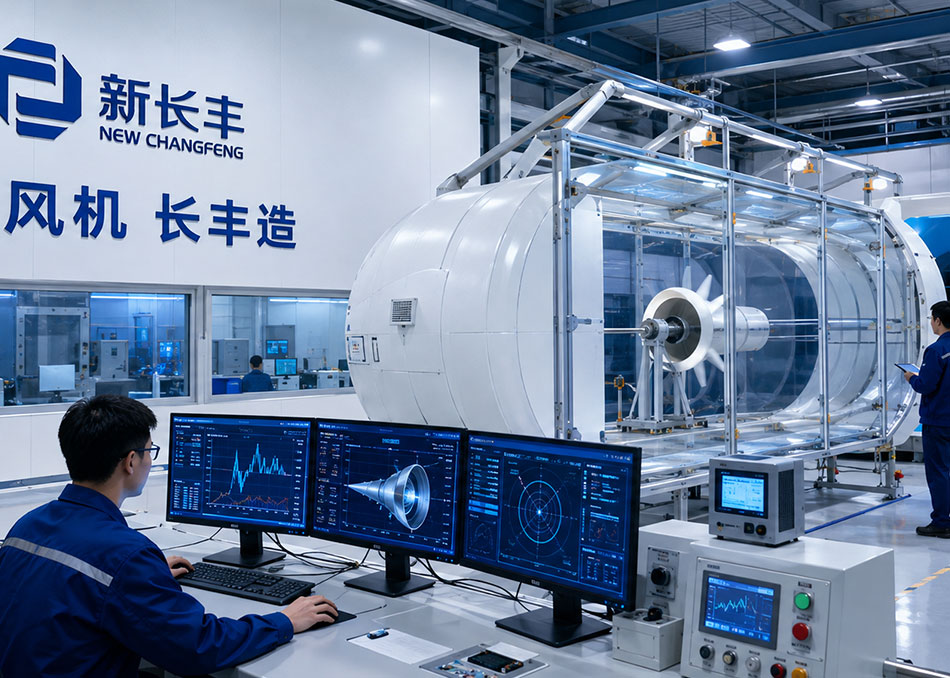
In commercial kitchens, ventilation problems often stem not from an inability to exhaust air, but from an inability to supply enough makeup air. After installing high-capacity exhaust hoods and fans, many kitchens experience worsened conditions: grease and smoke spillover, unstable burner flames, doors that are hard to open due to strong suction, and unbearable heat for staff. The common root cause is an imbalance where exhaust airflow exceeds supply airflow, creating excessive negative pressure. Water-cooled fresh air units, as dedicated kitchen cooling and ventilation equipment, address this core issue of negative pressure resolution and ventilation makeup air.
Where Does Kitchen Negative Pressure Come From?
Commercial kitchen exhaust systems typically consist of exhaust hoods, grease filters, and exhaust fans that remove cooking fumes, heat, and moisture. According to GB 18483, the emission standard for cooking fume, restaurants must treat and discharge fumes in compliance, making exhaust system operation times and airflow fairly rigid. The problem is that many projects focus only on the exhaust side while neglecting the makeup air side. When exhaust airflow significantly exceeds natural infiltration capacity, negative pressure develops.
The chain reactions are typical: capture efficiency at the hood drops, fumes spill from hood edges into dining or adjacent areas; insufficient air for combustion causes flames to flutter and burn incompletely, affecting cooking efficiency and safety; doors and windows become difficult to open, hindering movement and causing sewer odors to backflow; and in summer, already high kitchen temperatures lead to heat accumulation under negative pressure, making staff feel stuffy and reducing productivity.
The Role of Water-Cooled Fresh Air Units in Makeup Air
Water-cooled fresh air units are designed to supply tempered fresh air while cooling it through water evaporation, helping to balance exhaust and supply airflow. By introducing a controlled volume of outdoor air, they reduce negative pressure, improve hood capture efficiency, and stabilize combustion. Simultaneously, the evaporative cooling process lowers the incoming air temperature, providing a more comfortable working environment without the high energy consumption of traditional air conditioning.
These units are particularly suitable for kitchens with high heat loads and limited space. They can be integrated with existing exhaust systems to create a balanced ventilation strategy. Key benefits include:
- Negative pressure control: Supplying makeup air reduces the pressure differential, preventing fume spillage and door suction issues.
- Temperature reduction: Evaporative cooling can significantly lower supply air temperature, improving staff comfort.
- Energy efficiency: Water-cooled fresh air units consume less power than compressor-based cooling systems.
- Compliance support: Balanced ventilation helps maintain proper exhaust performance, aiding compliance with GB 18483.
Design and Installation Considerations
Proper sizing and placement are critical. The makeup air volume should be balanced with exhaust volume, typically aiming for a slight negative pressure (around 5-10 Pa) to prevent odor migration while avoiding excessive negative pressure. Units should be positioned to distribute fresh air evenly, avoiding direct drafts on cooking surfaces. Ductwork should be designed to minimize resistance and noise. Regular maintenance, including water quality management and filter cleaning, ensures consistent performance.
Incorporate controls that modulate supply air based on exhaust operation or pressure sensors. This demand-controlled ventilation optimizes energy use and maintains balanced conditions. Also, consider the unit's water consumption and drainage; proper water treatment prevents scaling and ensures efficient cooling.
Frequently Asked Questions
Q: Can a water-cooled fresh air unit replace a traditional air conditioner in the kitchen?
A: While it provides cooling, its primary function is ventilation and makeup air. It is not a direct replacement for air conditioning but can reduce the cooling load and improve comfort when used in conjunction with other cooling methods.
Q: How do I determine the right size for my kitchen?
A: Sizing depends on exhaust airflow, kitchen volume, and heat load. A professional HVAC engineer should calculate the required makeup air volume, typically 80-90% of exhaust volume, and select a unit that delivers that airflow with appropriate cooling capacity.
Q: What maintenance does a water-cooled fresh air unit require?
A: Regular maintenance includes cleaning or replacing filters, checking water quality and treating if necessary, inspecting the water distribution system, and ensuring the fan and motor are functioning correctly. Schedule maintenance quarterly or as recommended by the manufacturer.
In summary, water-cooled fresh air units offer an effective solution for commercial kitchens struggling with negative pressure and heat. By providing balanced makeup air and evaporative cooling, they enhance safety, comfort, and compliance. For tailored solutions, consult XCFFJ's experts to design a system that meets your kitchen's specific needs.