
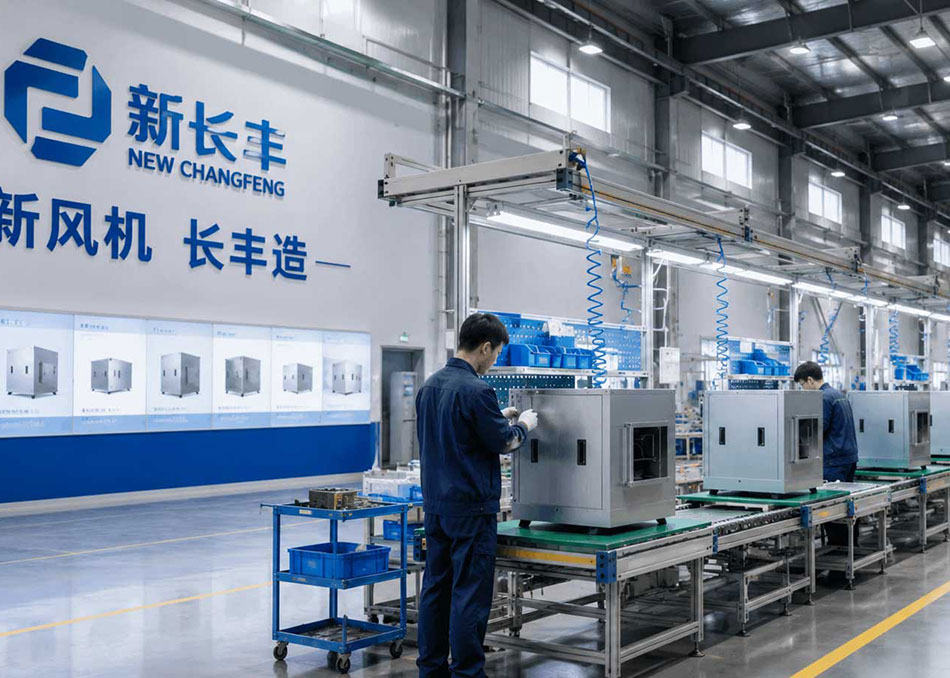
When a commercial kitchen's exhaust system kicks on, the hood, grease filter, and exhaust fan form a powerful extraction chain. If make-up air can't keep pace, the kitchen slides into pronounced negative pressure: door gaps whistle, sliding doors become hard to open, cooking fumes back-draft into the dining room, gas burners starve for oxygen, and hood capture efficiency drops. The fix isn't simply adding more exhaust capacity—it's establishing a controlled make-up air pathway. A water-cooled fresh air unit fills exactly that role, delivering cooled, filtered outdoor air while balancing exhaust volume through directed supply. And for the system to stay stable long-term, equipment maintenance must be managed alongside negative-pressure commissioning.
Where Kitchen Negative Pressure Comes From—and Why Water-Cooled Fresh Air Units Are the Make-Up Air Workhorse
Negative pressure in a kitchen is fundamentally an imbalance between exhaust volume and make-up air volume. The exhaust side consists of hoods, exhaust fans, and fume purifiers; the passive make-up side consists of door and window gaps, pass-through openings, and natural infiltration. Passive make-up paths are uncontrolled and high-resistance, which often leaves hood edge capture velocity too low and allows fumes to spill into the room.
Per basic ventilation engineering principles, make-up air volume should be reasonably matched to exhaust volume so the kitchen maintains slight negative pressure rather than strong negative pressure—preventing fume migration while still supplying the fresh air needed by combustion equipment and staff. A water-cooled fresh air unit combines supply air with evaporative cooling, delivering treated air into the kitchen's make-up zone through ductwork or directed supply outlets. Compared with an ordinary supply fan, it can lower supply air temperature during hot summer periods, avoiding the awkward situation where make-up air makes the kitchen hotter, while positive-pressure supply counteracts the exhaust side.
How the Water-Cooled Fresh Air Unit Balances Make-Up Air and Negative Pressure
The unit draws in outdoor air, passes it through evaporative cooling media, and supplies it to targeted zones—typically near the cooking line or along the make-up air path toward the hood. Because the supply is directed rather than diffuse, it can offset exhaust volume locally without creating uncomfortable drafts on staff or disrupting burner flames.
Commissioning should focus on three variables:
- Supply-to-exhaust ratio: Target slight negative pressure (typically a small negative differential relative to outdoors) rather than deep negative pressure, so fumes stay contained without starving combustion appliances.
- Supply air temperature: In summer, evaporative cooling reduces the supply temperature so make-up air doesn't add heat load to an already hot kitchen.
- Supply air distribution: Directed outlets should feed the breathing zone and hood capture zone without blowing directly onto open flames or prep surfaces.
Reference standards such as GB/T 1236 for fan performance testing and GB 19761 for fan energy efficiency provide a basis for verifying that the fan inside the unit performs as rated. For kitchens with grease-laden air, GB 18483 kitchen fume emission limits inform the overall exhaust and purification design that the make-up air system must complement.
Maintenance That Keeps Negative-Pressure Control Working
A water-cooled fresh air unit that isn't maintained will drift out of balance: clogged cooling pads reduce airflow, dirty filters raise resistance, and a slipping belt or worn bearing changes fan output. Any of these can quietly undo the negative-pressure tuning you commissioned. Maintenance should therefore be scheduled alongside negative-pressure checks, not treated as a separate task.
- Cooling media and water system: Inspect pads for scale, algae, and debris; clean or replace per manufacturer guidance; check water distribution and drainage to prevent standing water.
- Filters: Clean or replace on a schedule matched to kitchen grease and dust loads; record pressure drop to catch clogging early.
- Fan and drive: Check belt tension, bearing condition, and vibration; verify motor current against nameplate values.
- Cabinet and ductwork: Look for grease buildup, corrosion, and air leaks at joints; seal gaps that undermine directed supply.
- Controls and dampers: Confirm damper actuators move freely and that supply volume tracks exhaust operation, especially during partial-load periods.
Keep a simple log of supply airflow checks, filter changes, and negative-pressure readings. Trends reveal problems before staff notice door whistling or fume spillover.
Integrating Make-Up Air with the Broader Kitchen Ventilation Strategy
The water-cooled fresh air unit is most effective as part of a coordinated system. Exhaust hoods, grease filters, and fume purifiers handle capture and cleaning; the fresh air unit handles balanced, cooled make-up air. In buildings with fire-rated ventilation, smoke and heat exhaust provisions under GB 51251 should be coordinated with the kitchen make-up air design so that fire-mode operation doesn't conflict with normal negative-pressure control.
For school canteens, hotel kitchens, and central kitchens in warehouse logistics and food-service facilities, this combination supports consistent hood capture, better burner performance, and more comfortable working conditions. It also reduces the common complaint that the dining area smells of cooking fumes—a symptom of uncontrolled negative pressure pulling air the wrong way.
FAQ
Q: Why does my kitchen door become hard to open when the exhaust fan runs?
A: That's a classic sign of strong negative pressure. The exhaust system is removing more air than the make-up path can supply, so the room pulls air through every gap. A properly sized and commissioned water-cooled fresh air unit adds controlled make-up air, bringing the kitchen back to slight negative pressure and relieving the door-pull effect.
Q: Can a water-cooled fresh air unit replace a regular supply fan?
A: In hot climates or during summer peaks, it offers an advantage because evaporative cooling lowers the supply air temperature, so make-up air doesn't overheat the kitchen. The right choice depends on your climate, kitchen layout, and exhaust volume; the unit should be selected to match the exhaust system rather than treated as a drop-in swap.
Q: How often should the unit be maintained?
A: Follow the manufacturer's schedule, but in grease-heavy commercial kitchens, filters and cooling media typically need more frequent attention than in clean environments. Pair maintenance visits with negative-pressure checks so airflow drift is caught early.
Q: Will make-up air blow out the burner flames?
A: Not if supply outlets are positioned and directed correctly. Supply should feed the breathing zone and hood capture area without direct high-velocity discharge onto cooking surfaces. Commissioning should verify flame stability and hood capture after balancing.
Negative pressure in a commercial kitchen is a balancing problem, not just an exhaust problem. A water-cooled fresh air unit supplies cooled, directed make-up air that keeps the kitchen at slight negative pressure—containing fumes, supporting combustion, and improving comfort. Pair it with disciplined maintenance and periodic rebalancing, and the system keeps performing through every service peak. To discuss make-up air sizing and equipment selection for your kitchen, contact XCFFJ's ventilation team.