
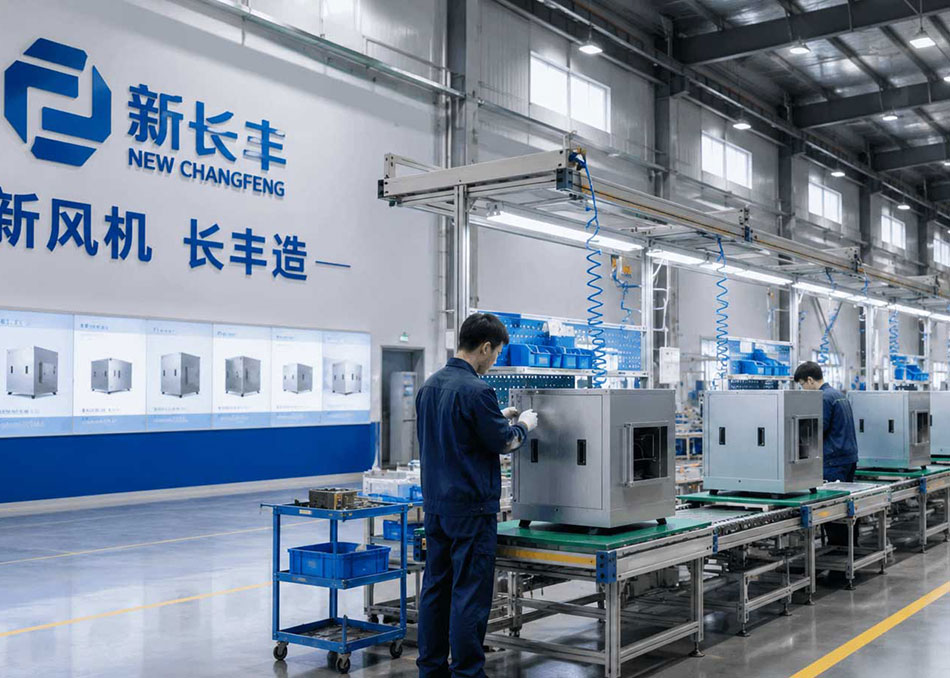
In commercial kitchens, the exhaust system is the hidden lifeline that keeps the back-of-house running. When cooking fumes cannot escape, the cooking line heats up fast, working conditions deteriorate, and grease-laden air lingers. If exhaust volume is too high or makeup air is insufficient, burners become unstable, smoke backdrafts into the kitchen, and ductwork vibrates. Many operators focus on ranges and purifiers but overlook the fan—the heart of the system. Cabinet centrifugal fans, with their compact design, moderate pressure capability, and controllable noise, have become a common choice for kitchen exhaust and makeup air. This guide covers key selection points for applying cabinet centrifugal fans in commercial kitchen exhaust.
Why Cabinet Centrifugal Fans Suit Commercial Kitchen Exhaust
Commercial kitchen exhaust differs from general industrial ventilation: fumes are hot, carry oil mist, and have strong odors. Duct runs are often long with multiple bends. Axial fans have limited static pressure and struggle when facing long ducts and the resistance of purification equipment. Centrifugal fans, by contrast, use impeller work to maintain stable airflow against higher resistance, making them better suited to complex kitchen ductwork.
A cabinet centrifugal fan integrates the impeller, motor, and housing. The inner walls often include sound attenuation and insulation, keeping noise relatively contained. The rectangular cabinet shape simplifies installation in ceiling voids, plant rooms, or on rooftops. In a commercial kitchen exhaust purification system, it can serve as the main exhaust fan or handle makeup air and fresh air supply, forming a complete loop of exhaust purification and ventilation makeup.
Key Selection Factors for Kitchen Exhaust Applications
Selecting the right fan requires balancing airflow, static pressure, noise, and grease resistance. The goal is to match the fan to the system resistance while maintaining acceptable noise and energy use.
- Airflow and static pressure: Calculate total system resistance from hoods, ductwork, elbows, and the fume purifier. Choose a fan whose performance curve intersects the system curve near its best efficiency point. Avoid oversizing, which wastes energy and can cause noise.
- Grease and heat resistance: Kitchen exhaust contains grease and heat. Motors should be positioned out of the airstream or protected. Fans should be easy to clean and drain. Consider models designed for grease-laden air.
- Noise control: Kitchen staff and nearby spaces are sensitive to noise. Cabinet fans with acoustic insulation help. Also consider vibration isolation and flexible duct connectors.
- Makeup air balance: Exhaust alone can create negative pressure, causing doors to be hard to open and burners to starve. A dedicated makeup air fan or unit should be sized to replace most of the exhausted air, ideally with slight negative pressure to contain odors.
- Code compliance: In many regions, kitchen exhaust systems must meet fire safety and emission standards. Refer to local codes and standards such as GB 18483 for fume emission and GB 51251 for smoke exhaust where applicable.
Integrating Exhaust Purification and Makeup Air
A well-designed kitchen ventilation system treats exhaust and makeup air as one. The exhaust fan pulls air through hood filters and a fume purifier—often electrostatic or UV-based—before discharging outdoors. The makeup air unit supplies filtered, conditioned air to replace what is exhausted, improving comfort and combustion stability.
Cabinet centrifugal fans can serve both sides. On the exhaust side, they handle the resistance of long ducts and purification equipment. On the makeup side, they deliver fresh air, sometimes through a water-cooled or evaporative cooling unit for temperature control. This integrated approach reduces energy waste and ensures consistent kitchen pressure.
Installation and Maintenance Best Practices
Proper installation extends fan life and maintains performance. Mount fans on vibration isolators, use flexible connectors, and ensure ductwork is properly sealed. For grease-laden exhaust, provide access doors for cleaning and drainage. Regular maintenance—cleaning impellers, checking belts and bearings, and inspecting motor condition—prevents imbalance and failure.
Energy efficiency matters. Fans compliant with GB 19761 (fan energy efficiency) can reduce operating costs. Variable frequency drives (VFDs) allow airflow to match demand, saving energy during off-peak hours. However, ensure the fan can operate safely at reduced speeds without grease buildup or condensation issues.
Frequently Asked Questions
Q: Can a cabinet centrifugal fan be used for both exhaust and makeup air?
A: Yes. The same fan model can often serve both roles, but selection must account for different air conditions. Exhaust air is hot and greasy; makeup air is typically cooler and cleaner. Choose materials and motor placement accordingly. For makeup air, consider filtration and possibly heating or cooling.
Q: How do I know what static pressure my kitchen exhaust system needs?
A: Calculate pressure losses from the hood, duct length and fittings, the fume purifier, and discharge. Use duct sizing software or consult a ventilation engineer. Do not guess—undersized fans fail to exhaust, oversized fans waste energy and create noise.
Q: What about noise? My kitchen is already loud.
A: Cabinet centrifugal fans with acoustic insulation help, but system design matters more. Avoid sharp elbows, use smooth ductwork, and ensure the fan operates near its best efficiency point. Install vibration isolators and flexible connectors. If noise remains an issue, consider a silencer or locating the fan away from the kitchen.
Q: How often should I clean the fan?
A: In grease-heavy kitchens, inspect monthly and clean as needed. Grease buildup can unbalance the impeller, reduce airflow, and create fire risk. Establish a maintenance schedule based on your cooking volume and type.
Selecting the right cabinet centrifugal fan for commercial kitchen exhaust is about matching performance to system resistance while managing noise, grease, and energy. By considering exhaust and makeup air together, you create a safer, more comfortable kitchen. For specific guidance on cabinet centrifugal fans and complete kitchen ventilation solutions, consult a qualified supplier who understands commercial kitchen demands.