
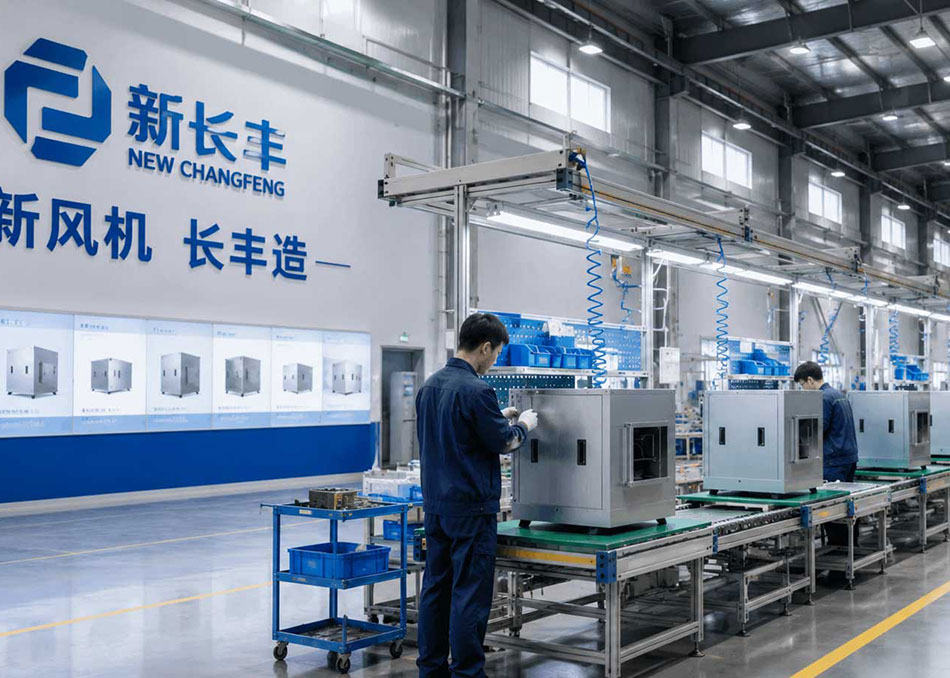
Commercial kitchens are notorious for heat, grease, and smoke, but the root cause of poor exhaust often isn't an undersized exhaust fan—it's improperly designed make-up air. When powerful exhaust systems run without adequate replacement air, the kitchen develops a strong negative pressure. This leads to doors that are hard to open, grease-laden air backdrafting into dining areas, flames pulled away from burners, and reduced exhaust efficiency. Meanwhile, factory workshops face similar challenges with heat and poor air quality. This article explains the causes of negative pressure in commercial kitchens, how water-cooled fresh air units provide the correct make-up air solution, and offers practical selection guidance for industrial cooling equipment.
Why Make-Up Air Is Essential in Commercial Kitchens
Commercial kitchens typically rely on powerful exhaust systems—grease hoods, exhaust fans, and pollution control units—that extract large volumes of air. According to fundamental ventilation principles, the volume of exhaust air must be balanced by an equal volume of make-up air; otherwise, the indoor static pressure drops below outdoor pressure, creating negative pressure. The consequences are immediate: make-up air enters only through uncontrolled paths such as door gaps, floor drains, and flue connections, leading to chaotic airflow patterns. Grease and smoke can easily escape into dining areas, and the capture efficiency of exhaust hoods diminishes significantly.
Industry standards provide clear requirements for make-up air. China's GB 18483 "Emission Standard of Cooking Fume" sets limits on fume emission and purification, while GB 51251 "Technical Standard for Smoke Control and Exhaust Systems in Buildings" offers design guidelines for smoke exhaust and make-up air systems. In practice, kitchen make-up air volume should closely match exhaust volume—typically slightly less to maintain a slight negative pressure. This prevents grease migration while avoiding excessive negative pressure that could affect combustion appliances and personnel comfort.
The Role of Water-Cooled Fresh Air Units in Kitchen Make-Up Air
A water-cooled fresh air unit is specifically designed to address the unique challenges of commercial kitchen make-up air. Unlike simple supply fans that bring in untreated outdoor air, these units combine cooling, filtration, and precise airflow control. The water-cooled design uses a water coil to cool incoming air, reducing the temperature of the make-up air before it enters the kitchen. This is particularly important in hot climates or during summer months when outdoor air can be extremely warm, adding to kitchen heat loads.
By supplying cooled, filtered air directly to the kitchen, water-cooled fresh air units help maintain a comfortable working environment while balancing exhaust volumes. They can be integrated with the exhaust system controls to modulate make-up air based on exhaust demand, ensuring optimal pressure balance. This not only improves grease capture efficiency but also reduces the risk of negative pressure-related issues such as backdrafts and flame distortion.
Key Selection Criteria for Kitchen Make-Up Air Units
Choosing the right water-cooled fresh air unit requires careful consideration of several factors:
- Airflow Capacity: Match the unit's airflow to the kitchen's exhaust volume, typically 80–90% of exhaust capacity to maintain slight negative pressure.
- Cooling Capacity: Select a unit with sufficient cooling coil capacity to handle local climate conditions and desired supply air temperature.
- Filtration: Ensure the unit includes appropriate filters (e.g., EU4 or higher) to remove outdoor dust and pollutants before air enters the kitchen.
- Control Integration: Look for units that can interface with exhaust fan controls for automatic modulation of make-up air.
- Energy Efficiency: Consider fan energy efficiency in accordance with GB 19761 and choose units with high-efficiency motors and optimized airflow paths.
- Noise Levels: Select low-noise models to avoid adding to kitchen noise pollution.
Proper sizing and selection are critical. Undersized units will fail to relieve negative pressure, while oversized units may create positive pressure, causing odors to migrate into dining areas. Consulting with a ventilation engineer is recommended to perform a detailed load calculation and pressure balance analysis.
Industrial Cooling Equipment Recommendations for Factories
While commercial kitchens require specialized make-up air solutions, factories and workshops face similar ventilation challenges. High temperatures, heat generated by machinery, and poor air circulation can lead to worker discomfort and reduced productivity. For industrial spaces, a combination of ventilation and cooling equipment is often the best approach.
Evaporative air coolers are an energy-efficient option for large spaces, using water evaporation to cool air while providing high airflow. Negative pressure fans can help exhaust hot air and contaminants, while axial fans or roof turbo ventilators can improve general air circulation. For precise temperature control, consider water-cooled fresh air units similar to those used in kitchens, which can supply cooled fresh air directly to work areas. When selecting equipment, refer to GB/T 1236 for fan performance testing and GB 19761 for energy efficiency to ensure reliable performance.
Frequently Asked Questions
Q: What are the signs that my commercial kitchen has a negative pressure problem?
A: Common signs include difficulty opening doors to the outside, grease and smoke drifting into the dining area, flames on gas burners being pulled away from the burner heads, and exhaust hoods not capturing smoke effectively. If you notice these issues, it's likely that your make-up air is insufficient or poorly distributed.
Q: Can I simply open a window to provide make-up air?
A: While opening a window provides some make-up air, it is uncontrolled and often inadequate. It can also introduce unconditioned air (hot, cold, or polluted) and create drafts. A dedicated make-up air unit, such as a water-cooled fresh air unit, ensures filtered, tempered air is supplied in the right quantity and location to maintain proper pressure balance and comfort.
Q: How do I determine the right size of water-cooled fresh air unit for my kitchen?
A: The unit should be sized based on your exhaust airflow. Typically, make-up air volume should be 80–90% of exhaust volume. However, other factors such as kitchen layout, hood design, and local climate affect the final selection. It's best to consult a ventilation professional who can perform a proper load calculation and recommend a suitable model.
Q: Are water-cooled fresh air units suitable for year-round use?
A: Yes. In cooler weather, the cooling function can be bypassed or modulated, allowing the unit to supply fresh, filtered air without unnecessary cooling. Many models offer variable speed fans and adjustable cooling to adapt to seasonal changes, ensuring energy efficiency and comfort throughout the year.
Proper make-up air is essential for a safe, efficient, and comfortable commercial kitchen. Water-cooled fresh air units provide a reliable solution to negative pressure, grease migration, and heat stress. For factory environments, a tailored combination of ventilation and cooling equipment can similarly enhance working conditions. To explore the right equipment for your project, visit www.xcffj.com or contact our technical team for personalized recommendations.