
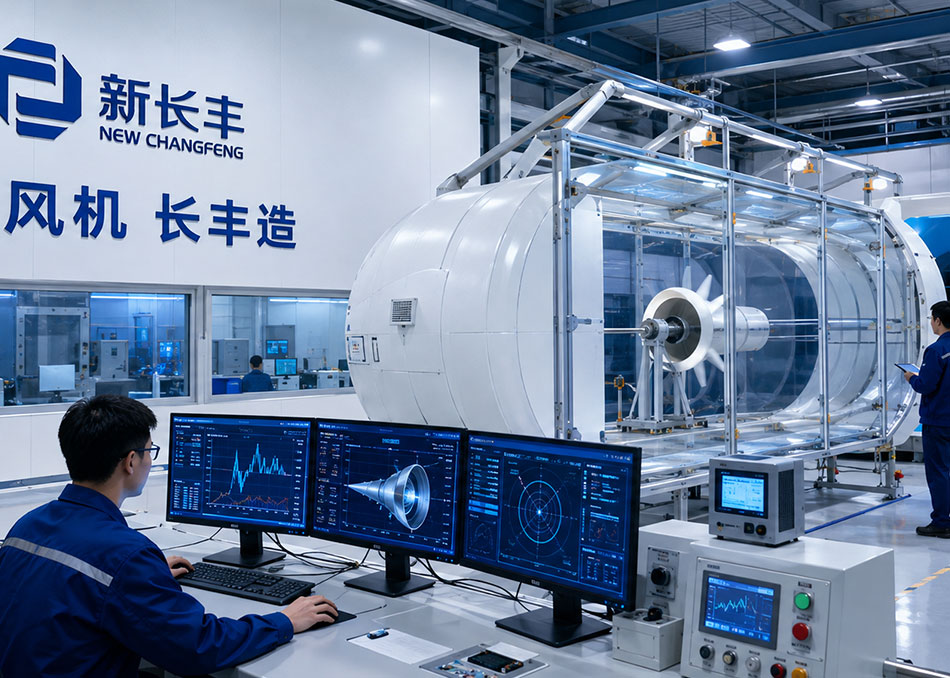
In commercial kitchens, unbearable heat, grease-laden air spilling into dining areas, doors that stick shut from suction, and exhaust hoods that seem to underperform are common complaints. More often than not, the root cause isn't an undersized exhaust fan—it's inadequate make-up air. Many operators focus exclusively on the exhaust side, neglecting the supply side, which leads to excessive negative pressure. Even the most powerful exhaust system cannot perform effectively under such conditions. The water-cooled fresh air unit is a key solution: it supplies fresh outdoor air while simultaneously cooling it through evaporative processes, balancing pressure and improving the kitchen environment. This article explains the principles, selection, and implementation of negative pressure control and ventilation make-up air in commercial kitchens.
Why Do Commercial Kitchens Develop Negative Pressure?
When an exhaust system operates, hoods and exhaust fans continuously draw air out of the kitchen. Without an equivalent supply of make-up air, indoor pressure drops below outdoor pressure, creating negative pressure. While some negative pressure is normal, excessive negative pressure causes a cascade of problems: reduced hood capture efficiency, grease and odors spreading around cooking stations, infiltration of dust and odors through door gaps and floor drains, incomplete gas combustion, and occupant discomfort.
According to fundamental ventilation engineering principles, exhaust and make-up air volumes should be dynamically balanced. Relevant standards and codes (such as GB 51251 for smoke and heat exhaust, and local building codes) specify make-up air ratios, pathways, and airflow organization for commercial kitchens. In practice, make-up air should cover most of the exhaust volume and be directed near cooking zones to avoid short-circuiting directly into the hood. When make-up air is insufficient, the actual exhaust capacity falls significantly below the rated performance—this is why many kitchens find their equipment seemingly underperforms.
Therefore, solving negative pressure starts with proper make-up air design, not simply adding more exhaust power. A water-cooled fresh air unit addresses both the volume and temperature aspects of make-up air, making it an efficient choice for kitchen ventilation.
How Water-Cooled Fresh Air Units Work for Kitchen Make-Up Air
A water-cooled fresh air unit combines ventilation and evaporative cooling in one device. It draws in outdoor fresh air, passes it through an evaporative cooling module (typically using a water-soaked cooling pad or spray system), and supplies cooled, filtered air into the kitchen. The evaporative process reduces the air temperature without the high energy consumption of traditional air conditioning, while also providing a large volume of make-up air to balance negative pressure.
Key benefits for kitchen applications include:
- Negative pressure control: By supplying a sufficient volume of make-up air, the unit helps maintain a slight negative pressure (relative to adjacent areas) without excessive suction, ensuring proper exhaust hood operation and preventing grease migration.
- Temperature reduction: Evaporative cooling can lower supply air temperature significantly, improving comfort in hot kitchens and reducing heat stress on staff.
- Energy efficiency: Compared to refrigerated make-up air units, water-cooled fresh air units consume less energy, aligning with GB 19761 fan energy efficiency requirements when equipped with high-efficiency centrifugal fans.
- Air quality: Multi-stage filtration (often including primary and intermediate filters) removes dust and particulates, contributing to better indoor air quality.
It's important to note that the cooling effect depends on ambient wet-bulb temperature; in humid climates, the temperature drop may be less pronounced. However, the primary function—providing balanced make-up air—remains effective regardless of climate.
Selecting and Sizing a Water-Cooled Fresh Air Unit
Proper selection is critical to solving negative pressure without over- or under-ventilating. The following steps are recommended:
- Determine exhaust volume: Calculate the total exhaust airflow from all hoods and exhaust fans, referring to GB/T 1236 for fan performance testing and local codes for kitchen exhaust rates.
- Establish make-up air ratio: Typically, make-up air should be 80–90% of exhaust volume, with the remainder coming from infiltration. This maintains a slight negative pressure to contain odors while ensuring efficient exhaust.
- Assess cooling load: Consider kitchen heat sources (cooking equipment, lighting, occupants) and desired temperature reduction. Evaporative cooling performance varies with climate; consult performance data for your region.
- Select fan and motor: Choose a unit with a centrifugal fan that meets the required airflow and static pressure. Verify energy efficiency according to GB 19761.
- Plan ductwork and air distribution: Supply air should be directed to occupied zones and near cooking areas, avoiding direct short-circuiting to exhaust hoods. Use diffusers or perforated ducts for even distribution.
Working with a qualified ventilation engineer is advisable to ensure compliance with local codes and optimal performance.
Installation and Operational Best Practices
Correct installation and maintenance maximize the benefits of water-cooled fresh air units:
- Location: Install the unit outdoors or in a dedicated mechanical room with adequate access for maintenance. Ensure the air intake is away from exhaust outlets and grease-laden air.
- Water supply and drainage: Provide a reliable water connection and drainage for the evaporative cooling system. Regular water quality checks help prevent scale buildup.
- Duct insulation: Insulate supply ducts to prevent condensation and temperature loss, especially in humid environments.
- Controls: Integrate the unit with exhaust fan controls to maintain balanced airflow. Variable frequency drives (VFDs) can adjust fan speed based on demand, saving energy.
- Maintenance: Regularly clean or replace filters, inspect cooling pads for fouling, and check fan belts and bearings. Schedule professional servicing at least annually.
By following these practices, operators can achieve consistent negative pressure control, improved kitchen comfort, and compliance with fume emission standards such as GB 18483.
Frequently Asked Questions
Q: Can a water-cooled fresh air unit completely eliminate negative pressure?
A: No, and it shouldn't. A slight negative pressure (relative to adjacent spaces) is desirable to prevent cooking odors from migrating. The goal is to balance make-up air with exhaust so that negative pressure remains within an acceptable range—typically a few pascals. The unit helps achieve this balance by supplying sufficient make-up air.
Q: How does evaporative cooling perform in humid climates?
A: Evaporative cooling is most effective in dry climates. In humid conditions, the achievable temperature drop is smaller because the air is already near saturation. However, the unit still provides essential make-up air and ventilation, which are critical for negative pressure control. For additional cooling, consider supplemental air conditioning or dehumidification.
Q: What maintenance does a water-cooled fresh air unit require?
A: Regular maintenance includes cleaning or replacing air filters (monthly or as needed), checking and cleaning the cooling pads or spray system (seasonally), inspecting the water supply and drainage, lubricating fan bearings, and checking belt tension. An annual professional inspection is recommended to ensure optimal performance and energy efficiency.
In summary, solving negative pressure in commercial kitchens requires a balanced approach to exhaust and make-up air. Water-cooled fresh air units provide an efficient, dual-function solution—supplying cooled fresh air while stabilizing pressure—leading to better working conditions, improved exhaust performance, and compliance with ventilation standards. For tailored advice on selecting the right unit for your kitchen, consult a ventilation specialist or contact XCFFJ for product recommendations.