
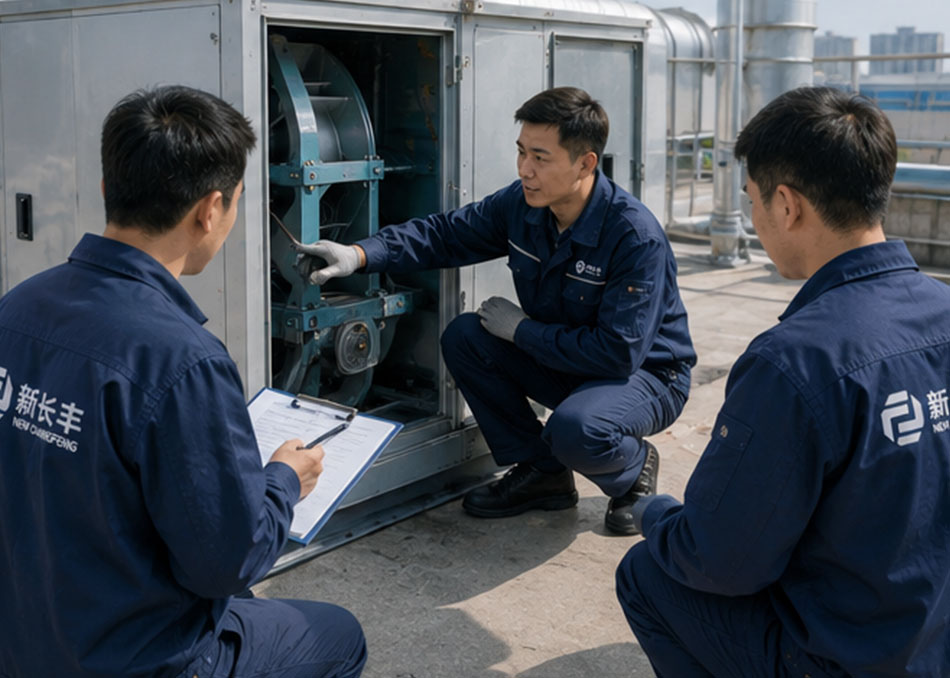
Located in the subtropical zone, Shenzhen experiences long summers with high humidity and temperatures frequently exceeding 35°C. Industrial plants in the region commonly face issues of stuffiness and poor air circulation. Many facility managers initially turn to fans or air conditioning, but these solutions often fall short. Ordinary fans only provide localized airflow and cannot address overall air exchange, while air conditioning in high-ceilinged plants consumes enormous energy and, with doors and windows sealed, leads to deteriorating indoor air quality. As a core piece of ventilation and cooling equipment for industrial plants, the negative pressure fan creates a negative pressure environment that forces air out, effectively improving the thermal environment in workshops. However, with numerous brands and models available, how can Shenzhen enterprises make a scientifically informed selection? This article provides systematic guidance from the perspectives of technical principles, selection criteria, and installation strategies.
Why Negative Pressure Fans Are the Preferred Cooling Solution for Shenzhen Plants
The fundamental principle of a negative pressure fan is to use a large-airflow, low-speed axial impeller to exhaust indoor air, creating a negative pressure inside the building. This pressure differential draws fresh outdoor air in through air inlets or gaps around doors and windows, establishing a continuous airflow cycle. This ventilation method rapidly removes heat, dust, and odors accumulated in the workshop, making it particularly suitable for hot and humid regions like Shenzhen.
Compared to air conditioning, negative pressure fans have significantly lower initial investment and operational costs. In large, high-ceiling plants, the cooling load for air conditioning is enormous, whereas negative pressure fans require only a small amount of electricity to move large volumes of air. Combined with natural make-up air, they can achieve noticeable cooling—typically reducing perceived temperature by 5–10°C. Additionally, negative pressure fans improve air quality, reducing occupational health risks and aligning with modern factory commitments to environmental sustainability and employee well-being.
Key Factors in Selecting Negative Pressure Fans
When choosing a negative pressure fan for a Shenzhen industrial facility, several critical factors must be evaluated to ensure optimal performance and cost-effectiveness.
- Airflow and Static Pressure: Determine the required air changes per hour (ACH) based on the workshop's volume and occupancy. For general industrial spaces, 25–40 ACH is often recommended. Static pressure must be considered to overcome duct resistance and external wind pressure.
- Fan Efficiency and Energy Consumption: Look for fans with high efficiency ratings and low power consumption per unit of airflow. Energy-efficient models reduce long-term operating costs, especially in facilities that run fans continuously.
- Material and Durability: In humid and corrosive environments, choose fans with corrosion-resistant coatings, stainless steel fasteners, and sealed motors to ensure longevity.
- Noise Levels: Excessive noise can harm worker comfort and communication. Select fans with lower noise ratings or consider installing sound attenuators where necessary.
- Compliance and Certification: Ensure the fan meets relevant standards such as GB/T 1236 for performance testing and GB 19761 for energy efficiency. This guarantees reliability and safety.
Installation and Layout Strategies for Maximum Efficiency
The effectiveness of a negative pressure ventilation system depends not only on the fan itself but also on proper installation and layout. To achieve uniform airflow, fans should be strategically placed on one side of the building, with air inlets on the opposite side to create a cross-flow ventilation pattern. This arrangement ensures that fresh air passes through the entire workspace before being exhausted.
Consider the following installation tips:
- Position fans high on walls or roofs to exhaust hot air that naturally rises.
- Install air inlets (such as louvered vents or evaporative cooling pads) at low levels to provide cooler incoming air.
- Ensure that the total inlet area is at least equal to the fan exhaust area to prevent negative pressure from becoming too high, which would reduce airflow.
- Space fans evenly to avoid dead zones where air stagnation occurs.
- For large facilities, consider using multiple smaller fans rather than one large unit to provide flexibility and redundancy.
Case Scenario: Applying Negative Pressure Fans in a Shenzhen Workshop
Imagine a typical Shenzhen electronics assembly plant with a floor area of 2,000 square meters and a ceiling height of 6 meters. The workshop houses production lines and emits heat from soldering equipment. To alleviate the heat, the facility manager could install several negative pressure fans along the north wall, with evaporative cooling pads on the south wall to pre-cool incoming air. This configuration would create a gentle breeze across the workstations, significantly improving comfort. The system would operate at a fraction of the cost of air conditioning, and maintenance is straightforward, requiring only periodic cleaning of blades and belts.
Frequently Asked Questions
Q: How many negative pressure fans do I need for my plant?
A: The number depends on the plant's volume, desired air changes per hour, and the fan's airflow capacity. A professional assessment should calculate the total required airflow (volume × ACH) and divide by the fan's rated airflow, considering factors like duct losses and room layout.
Q: Can negative pressure fans work in conjunction with evaporative cooling?
A: Absolutely. In Shenzhen's humid climate, evaporative cooling is less effective than in dry regions, but it can still provide a modest temperature drop. When combined with negative pressure fans, the pre-cooled air is distributed throughout the workshop, enhancing overall comfort.
Q: Are there any downsides to negative pressure fans?
A: While highly effective for general ventilation, they do not provide active cooling like air conditioning. In extremely hot conditions, the perceived temperature drop may be less pronounced. Additionally, airborne dust or contaminants from outside can be drawn in unless filtered. However, these issues can be mitigated with proper filtration and system design.
Making the Right Choice
Selecting the right negative pressure fan for Shenzhen industrial plants requires a thoughtful analysis of airflow needs, energy efficiency, durability, and installation strategy. By understanding the principles of negative pressure ventilation and evaluating your specific workshop conditions, you can achieve a cost-effective and sustainable cooling solution that enhances worker productivity and comfort.
At XCFFJ, we offer a range of high-quality negative pressure fans designed for demanding industrial environments. Our experts can help you assess your facility and recommend the ideal configuration. Contact us today to discuss your ventilation and cooling needs.