
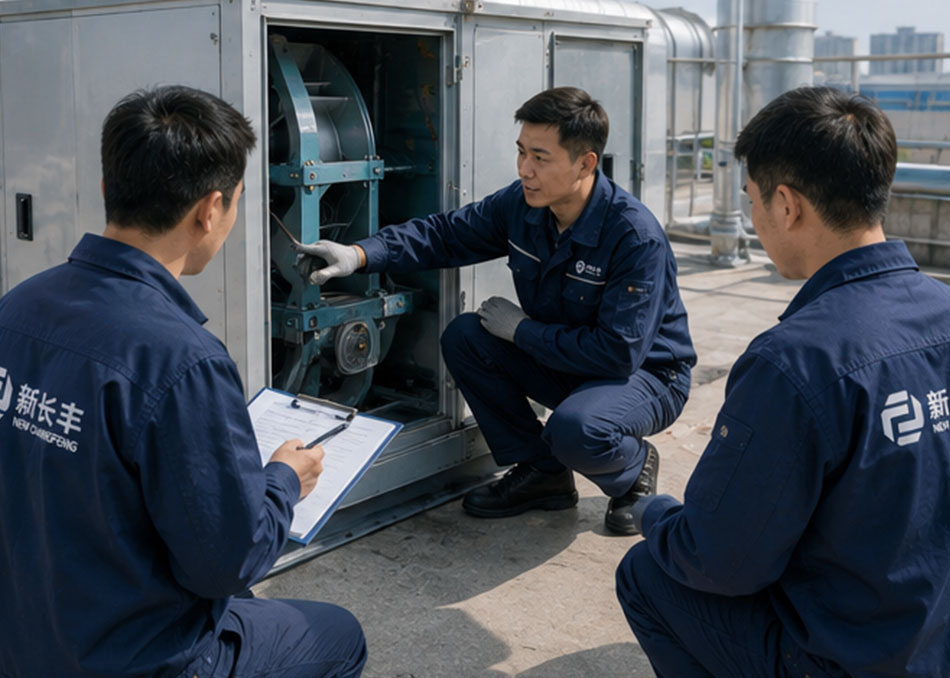
When a commercial kitchen's exhaust system switches on, the exhaust hood over the cooking line pulls a large volume of air out of the room. Within seconds, the kitchen can slip into negative pressure. The symptoms are familiar to anyone who has operated a food service facility: doors that whistle at the seams, doors that are hard to push open, cooking fumes that escape into the dining area despite a seemingly powerful hood, gas burners that burn yellow or backfire, drain traps that gurgle and lose their water seal, and persistent odors in dishwashing and restroom areas. Many operators respond by focusing on the exhaust fan, assuming it is not strong enough. In reality, the root cause of kitchen negative pressure is often not insufficient exhaust—it is incorrect make-up air. The water-cooled fresh air unit, which combines make-up air supply with cooling, is becoming an important option in kitchen ventilation design. This guide covers the causes of negative pressure, the working principle of the equipment, key selection criteria, and common pitfalls, so you can make a practical, informed purchase.
Why Commercial Kitchens Develop Negative Pressure—and Why Make-Up Air Must Be Designed as a System
Kitchen exhaust systems are designed in accordance with GB 18483, the national emission standard for cooking fume, along with local restaurant fume control requirements. An exhaust hood must maintain adequate capture velocity at its face to effectively contain smoke and grease-laden vapor. When the exhaust air volume clearly exceeds the make-up air volume, indoor static pressure drops below outdoor pressure, and the kitchen enters a negative-pressure condition. A slight negative pressure is not entirely undesirable—it helps keep fumes from drifting into the dining room. But excessive negative pressure creates a chain of operational problems.
Typical symptoms include difficulty pushing doors open, doors that pull themselves shut, hoods that appear to have strong suction yet still allow fume spillage, gas flames that turn yellow or backfire, odors backing up from dishwashing and restroom areas, and floor drains whose water seals are sucked dry. These are all essentially the result of a restricted make-up air path or insufficient make-up air volume. The correct approach is to treat exhaust and make-up air as a single balanced system, maintaining a slight negative pressure relative to the dining area—enough to contain fumes without creating the operational problems described above.
This is where the water-cooled fresh air unit fits in. Rather than simply opening a wall louver or relying on infiltration through gaps, a properly sized make-up air unit delivers a controlled volume of filtered outdoor air directly to the kitchen. Because it also provides cooling, it addresses a second persistent pain point: the heat load that builds up in kitchens already struggling with high temperatures from cooking equipment.
How a Water-Cooled Fresh Air Unit Works and Why It Suits Kitchen Make-Up Air
A water-cooled fresh air unit draws in outdoor air, filters it, and passes it through a cooling coil that uses chilled water or a water-based cooling medium to reduce the air temperature before delivering it into the space. Unlike a conventional air conditioner, which recirculates indoor air, a fresh air unit is designed to bring in outdoor air—exactly what a negative-pressure kitchen needs. The result is a controlled supply of cooler, cleaner make-up air that offsets exhaust volume while improving working conditions on the cooking line.
From a ventilation engineering standpoint, the unit supports a balanced system design. The make-up air volume can be matched to the exhaust hood's demand, and the supply air can be directed to the areas where it is most needed—typically low or mid-level delivery near the cooking line, so that air moves toward the hood rather than short-circuiting across the ceiling. Because the unit cools the supply air, it also reduces the sensible heat load in the kitchen, which is a welcome benefit in facilities where summer temperatures make the work environment difficult.
When compared with other make-up air strategies, the water-cooled fresh air unit offers a distinct advantage: it does not simply replace extracted air with unconditioned outdoor air, which can make a hot kitchen even hotter in summer and uncomfortably cold in winter. By conditioning the supply air, it helps maintain a more stable kitchen environment while supporting the negative-pressure control strategy.
Selection Criteria: Matching a Water-Cooled Fresh Air Unit to Your Kitchen
Choosing the right unit requires more than picking a model from a catalog. The starting point is a proper ventilation balance calculation. The exhaust volume of the hood system should be established first, then the make-up air volume determined so that the kitchen maintains a slight negative pressure relative to adjacent spaces. As a rule of thumb, make-up air should account for the majority of exhaust volume, with the remaining balance drawn through controlled paths such as door grilles or transfer openings. The exact ratio depends on the hood design, cooking style, and local code requirements, so it should be verified by a qualified ventilation engineer.
Beyond airflow balance, several technical factors deserve attention:
- Cooling capacity and water supply: Confirm the available chilled water temperature, flow rate, and quality. The cooling coil performance depends on the water-side conditions, so the unit must be selected against the actual water supply parameters, not generic catalog conditions.
- Fan performance and energy efficiency: Fan performance should be verified in accordance with GB/T 1236, the standard for fan performance testing, and the fan should meet the energy efficiency requirements of GB 19761. A unit that is efficient at design conditions will reduce operating costs over its service life.
- Filtration: Kitchen make-up air carries outdoor dust and, in urban areas, grease and particulate matter. Adequate filtration protects the cooling coil and keeps the supply air clean. Consider the maintenance access for filter replacement.
- Noise: Kitchen staff work long shifts, and supply air noise should be controlled. Check the sound pressure level at the expected operating point and consider acoustic attenuation if the unit is installed near workstations or adjacent spaces.
- Installation and service access: Plan for coil cleaning, drain pan inspection, and fan maintenance. A unit that is difficult to service will degrade in performance over time.
It is also worth coordinating with fire safety requirements. In facilities where smoke and heat exhaust systems are required under GB 51251, the make-up air design should be coordinated with the smoke control strategy so that the two systems do not conflict during an emergency.
Common Mistakes in Kitchen Make-Up Air Design
Many negative-pressure problems persist because of recurring design and installation mistakes. One of the most common is treating make-up air as an afterthought—installing a small louver or relying on door gaps, then wondering why the hood still spills smoke. Another is supplying make-up air at the ceiling, where it short-circuits directly to the hood without sweeping the cooking zone, leaving fumes to escape at the hood edges.
Oversizing the exhaust fan while undersizing the make-up air path is another frequent error. A more powerful fan increases negative pressure and makes the symptoms worse, not better. Similarly, using a recirculating air conditioner as a substitute for a fresh air unit does not solve the pressure imbalance, because it does not introduce outdoor air. Finally, neglecting commissioning is a widespread problem: even a well-selected system needs airflow measurement and balancing after installation to confirm that the design intent is achieved.
Operators should also be cautious about claims that a single device will solve all kitchen ventilation problems. Negative pressure is a system-level issue, and the water-cooled fresh air unit is one component—albeit an important one—within a balanced exhaust and make-up air strategy.
FAQ
Q: Can a water-cooled fresh air unit eliminate kitchen negative pressure on its own?
A: No single device can guarantee balanced pressure. The unit supplies conditioned outdoor air, but the exhaust volume, transfer paths, and building envelope all affect pressure. The unit should be sized as part of a coordinated exhaust and make-up air design, and the system should be commissioned and balanced after installation.
Q: How is a water-cooled fresh air unit different from a standard air conditioner?
A: A standard air conditioner recirculates indoor air and does not introduce outdoor air, so it does not address the pressure imbalance caused by exhaust. A water-cooled fresh air unit draws in outdoor air, filters and cools it, and delivers it to the kitchen, directly supporting make-up air requirements while improving thermal comfort.
Q: What information do I need before requesting a selection?
A: You will need the exhaust hood airflow, the target pressure relationship between the kitchen and adjacent spaces, available chilled water temperature and flow, installation space and access, and any local code requirements. A ventilation engineer can then calculate the required make-up air volume and cooling load.
Q: Does the unit help with kitchen heat in summer?
A: Yes. Because the supply air is cooled before delivery, the unit reduces the sensible heat load in the kitchen compared with unconditioned make-up air. The actual cooling effect depends on the water supply conditions and the unit's coil performance, which should be confirmed during selection.
Conclusion
Kitchen negative pressure is rarely solved by a bigger exhaust fan. It is solved by treating exhaust and make-up air as one balanced system, and by choosing make-up air equipment that delivers the right volume of clean, conditioned air to the right place. A water-cooled fresh air unit addresses both pressure balance and kitchen heat, making it a practical choice for commercial kitchens, school canteens, hotel kitchens, and central kitchens. If you are planning a kitchen ventilation upgrade or troubleshooting persistent negative-pressure symptoms, XCFFJ's ventilation specialists can help you evaluate your exhaust and make-up air requirements and select equipment that fits your site conditions.