
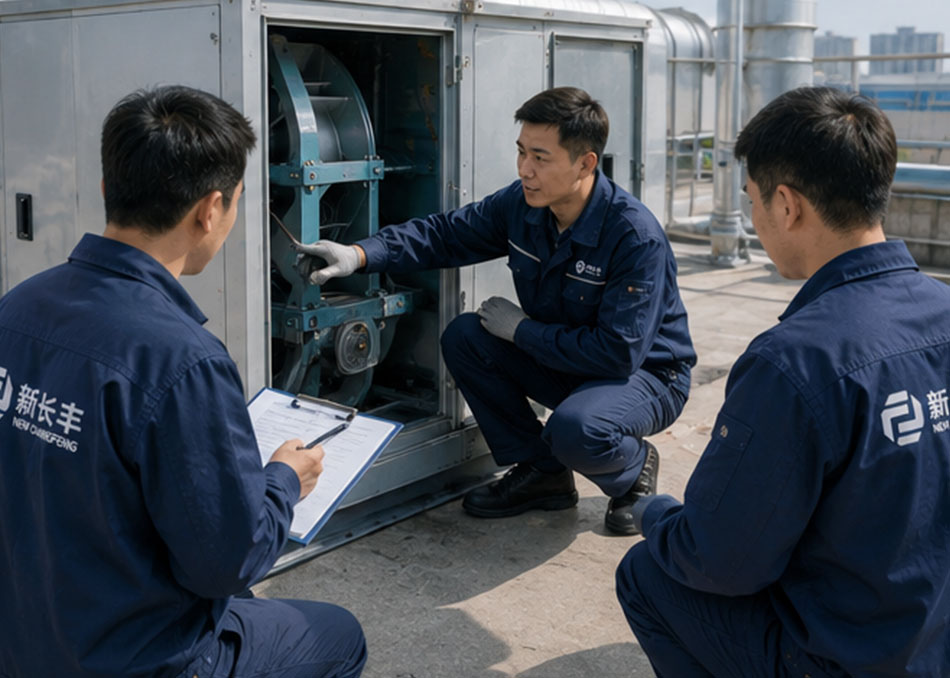
In the daily operations of a commercial kitchen, high temperatures, grease-laden smoke, and lingering odors are among the most persistent challenges for restaurant owners. When the kitchen is adjacent to the dining area, smoke infiltration not only degrades the guest experience but also poses health risks to chefs. While traditional axial fans or exhaust fans are cost-effective, they often struggle with long duct runs and multiple bends, leading to poor ventilation and grease buildup. A well-designed kitchen exhaust system hinges on selecting a high-static-pressure fan that matches the actual operating conditions—this is where the DT cabinet centrifugal fan excels.
Understanding the Pain Points of Commercial Kitchen Exhaust
Many restaurant owners fall into two common traps when upgrading their exhaust systems: assuming that higher airflow is always better, while ignoring the impact of duct resistance on actual performance, or overlooking the pressure drop caused by purification equipment, which leaves the exhaust weak at the outlet. In reality, a commercial kitchen exhaust system must overcome resistance from hoods, duct elbows, grease filters, and roof exits. If the fan's static pressure is insufficient, even a large impeller cannot effectively expel the smoke.
Moreover, the hot, humid, and greasy environment of a commercial kitchen imposes special requirements on motor protection and impeller materials. Standard fans operating in such conditions tend to accumulate grease on the blades, causing imbalance and premature bearing failure, leading to high maintenance costs. Therefore, a scientific approach to kitchen exhaust design must consider system resistance calculations, airflow requirements, and compatibility with purification equipment—rather than simply replacing one fan with another.
Why the DT Cabinet Centrifugal Fan Is a Preferred Choice for Kitchen Exhaust
The DT cabinet centrifugal fan is engineered specifically for demanding ventilation systems, including those in commercial kitchens. Unlike axial fans, centrifugal fans generate higher static pressure, making them ideal for overcoming the resistance of long ducts and multiple elbows. The DT series features a robust housing and a forward-curved or backward-curved impeller design (depending on model) that ensures efficient airflow even under high static pressure conditions.
Additionally, the DT cabinet centrifugal fan is designed for easy integration with exhaust purification systems. Its compact, cabinet-style enclosure reduces noise levels, which is critical in establishments where the kitchen is close to dining areas. The fan's motor is typically protected to withstand grease and moisture, and the impeller is constructed from materials that resist corrosion and are easier to clean, reducing downtime and maintenance frequency.
Key Considerations for Selecting and Installing a DT Cabinet Centrifugal Fan
- System Resistance Calculation: Before selecting a fan, calculate the total pressure loss across the duct, hood, purification unit, and exhaust outlet. This ensures the fan's static pressure rating meets the actual requirements.
- Airflow vs. Static Pressure: Do not oversize the fan based solely on airflow; instead, refer to the fan performance curve to ensure it delivers the required airflow at the calculated static pressure.
- Compliance with Standards: Ensure the fan and system design comply with local codes, such as GB 18483 for kitchen fume emission and GB/T 1236 for fan performance testing, to guarantee safety and environmental compliance.
- Noise and Vibration: Install the fan on vibration isolators and consider flexible duct connections to minimize noise transmission to the dining area.
- Maintenance Access: Provide adequate access panels for cleaning the impeller and inspecting the motor, as grease buildup is inevitable in kitchen exhaust systems.
Integrating Purification Equipment for Comprehensive Exhaust Solutions
A DT cabinet centrifugal fan works best as part of a complete exhaust and purification system. In commercial kitchens, it is common to pair the fan with an electrostatic precipitator or a UV purifier to remove grease and odors before discharging air to the atmosphere. The fan must be selected with enough static pressure to overcome the additional resistance of these purification units.
When designing such a system, it is essential to position the purification unit between the hood and the fan, ensuring that the fan is not exposed to excessive grease. Regular cleaning of the purification unit will maintain the fan's performance and extend its service life. XCFFJ offers a range of compatible purification equipment, allowing for a turnkey solution that meets both ventilation and emission standards.
Frequently Asked Questions
Q: What is the main advantage of a cabinet centrifugal fan over an axial fan for kitchen exhaust?
A: A cabinet centrifugal fan provides significantly higher static pressure, which is necessary to overcome the resistance of long duct runs, elbows, and purification equipment. Axial fans are better suited for low-resistance, high-volume applications and often fail to perform adequately in complex kitchen exhaust systems.
Q: How do I determine the required static pressure for my kitchen exhaust fan?
A: Calculate the total pressure loss of your system by summing the losses from the hood, ductwork (including fittings), purification unit, and any dampers or louvers. Consult engineering references or use design software to estimate these values, then add a safety margin of 10-15%. The fan should be selected to provide the required airflow at this total static pressure.
Q: Can a DT cabinet centrifugal fan be retrofitted into an existing exhaust system?
A: Yes, the DT series is designed for flexibility. It can be installed in place of an existing fan, provided the duct connections and mounting space are compatible. It is advisable to have a professional assess the existing system to ensure that the fan's performance matches the new requirements and that any necessary adjustments to duct sizing or purification equipment are made.
Q: What maintenance does a DT cabinet centrifugal fan require in a kitchen environment?
A: Regular maintenance includes inspecting and cleaning the impeller to prevent grease buildup, checking belt tension (if belt-driven), lubricating bearings as per manufacturer's recommendations, and ensuring the motor and electrical connections are free of grease and moisture. Depending on usage, a monthly inspection is recommended, with thorough cleaning every quarter.
Choosing the right exhaust fan is a critical decision for any commercial kitchen. The DT cabinet centrifugal fan from XCFFJ offers a reliable, high-performance solution that addresses the specific challenges of grease-laden air and long duct runs. By pairing it with proper purification and maintenance practices, you can ensure a safe, comfortable, and compliant kitchen environment.
If you are planning a kitchen exhaust upgrade or need expert advice on selecting the right fan, contact XCFFJ today. Our team of engineers can help you design a system that meets your needs and complies with all relevant standards.