
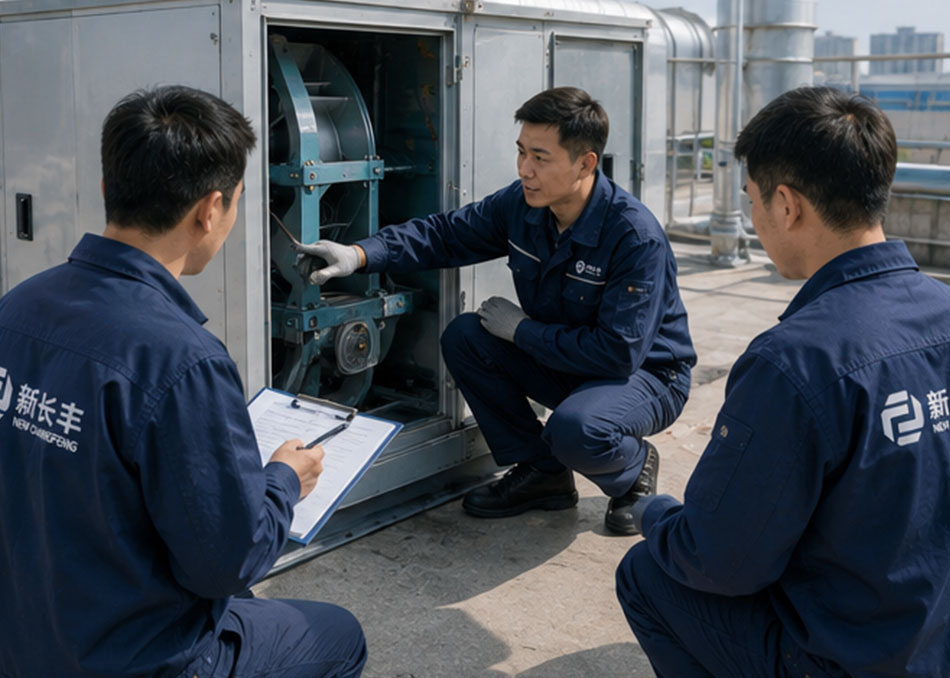
In commercial kitchens, poor ventilation is often not a problem of exhaust but of make-up air. Many operators focus on exhaust hoods, fume purifiers, and exhaust fans, overlooking the make-up air supply. As a result, exhaust volume exceeds make-up air volume, creating negative pressure in the kitchen. This leads to a cascade of issues: doors that are hard to open, fume backdraft, burners pulled off-flame, and air-conditioned air unable to enter. The water-cooled fresh air unit is a key device to resolve this contradiction—it supplies make-up air while cooling outdoor air through water evaporation before delivering it indoors. However, installation alone is not enough; proper maintenance directly determines the make-up air effect and equipment lifespan. This article focuses on the kitchen make-up air scenario and explains the maintenance logic of water-cooled fresh air units.
Understanding Negative Pressure in Kitchens: Why Make-Up Air Is Essential
During peak cooking hours, the exhaust system operates at full capacity, and the exhaust volume typically far exceeds the natural infiltration of fresh air. According to the principle of continuity, indoor air is extracted in large quantities without equivalent replacement, causing indoor static pressure to drop below outdoor pressure—creating negative pressure. The problems are concrete: kitchen doors are sucked shut and hard to push open, whistling occurs at pass-through openings, odors from restrooms are drawn back, fume spills from hood edges into the dining area, and even gas burner combustion stability is affected.
According to GB 51251 Technical Standard for Smoke Control and Exhaust Systems in Buildings and related kitchen ventilation design principles, kitchens should maintain a slight negative pressure or near-neutral pressure differential, with exhaust and make-up air designed to match. Make-up air paths typically include mechanical supply via fresh air units or natural infiltration through openings. Relying solely on natural infiltration is unreliable, especially in sealed modern buildings. Therefore, a dedicated make-up air system is a necessity, not an option.
The Role of Water-Cooled Fresh Air Units in Kitchen Make-Up Air
A water-cooled fresh air unit is not just a fan; it integrates filtration, cooling, and air supply. Outdoor air is drawn in, filtered, and then passed through a water-cooled evaporation module (direct evaporative cooling) where heat is absorbed as water evaporates, reducing the air temperature. The cooled fresh air is then delivered into the kitchen, simultaneously replenishing air volume and improving the indoor thermal environment. This is particularly valuable in hot kitchens where air conditioning alone cannot cope with high sensible and latent loads.
In kitchen make-up air design, the unit should be sized to match the exhaust volume, typically providing 80–90% of the exhaust air volume to maintain a slight negative pressure. The unit’s external static pressure must overcome the resistance of ductwork, filters, and discharge outlets. It is important to select a model with sufficient pressure and to ensure the air supply outlets are distributed to avoid drafts affecting burners or causing discomfort to staff.
Maintenance of Water-Cooled Fresh Air Units: Key Points
Regular maintenance ensures the unit continues to deliver the required air volume and cooling effect. The following aspects deserve attention:
- Water quality and evaporation module: Scale and sediment can accumulate in the water tank and evaporation pads, reducing cooling efficiency and airflow. Periodically drain, clean, and descale according to water hardness. Replace evaporation pads when they become clogged or degraded.
- Filters: Clean or replace air filters regularly to maintain airflow and prevent dust from entering the kitchen. The frequency depends on outdoor air quality and operating hours.
- Fan and motor: Check belt tension (if belt-driven), lubricate bearings, and clean fan blades to prevent imbalance and vibration. Listen for abnormal noise and address it promptly.
- Water pump and distribution system: Ensure the pump operates correctly and water is evenly distributed over the evaporation media. Clean nozzles and check for leaks.
- Drainage and freeze protection: In cold seasons, drain water from the unit and piping to prevent freezing. Ensure drainage is unobstructed to avoid stagnant water.
- Electrical and controls: Inspect wiring and connections for tightness, and verify that sensors and control sequences function properly.
Establishing a maintenance log with scheduled tasks helps prevent unexpected breakdowns and maintains consistent make-up air performance.
Design and Installation Considerations for Kitchen Make-Up Air
Proper design and installation are prerequisites for effective make-up air. The make-up air unit should be located to draw in clean outdoor air, away from exhaust outlets and grease-laden discharges. Ductwork should be sized to minimize pressure loss, and supply outlets should be placed to avoid direct drafts on cooking surfaces while ensuring good mixing. The system should be interlocked with the exhaust system so that make-up air operates whenever exhaust is on, maintaining balanced pressure.
Additionally, the make-up air volume should be adjustable to adapt to different cooking periods. Variable frequency drives (VFDs) on the fan can save energy and reduce noise during low-demand periods. It is also essential to comply with local building codes and fire safety regulations, especially regarding fire dampers and electrical safety in wet environments.
Frequently Asked Questions (FAQ)
Q: Why does my kitchen have negative pressure even with an exhaust hood?
A: Negative pressure occurs when exhaust volume exceeds make-up air volume. Natural infiltration is often insufficient, especially in well-sealed buildings. Installing a dedicated make-up air unit, such as a water-cooled fresh air unit, can balance the pressure and solve issues like doors that are hard to open and fume backdraft.
Q: How often should I maintain the water-cooled fresh air unit?
A: Maintenance frequency depends on usage and environmental conditions. Generally, clean filters monthly, check the water system and evaporation pads quarterly, and perform a comprehensive inspection annually. In areas with hard water, more frequent descaling may be needed. Always refer to the manufacturer’s manual for specific recommendations.
Q: Can a water-cooled fresh air unit also cool the kitchen?
A: Yes, it provides cooling through evaporative cooling, which reduces the air temperature by several degrees. While not as powerful as refrigerant-based air conditioning, it significantly improves comfort and is energy-efficient. It is especially effective in hot, dry climates; in humid climates, the cooling effect is reduced but still beneficial for ventilation.
Q: What are the signs that my make-up air unit needs maintenance?
A: Reduced airflow, unusual noises, water leaks, unpleasant odors, or insufficient cooling are common signs. If you notice any of these, inspect the filters, water system, and fan. Regular maintenance prevents these issues and extends equipment life.
In summary, solving negative pressure in commercial kitchens requires a systematic approach with proper make-up air design and reliable equipment. Water-cooled fresh air units play a dual role: supplying make-up air and improving indoor comfort. With regular maintenance, they ensure efficient and long-term operation. For tailored solutions for your kitchen ventilation and cooling needs, consult XCFFJ’s experts to select the right water-cooled fresh air unit for your project.