
In commercial kitchens—whether in restaurants, hotels, or school canteens—the battle against heat, smoke, and odors is constant. Exhaust hoods and fans work tirelessly to remove cooking fumes, but when the volume of air exhausted far exceeds the volume of makeup air supplied, a dangerous negative pressure condition develops. This imbalance leads to reduced hood capture efficiency, smoke spillage into dining areas, doors that are hard to open, sewer gas backdraft, incomplete gas combustion, and even instability in the entire exhaust system. The solution isn't simply a larger exhaust fan; it's a carefully designed makeup air strategy. Water-cooled fresh air units (also known as evaporative cooling fresh air units) are engineered to address this challenge by simultaneously supplying filtered, cooled outdoor air and maintaining proper pressure balance. This article explores how these units work, why they are uniquely suited to kitchen environments, and how to select and integrate them effectively.
Why Negative Pressure Occurs and Why It Must Be Fixed
In any kitchen equipped with a commercial exhaust hood, the exhaust fan continuously extracts large volumes of air. Building codes and standards such as GB 51251 (Technical Standard for Smoke Control and Exhaust Systems in Buildings) and GB 18483 (Emission Standard of Cooking Fume) emphasize that exhaust systems must be designed in coordination with makeup air systems. Makeup air is not merely a matter of opening a window; it requires organized, filtered, and often cooled air to be introduced into the space.
When makeup air is insufficient, the kitchen becomes negatively pressurized relative to adjacent areas. This causes several problems:
- Reduced exhaust effectiveness: The hood loses its ability to capture fumes, allowing grease and odors to migrate into the dining area.
- Door operation issues: Staff struggle to open doors due to the pressure differential.
- Backdrafts: Foul odors from floor drains can be drawn into the kitchen.
- Combustion problems: Gas appliances may not receive enough oxygen for complete combustion, leading to inefficiency and safety risks.
- System instability: The exhaust fan may operate at a different point on its curve, reducing overall performance and increasing energy consumption.
Many operators mistakenly believe that simply increasing exhaust capacity will solve the problem. In reality, a stronger exhaust fan exacerbates the negative pressure, making it even harder to capture fumes effectively. The correct approach is to design exhaust and makeup air in tandem, aiming for a slight negative pressure or near-neutral balance. At the same time, cooling the makeup air improves the working environment for kitchen staff, who often endure high temperatures.
How Water-Cooled Fresh Air Units Work and Why They Fit Commercial Kitchens
A water-cooled fresh air unit combines centrifugal fan technology with evaporative cooling. Outdoor air is first filtered to remove dust and insects, then passed through a cooling pad or wet film where it contacts water. This evaporative process cools the air (approaching the wet-bulb temperature) without adding significant moisture in most climates. Finally, a centrifugal fan delivers the cooled, filtered air into the kitchen.
This dual function—makeup air and cooling—makes water-cooled fresh air units particularly suitable for hot, humid kitchen environments. Unlike simple axial fans that only move air, these units provide a comfortable, tempered supply of fresh air that can offset the heat generated by cooking equipment. The centrifugal fan design ensures stable airflow against the resistance of ductwork and filters, while the evaporative cooling section reduces the temperature of the incoming air by several degrees, improving working conditions and reducing the load on any supplemental air conditioning.
Key advantages of water-cooled fresh air units for kitchen negative pressure control include:
- Pressure balance: They deliver a controlled volume of makeup air that can be matched to exhaust requirements, preventing excessive negative pressure.
- Temperature reduction: Evaporative cooling lowers the supply air temperature, enhancing comfort without the energy consumption of refrigeration-based systems.
- Filtration: Built-in filters keep the kitchen cleaner and protect downstream equipment.
- Energy efficiency: Compared to traditional air conditioning, evaporative cooling consumes significantly less electricity.
- Compliance: They help meet ventilation requirements outlined in GB 51251 and GB 18483 by ensuring proper makeup air and dilution of contaminants.
Designing a Makeup Air System with Water-Cooled Fresh Air Units
Proper design begins with a thorough assessment of the kitchen's exhaust volume. The makeup air volume should typically be 80–90% of the exhaust volume to maintain a slight negative pressure (around -5 Pa to -10 Pa relative to adjacent spaces). This prevents odors from escaping while ensuring doors remain operable and combustion appliances receive adequate oxygen.
Water-cooled fresh air units should be selected based on the required airflow and the static pressure of the duct system. The unit's centrifugal fan must overcome the resistance of filters, cooling pads, and ductwork. It is essential to consult with a qualified HVAC engineer who can perform a room-by-room pressure analysis and select equipment that meets the specific needs of the kitchen.
Installation considerations include:
- Location: The unit should draw outdoor air from a clean area, away from exhaust discharges and grease-laden air.
- Ductwork: Supply ducts should be routed to distribute air evenly throughout the kitchen, avoiding short-circuiting directly to the exhaust hood.
- Control: Variable frequency drives (VFDs) can modulate fan speed to match changing exhaust demands, further optimizing energy use and pressure balance.
- Maintenance: Regular cleaning of filters and cooling pads is necessary to maintain airflow and cooling efficiency.
- Freeze protection: In cold climates, provisions must be made to prevent water in the cooling section from freezing.
Selecting the Right Water-Cooled Fresh Air Unit
When choosing a water-cooled fresh air unit, several factors come into play. The unit must be sized correctly to provide the necessary makeup air volume without over-pressurizing the kitchen. It should also be constructed with materials that resist corrosion from moisture and kitchen contaminants. Look for units with easy-access panels for maintenance and high-quality centrifugal fans that operate quietly and efficiently.
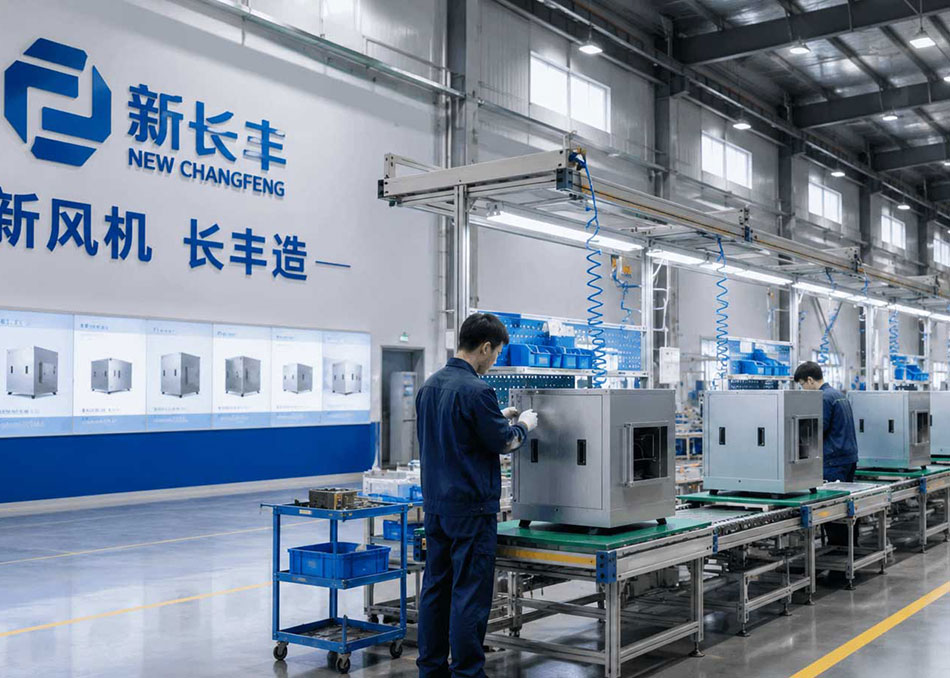
Brands like XCFFJ offer a range of water-cooled fresh air units designed specifically for commercial kitchen applications. These units incorporate robust centrifugal fans, efficient evaporative cooling media, and effective filtration. They are engineered to comply with relevant standards and can be integrated into new or existing exhaust systems. When evaluating options, consider the unit's airflow capacity, static pressure capability, cooling effectiveness, noise level, and ease of maintenance.
It's also important to work with a manufacturer that provides technical support and can assist with system design. A proper selection ensures that the kitchen maintains the desired pressure balance, stays comfortable, and operates efficiently.
Frequently Asked Questions
Q: Can a water-cooled fresh air unit completely eliminate negative pressure in my kitchen?
A: It can help you achieve a balanced or slightly negative pressure by supplying a controlled volume of makeup air. However, the exact result depends on proper sizing, duct design, and coordination with the exhaust system. A qualified engineer should assess your specific kitchen to determine the right setup.
Q: Does evaporative cooling work in humid climates?
A: Evaporative cooling is most effective in dry climates, but it still provides some cooling in humid conditions. The temperature drop may be smaller, but the unit still delivers fresh air and helps with pressure balance. In very humid areas, you may need to supplement with other cooling methods.
Q: How much maintenance does a water-cooled fresh air unit require?
A: Regular maintenance includes cleaning or replacing filters, checking and cleaning the cooling pads, inspecting the water distribution system, and lubricating fan bearings. The frequency depends on the kitchen environment and hours of operation. Establishing a routine maintenance schedule is essential for optimal performance and longevity.
Q: Can I retrofit a water-cooled fresh air unit into an existing kitchen?
A: Yes, many units are designed for retrofit applications. However, you'll need to consider available space, duct routing, and electrical supply. A professional installer can help determine the best location and integration strategy.
In summary, negative pressure in commercial kitchens is a common but solvable problem. Water-cooled fresh air units offer a dual solution: they provide the necessary makeup air to balance exhaust and improve indoor air quality, while also cooling the incoming air to enhance comfort. By understanding the principles and working with experienced manufacturers like XCFFJ, you can create a kitchen environment that is safer, more efficient, and more pleasant for staff. For tailored advice on selecting and designing a system for your kitchen, contact our technical team today.