
Internet cafes are high-density environments: dozens of gaming PCs run simultaneously, monitors generate continuous heat, and people add both body heat and moisture. With doors and windows often kept closed and air conditioning running in recirculation mode, the result is a stuffy, odorous space with elevated CO₂ levels. Many operators focus solely on cooling capacity, overlooking two fundamental questions: where does fresh air come from, and how does heat leave? Water-cooled fresh air units address both by supplying filtered, cooled outdoor air while maintaining proper ventilation. This guide explains how these units work, why they suit internet cafes, and how to select and install them for optimal results.
Why Internet Cafes Need More Than Air Conditioning
Traditional split or cabinet air conditioners cool indoor air by recirculating it—they do not introduce outdoor fresh air. In a crowded internet cafe, CO₂, body odor, smoke, and equipment fumes accumulate continuously. As air quality deteriorates, customer comfort and willingness to stay decrease. From a ventilation engineering perspective, this is a classic "cool but no fresh air" problem that requires a dedicated fresh air system.
Water-cooled fresh air units work differently: they draw in outdoor air, pass it through an evaporative cooling module, and deliver cooled fresh air indoors while establishing an organized supply and exhaust path. Compared with simple fresh air fans, the evaporative stage reduces supply air temperature in dry or moderately humid climates. Compared with air conditioning, these units handle "make-up air + pre-cooling," reducing the cooling load on the AC system.
For internet cafes, the benefits are clear:
- Improved air quality: Continuous fresh air dilution lowers CO₂ and odors, enhancing customer comfort.
- Reduced cooling load: Pre-cooled supply air means the AC works less, saving energy.
- Positive pressurization: Slightly higher supply than exhaust prevents untreated hot, humid air from infiltrating through gaps.
- Odor control: Organized exhaust removes smoke and stale air efficiently.
How Water-Cooled Fresh Air Units Work
At the heart of the unit is an evaporative cooling pad or spray system. Outdoor air is drawn through a wet medium, where water absorbs heat as it evaporates, lowering the air temperature. The cooled air is then supplied to the space by a centrifugal fan. The unit typically includes filters to remove dust and particles, and may have modulating dampers for precise airflow control.
Key technical considerations:
- Evaporative efficiency: Depends on pad design, water distribution, and airflow velocity. Proper maintenance ensures consistent cooling.
- Fan performance: Centrifugal fans provide stable static pressure to overcome duct resistance; performance should be verified according to GB/T 1236.
- Energy efficiency: Look for units compliant with GB 19761 fan energy efficiency grades.
- Water quality: Scale buildup reduces cooling efficiency; water treatment or regular cleaning is essential.
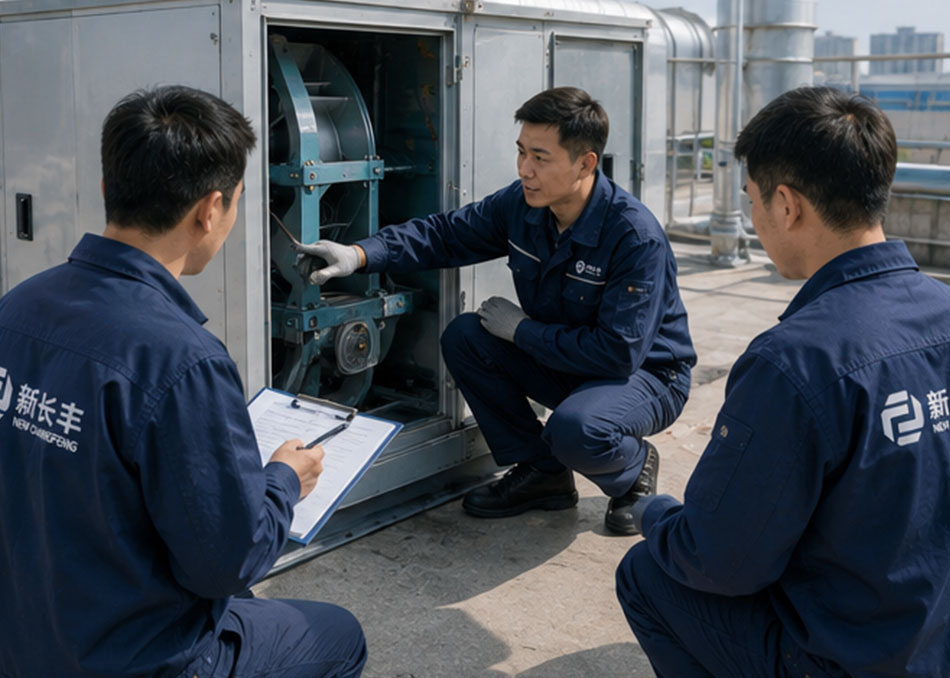
In internet cafes, the unit is typically installed on the roof or an exterior wall, with ductwork distributing cooled fresh air to multiple zones. Exhaust fans, such as negative pressure fans, remove stale air to complete the ventilation cycle.
Selecting the Right Water-Cooled Fresh Air Unit for Internet Cafes
Proper sizing is critical. An undersized unit won't deliver enough fresh air, while an oversized one wastes energy and may cause drafts. Calculate the required fresh air volume based on occupancy and floor area. As a rule of thumb, fresh air rate per person should be at least 30 m³/h, but local codes may require more. Also consider the sensible cooling load from equipment and people.
Key selection criteria:
- Airflow and static pressure: Match to duct layout and required throw distance. Avoid over-specifying static pressure, which increases noise and energy use.
- Cooling effectiveness: In humid climates, evaporative cooling is less effective; consider a hybrid design or supplemental dehumidification.
- Noise level: Internet cafes require a quiet environment; choose low-noise models and install with vibration isolators.
- Filtration: At least G4 grade filters protect the evaporative pad and improve supply air quality.
- Control and modulation: Variable speed fans or damper control allow adjustment based on occupancy and outdoor conditions.
- Compliance: Ensure the unit meets relevant safety and performance standards, such as GB 51251 for smoke exhaust if applicable.
Brands like Zhongyifeng offer water-cooled fresh air units, but always request performance data and verify independent test reports.
Installation and Commissioning Best Practices
Correct installation ensures the system performs as designed. The unit should be placed where it can draw clean outdoor air, away from exhaust outlets or kitchen fumes. Ductwork should be insulated to prevent condensation and heat gain. Air distribution should avoid direct drafts on customers.
Commissioning steps:
- Balance supply and exhaust airflows to maintain slight positive pressure (about 5–10 Pa) in the occupied space.
- Verify water flow and pad wetting; adjust to manufacturer specifications.
- Measure supply air temperature and airflow at each diffuser to confirm design values.
- Check noise levels and adjust fan speed or add attenuators if needed.
Regular maintenance—cleaning pads, checking water quality, replacing filters—keeps the system efficient and hygienic.
FAQ
Q: Can a water-cooled fresh air unit replace air conditioning in an internet cafe?
A: No, it is not a substitute for air conditioning. It supplies cooled fresh air and reduces the AC load, but in hot, humid climates, additional cooling may be needed. The unit works best as part of an integrated ventilation and cooling strategy.
Q: How much fresh air does an internet cafe need?
A: Fresh air volume depends on occupancy and local codes. A common guideline is 30 m³/h per person, but high-density spaces may require more. Consult a ventilation engineer to calculate accurately.
Q: What maintenance does a water-cooled fresh air unit require?
A: Regular tasks include cleaning or replacing evaporative pads, checking water quality and treating if necessary, cleaning filters, and inspecting fans and belts. Schedule maintenance monthly during peak season.
Q: Is evaporative cooling effective in humid climates?
A: Evaporative cooling is less effective in high humidity because the air is already near saturation. In such cases, consider a hybrid unit with dehumidification or rely more on conventional AC while using the fresh air unit primarily for ventilation.
Water-cooled fresh air units offer internet cafes a practical way to improve air quality and reduce cooling costs. By understanding the technology, sizing correctly, and maintaining the system, operators can create a more comfortable environment that keeps customers coming back. For expert advice on selecting and installing water-cooled fresh air units, contact XCFFJ today.