
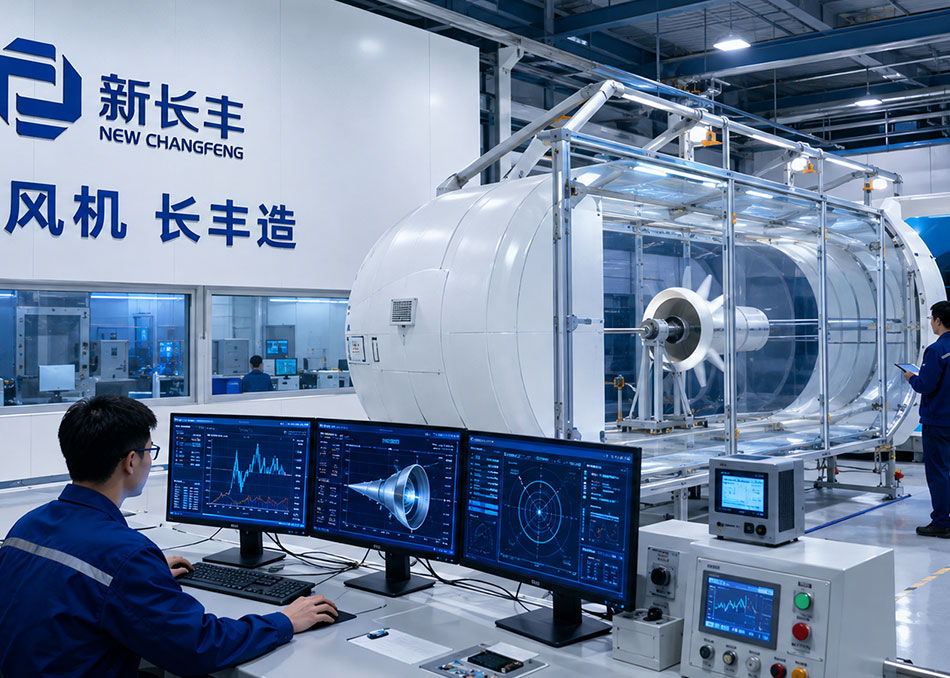
Summer heat in a factory is not just uncomfortable for workers. When workshop temperatures stay high, attention drops, equipment failure rates climb, and product defect rates become harder to control. In steel-structure plants, injection molding shops, and metalworking areas—where heat sources are concentrated and ceilings are high—simply aiming a few large fans at the workstations is rarely enough. Evaporative air coolers (also called water-cooled air conditioners or swamp coolers) have become a widely adopted solution for factory cooling retrofits, thanks to their noticeable temperature drop, relatively low operating energy consumption, and ability to deliver full fresh-air ventilation. However, products on the market vary greatly in form and function. Poor selection often leads to complaints like "it's installed but not cool," "the air doesn't reach the workstations," or "it breaks down after one season." This guide walks through the key selection points based on real factory conditions.
Start with the Cooling Principle, Then Talk About Selection
The core of an evaporative air cooler is water evaporation cooling: hot outdoor air passes through a wet curtain (evaporative filter), water evaporates and absorbs heat, the air temperature drops, and a fan delivers the cooled air into the building. This is an isenthalpic process—dry-bulb temperature falls while relative humidity rises. As a result, evaporative coolers work best in dry or semi-dry climates, and in factories that already require large amounts of fresh-air exchange.
Compared with compressor-based air conditioning, an evaporative cooler does not rely on a refrigerant compression cycle. Its structure is relatively simple, and its main energy consumption comes from the fan and the water pump. This is why it can keep operating costs manageable in large, high-ceiling workshops.
It is important to be clear: an evaporative air cooler is a combined "cooling + ventilation" solution, not a device that simply drives room temperature down to very low levels. It works by continuously replacing hot, stale indoor air with cooler, fresh outdoor air. If a factory needs precise temperature control for sensitive processes, evaporative cooling may not be the right fit on its own. But for general manufacturing spaces where heat is the main problem, it is often the most practical and energy-efficient option.
Match the Air Cooler to Your Factory Layout and Heat Load
Not all factories are the same. A unit that works well in an open warehouse may struggle in a narrow, partitioned workshop. Before choosing a model, assess the following factors:
- Building height and volume: High-ceiling plants need units that can deliver air over longer distances. Ducted or directional outlets help direct cool air to workstations rather than letting it stratify near the roof.
- Heat sources and their distribution: Injection molding machines, furnaces, and welding stations generate concentrated heat. Position units so that cool air flows across these areas and hot air can escape through roof vents or exhaust fans.
- Air exchange requirements: Factories with fumes, dust, or odors need a higher fresh-air exchange rate. Evaporative coolers naturally support this because they introduce 100% outdoor air.
- Climate: In humid regions, the temperature drop from evaporation is smaller. In these cases, consider combining evaporative cooling with other ventilation strategies, or use it primarily for air movement and fresh-air supply.
- Workstation layout: If workers are spread out, multiple smaller units with targeted airflow may be more effective than one large central unit.
Getting the airflow pattern right is just as important as the cooling capacity. A common mistake is to install a powerful unit but let the cool air mix with hot air before it reaches anyone. Use ducts, adjustable louvers, or strategically placed negative-pressure fans to create a directed airflow path from the cooler to the work area, and then out of the building.
Key Technical Considerations for Long-Term Reliability
Evaporative coolers are relatively simple machines, but that does not mean all units are equal. The difference between a unit that lasts many seasons and one that fails early often comes down to component quality and maintenance design.
- Evaporative pad quality: The wet curtain is the heart of the system. Look for pads with good water absorption, structural rigidity, and resistance to algae and scale. Cheap pads can degrade quickly, reducing cooling efficiency and becoming a breeding ground for odor.
- Fan and motor: The fan must move a large volume of air against the system's static pressure. Centrifugal fans are often preferred for ducted installations because they handle higher resistance, while axial fans are common in direct-discharge units. Check that the motor is rated for continuous duty and has adequate protection against moisture and dust.
- Water distribution system: Uniform water distribution across the pad is critical. Look for pumps and distribution pipes that are easy to access and clean. Uneven water flow creates dry spots that reduce cooling and allow scale to build up.
- Housing and corrosion resistance: Factory environments can be corrosive, especially in metalworking or chemical plants. Choose housings made from corrosion-resistant materials or with proper coatings. Stainless steel or high-quality polymer components last longer in harsh conditions.
- Maintenance access: Filters, pads, and water tanks need regular cleaning. Units designed with easy-access panels and removable components reduce downtime and labor costs.
It is also worth checking whether the unit complies with relevant standards. In China, fan performance is tested according to GB/T 1236, and fan energy efficiency is classified under GB 19761. For factories with specific exhaust needs, GB 51251 covers smoke and heat exhaust ventilation, and GB 18483 sets limits for kitchen fume emission. While these standards are Chinese, they reflect general principles of performance testing and energy efficiency that are useful reference points when evaluating equipment from any supplier.
Installation and Ventilation Design: Where Most Problems Begin
Even a high-quality evaporative cooler will underperform if the installation and ventilation design are wrong. The most common issues are insufficient exhaust openings, poor unit placement, and ductwork that restricts airflow.
For evaporative cooling to work, the hot air inside the building must have a way to escape. If the factory is tightly sealed, the cool air cannot push the hot air out, and the temperature will not drop as expected. This is why negative-pressure fans or roof turbo ventilators are often installed alongside evaporative coolers. They create a pressure difference that draws cool air in through the cooler and pushes hot air out through exhaust points.
Unit placement should consider the prevailing wind direction, the location of heat sources, and the path workers take through the space. In many cases, installing coolers on the side of the building opposite the exhaust fans creates a cross-flow pattern that covers the entire workshop. Ductwork, if used, should be sized generously to minimize pressure loss. Sharp bends and long runs should be avoided whenever possible.
For factories with multiple floors or partitioned areas, a single central system may not distribute air evenly. In these situations, multiple smaller units or a combination of evaporative coolers and circulation fans can provide more consistent comfort.
FAQ: Common Questions About Factory Evaporative Cooling
Q: Can an evaporative air cooler really cool a large factory?
A: Yes, but it works differently from traditional air conditioning. It cools by introducing large volumes of cooler outdoor air and pushing hot air out. The actual temperature drop depends on the outdoor humidity, the efficiency of the evaporative pads, and the ventilation design. In dry climates, the drop can be significant. In humid conditions, the cooling effect is smaller, but the ventilation benefit remains. For large factories, the key is to design the system so that cool air reaches the workstations and hot air exits efficiently.
Q: How does an evaporative cooler compare to a traditional air conditioner in terms of energy use?
A: Evaporative coolers typically use much less electricity than compressor-based air conditioners because they do not run a refrigeration cycle. Their main power draw is the fan and water pump. However, energy use depends on the size of the unit, the static pressure of the ductwork, and how long it runs. For large, open factory spaces where only general cooling is needed, evaporative coolers often have a lower operating cost. For spaces requiring precise temperature and humidity control, traditional air conditioning may be necessary despite higher energy use.
Q: What maintenance does an evaporative air cooler need?
A: Regular maintenance is essential for performance and longevity. The evaporative pads should be cleaned or replaced according to the manufacturer's recommendations—typically at the start of the cooling season and periodically during heavy use. The water tank and distribution system should be drained and cleaned to prevent scale and algae buildup. Fans and motors should be inspected for dust accumulation and lubricated if required. In dusty factory environments, more frequent cleaning may be necessary. Choosing a unit with easy-access design can significantly reduce maintenance time.
Q: Can I use an evaporative cooler in a factory that already has exhaust fans?
A: Absolutely. In fact, evaporative coolers and exhaust fans work well together. The exhaust fans remove hot, stale air, creating a slight negative pressure that helps draw cool air from the evaporative cooler into the workspace. This combination is one of the most effective and energy-efficient ways to cool a factory. The key is to balance the airflow so that the cooler is not fighting against excessive negative pressure, which can reduce its performance.
Q: Are there any situations where evaporative cooling is not suitable?
A: Evaporative cooling is less effective in very humid climates, where the air is already close to saturation. It is also not ideal for spaces that require strict humidity control, such as certain electronics or pharmaceutical manufacturing areas. In those cases, a refrigeration-based system or a desiccant dehumidification system may be more appropriate. However, for general manufacturing, warehousing, and workshops where heat and air quality are the main concerns, evaporative cooling is often a practical and cost-effective solution.
Conclusion
Choosing the right evaporative air cooler for your factory is about matching the equipment to your building, your climate, and your production needs. Start by understanding how evaporative cooling works, then evaluate your space—its height, heat sources, and ventilation paths. Pay attention to component quality, especially the evaporative pads and fan, because these determine long-term reliability. Finally, invest time in proper installation and ventilation design; it is the difference between a system that genuinely cools your factory and one that just moves hot air around.
At XCFFJ, we manufacture a range of industrial and commercial ventilation and cooling equipment, including evaporative air coolers, cabinet centrifugal fans, negative pressure fans, and water-cooled fresh air units. If you are planning a factory cooling retrofit or need help selecting the right model for your workshop, visit us at www.xcffj.com or contact our team for a consultation.