
Internet cafés are high-density spaces by nature: rows of PCs running for hours, tightly packed seating, doors and windows kept closed for air conditioning, and a maze of open halls, private booths, and smoking zones. In summer, the complaints write themselves—stuffy booths, stale air, lingering smoke. Many operators install a water-cooled fresh air unit to fix this, only to find uneven airflow, condensation on surfaces, short-circuited supply air, and cooling that never quite delivers. In most cases the equipment is fine; the placement and the air balance are not. This guide walks through the ventilation logic behind water-cooled fresh air units in internet cafés, with practical placement guidance and a lesson borrowed from commercial kitchen negative-pressure design.
What a Water-Cooled Fresh Air Unit Actually Does in an Internet Café
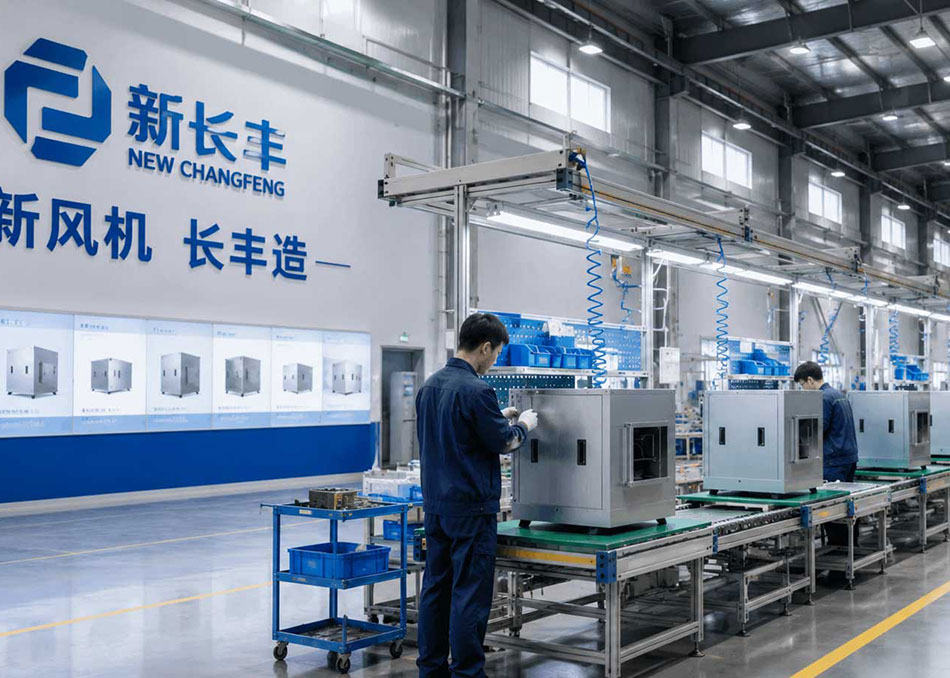
A water-cooled fresh air unit is an evaporative cooling supply device. Outdoor air passes through a wet cooling pad (or heat exchange core), drops in temperature, and is pushed indoors by a fan. In doing so it also provides a degree of positive-pressure make-up air. It addresses two problems—insufficient fresh air volume and supply air that is too warm—but it is not a substitute for exhaust.
In an internet café, heat loads come from PC towers, monitors, people, and lighting. If you supply air without a path for it to leave, humid warm air accumulates and the room still feels muggy no matter how cold the supply air is. The correct system logic is organized exhaust plus directed make-up air.
- Exhaust side: negative-pressure fans or ducted exhaust remove hot, contaminated air from high-temperature zones, smoking areas, and restrooms.
- Make-up side: the water-cooled fresh air unit delivers cooled outdoor air into occupied zones.
- Balance: the two air volumes must be matched, with make-up air slightly lower than exhaust air so the space holds a slight negative pressure. This keeps smoke and moisture from spilling into corridors and neighboring shops.
Supply air handles cooling and pollutant dilution; exhaust air carries heat and contaminants away. Neither works well alone.
Why Placement Decides Whether the Unit Performs
Placement errors produce predictable symptoms. A unit mounted too close to an exhaust intake creates short-circuiting: cooled fresh air is pulled straight out before it ever reaches customers. A unit blowing directly onto a single row of seats leaves the rest of the hall warm and still. A unit installed against an exterior wall with poor drainage or in a humid corner invites condensation on ducts, grilles, and nearby surfaces.
Three placement principles apply in nearly every café layout:
- Supply from the occupied zone's clean side. Position supply outlets on the side of the hall away from smoking areas and restrooms, so fresh air sweeps across seating before reaching exhaust points.
- Keep supply and exhaust separated. Maintain distance between supply diffusers and exhaust intakes so the air travels through the space rather than across the ceiling.
- Respect the evaporative process. The unit needs reliable outdoor air intake, a water supply and drain, and service access. Enclosed shafts or recirculated exhaust air will undermine cooling performance.
Duct layout matters as much as the unit location. Long, undersized ducts raise static pressure and cut airflow; sharp bends and excessive flexible duct create turbulence and noise. A straightforward, well-supported duct run with balanced branch dampers usually outperforms a complicated layout.
The Negative-Pressure Lesson from Commercial Kitchens
Commercial kitchen exhaust design offers a useful model for internet cafés. A kitchen hood only captures fumes effectively when the kitchen is held at negative pressure relative to surrounding spaces, and when make-up air is supplied in a controlled way. Without make-up air, the exhaust fan starves, capture collapses, and odors escape. With too much make-up air, smoke is pushed out of the hood and into the dining room.
The same balance applies to a café's smoking area or restroom block: exhaust should dominate locally so contaminants move toward the exhaust, while the water-cooled fresh air unit supplies the general occupied zone. This is the concept of negative-pressure containment with directed make-up air.
In practice, this means treating the smoking room or restroom as an exhaust-dominant zone with its own exhaust capacity, and letting the fresh air unit pressurize the main hall and booths slightly. The pressure cascade—clean zones slightly positive, dirty zones negative—keeps smoke and odors from migrating into the seating area. It also reduces the common complaint of smoke drifting into private booths whenever a door opens.
Design and Commissioning Checks Before You Buy
Before selecting equipment, confirm the basics: the café's floor area and ceiling height, the number of seats and PCs, the number of private booths, and whether smoking is permitted. These determine the fresh air demand and the exhaust strategy. Reference standards such as GB/T 1236 for fan performance testing and GB 19761 for fan energy efficiency when comparing equipment, and require test data rather than nominal claims.
During commissioning, verify airflow direction with smoke pencils or tissue tests at diffusers and exhaust grilles. Check that supply air reaches the far corners of the hall, that booth doors do not whistle or slam from pressure imbalance, and that no condensation forms on grilles or duct surfaces. Adjust dampers and fan speeds until the pressure relationship between zones is stable.
- Confirm outdoor air intake is clean and away from exhaust discharge.
- Verify water supply, drainage, and overflow protection for the unit.
- Check noise levels at seating height, not just at the unit.
- Document airflow settings so seasonal adjustments stay consistent.
Frequently Asked Questions
Q: Can a water-cooled fresh air unit replace exhaust fans in an internet café?
A: No. The unit supplies cooled fresh air and creates make-up pressure, but it does not remove heat, moisture, or smoke. You still need organized exhaust—negative-pressure fans or ducted exhaust—sized slightly above the make-up air volume to maintain a slight negative pressure in the space.
Q: Where should the unit be installed to avoid uneven cooling?
A: Supply outlets should serve the occupied zone from the cleaner side of the hall, away from smoking areas and restrooms, with duct runs kept short and balanced. Avoid placing supply diffusers directly beside exhaust intakes, which causes short-circuiting and wastes cooling capacity.
Q: Why does condensation appear on grilles or walls after installation?
A: Evaporative cooling adds moisture to the supply air. If the space is over-supplied, poorly exhausted, or if cold duct surfaces meet humid room air, condensation forms. Balancing supply and exhaust, insulating ducts, and ensuring adequate exhaust from humid zones usually resolves it.
Q: How does the kitchen negative-pressure approach apply to a café?
A: Treat smoke-heavy or odorous zones as exhaust-dominant and keep them at negative pressure relative to the main hall. The fresh air unit then supplies the clean zones at slight positive pressure, creating a pressure cascade that stops smoke and odors from spreading into seating areas.
Getting ventilation right in an internet café is less about buying a bigger unit and more about placing it correctly and balancing it against a well-designed exhaust system. A water-cooled fresh air unit paired with negative-pressure exhaust, sensible duct layout, and careful commissioning will deliver steadier temperatures, cleaner air, and fewer complaints—season after season. For layout reviews and equipment selection, consult XCFFJ's ventilation and cooling specialists at www.xcffj.com.