
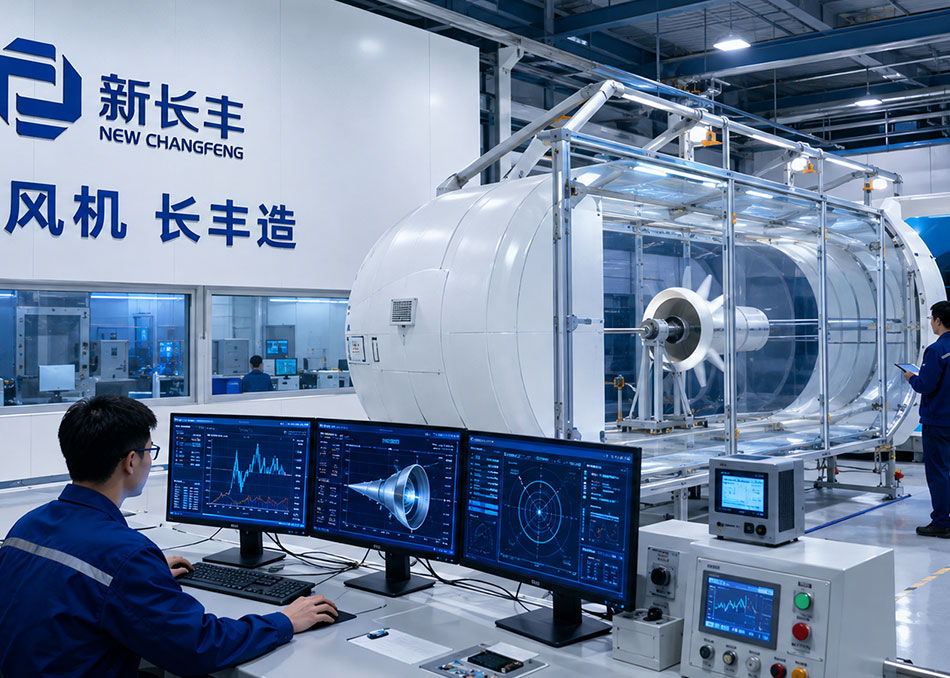
School canteen kitchens are hotspots for cooking fumes and steam. During peak meal times, when wok burners, steaming cabinets, and fryers run simultaneously, a poorly designed or undersized exhaust system can lead to油烟 spillage, stuffy kitchens, and poor air quality. This not only affects chef comfort but also risks environmental fines if emissions fail to meet standards. Among the various exhaust solutions, the cabinet centrifugal fan has become the core power unit for school canteen exhaust systems, thanks to its high static pressure, stable operation, and relatively controlled noise. This article explains the working principle of cabinet centrifugal fans and how they efficiently handle exhaust and make-up air, offering practical guidance for procurement and maintenance teams.
Basic Structure and Working Principle
A cabinet centrifugal fan consists of an impeller, a volute casing, an inlet, an outlet, a motor, and a vibration-damping base, all enclosed within a sound-insulated cabinet—hence the name. Its operation relies on centrifugal force: when the motor spins the impeller at high speed, air between the blades is forced outward by centrifugal action toward the volute, gaining both kinetic energy and static pressure. Meanwhile, a negative pressure forms at the impeller center, drawing in fresh air from the inlet, creating continuous airflow.
Compared to axial fans, cabinet centrifugal fans turn the airflow 90 degrees—axial inlet, radial outlet. This feature enables them to overcome the resistance of long duct runs, elbows, transitions, and purification equipment. For school canteens, where the exhaust path is often complex and purification devices add significant pressure loss, this capability is essential.
Key Advantages for School Canteen Exhaust
- High static pressure: Overcomes duct friction and the resistance of fume purifiers, ensuring consistent extraction even with multiple branches.
- Stable performance: Designed for continuous operation during peak hours, maintaining airflow without significant drop-off.
- Noise control: The enclosed cabinet and vibration isolation reduce both fan noise and structural transmission, which is critical in school environments.
- Space efficiency: Compact cabinet design fits into limited machine rooms or outdoor installations, saving valuable kitchen space.
Integration with Purification and Make-up Air
In a typical school canteen, the cabinet centrifugal fan works in tandem with a grease filter, electrostatic purifier, or UV purifier. The fan is usually placed after the purification device to pull contaminated air through the filters, ensuring that the fan blades stay cleaner and the system maintains high efficiency. Proper fan selection must account for the combined pressure drop of ductwork and purification equipment—often calculated using standards like GB/T 1236 for fan performance testing.
Equally important is make-up air (补风). When the exhaust fan removes large volumes of air, the kitchen can become negatively pressurized, causing drafts and reducing exhaust effectiveness. A balanced system introduces tempered fresh air through dedicated supply fans or ventilation louvers, maintaining a slight negative pressure to contain fumes while ensuring comfort. The cabinet centrifugal fan can also serve as a supply fan in such setups, providing reliable airflow for a balanced ventilation design.
Selection and Maintenance Tips
When selecting a cabinet centrifugal fan for a school canteen, consider the total exhaust volume required, duct length and configuration, and the pressure drop of the purification system. Choose a fan with a performance curve that matches the system resistance at the design airflow rate. Oversizing wastes energy, while undersizing leads to poor capture. Look for fans with energy-efficient motors (meeting GB 19761 efficiency grades) and quiet operation—especially important if the fan is installed near classrooms or administrative areas.
Regular maintenance is key to longevity. Clean the impeller and volute periodically to prevent grease buildup, which causes imbalance and vibration. Inspect belts and bearings (if applicable) and ensure the motor is properly lubricated. Check the vibration-damping mounts for wear, as loose mounts increase noise transmission. Also, verify that the inlet and outlet connections are airtight to avoid performance loss.
FAQ
Q: How do I calculate the required airflow for a school canteen exhaust system?
A: Start with the kitchen's volume and the recommended air change rate (typically 40-60 air changes per hour for commercial kitchens). Add the capture volume from hoods—each hood has a specified capture velocity and airflow requirement. Sum these to get total exhaust volume. Then, estimate the system pressure drop (duct friction, elbows, filters, purifier) to select a fan that delivers the needed airflow at that static pressure.
Q: Can a cabinet centrifugal fan be used for both exhaust and make-up air?
A: Yes. While it's primarily an exhaust fan, it can also serve as a supply fan if the system design requires positive pressure or dedicated make-up air. However, ensure the fan is rated for the appropriate airflow and pressure, and consider using a separate fan for make-up air to allow independent control and balancing.
Q: What maintenance is required to keep the fan running efficiently?
A: Regular cleaning of the impeller and casing to remove grease is essential. Check and tighten belt tension (if belt-driven), replace worn belts, lubricate bearings according to the manufacturer's schedule, and inspect the motor for overheating or unusual noise. Also, verify that the sound-insulated cabinet seals are intact to maintain noise reduction and prevent air leaks.
In summary, the cabinet centrifugal fan is a reliable and effective solution for school canteen exhaust systems, combining high static pressure, stable performance, and noise control. By understanding its working principle and properly integrating it with purification and make-up air systems, facility managers can ensure a safe, comfortable, and compliant kitchen environment. For tailored advice on selecting the right fan for your project, contact XCFFJ's technical team—we're here to help you design an efficient ventilation solution.