
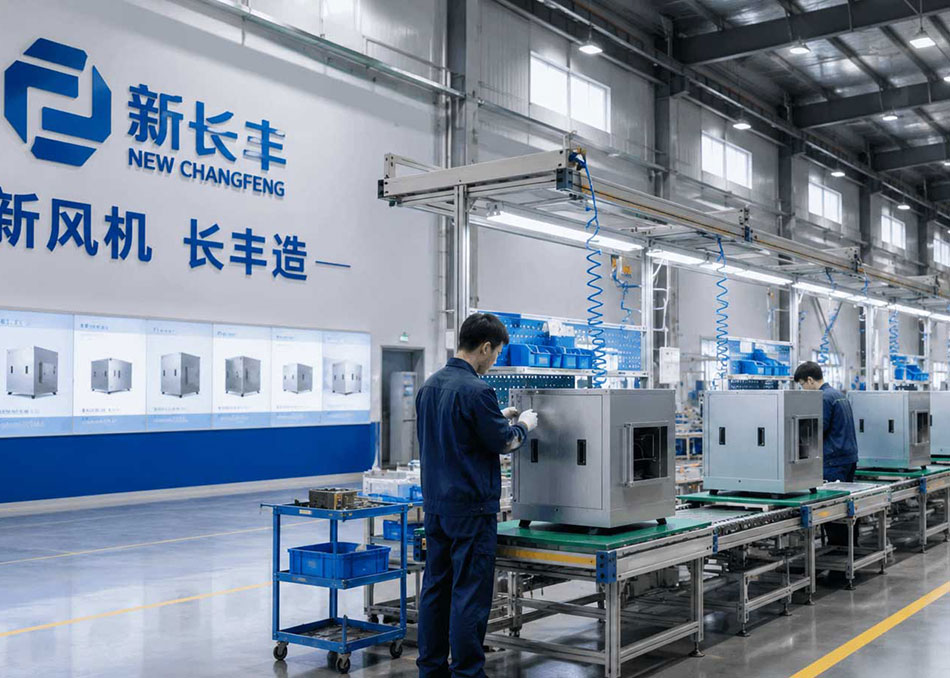
In subtropical cities like Guangzhou, hotel kitchens face a punishing combination: long, humid summers and cooking lines where woks, steamers, and ovens run simultaneously. The temperature at the chef's station can climb well above outdoor levels, turning a busy service into a test of endurance. Prolonged exposure to such heat doesn't just drain stamina—it raises the risk of heat stress, slows reaction times, and can compromise food safety and output. For back-of-house managers, a properly designed cooling strategy is no longer optional. Among the available options, the commercial kitchen air conditioner has gained attention because it targets workstation cooling, tolerates grease-laden air, and stands up to high ambient temperatures. This article looks at how to select the right system for hotel kitchens in Guangzhou's climate.
Start With the Real Requirement: Workstation Cooling, Not Whole-Kitchen Refrigeration
A common misstep is treating the kitchen like an office and expecting the entire space to reach comfort-level temperatures. Hotel kitchens are open, heat sources are concentrated, and cooking fumes are heavy. Attempting to cool the whole room means the cooling capacity is quickly lost to stove heat and exhausted by the ventilation system—resulting in very high energy use and disappointing results. A more practical approach is workstation cooling: directing cool air precisely to fixed positions such as the chef's station, the plating area, and the prep zone.
Guangzhou's high humidity adds a significant latent load on top of sensible heat. Before selecting equipment, clarify a few key questions: which workstations need cooling, how far apart they are, whether the kitchen already has an independent exhaust system, and whether ceiling or wall mounting is feasible. Only with a clear picture of these factors can you avoid buying equipment that never delivers cool air where people actually stand.
Why Commercial Kitchen Air Conditioners Are Built Differently
Standard comfort air conditioners are not designed for kitchen environments. Grease, moisture, and high ambient temperatures accelerate fouling and corrosion, while conventional filters clog quickly. A commercial kitchen air conditioner addresses these conditions with features such as grease-resistant coils and filtration, sealed electrical components, and a structure that supports targeted air delivery rather than general space cooling.
Because these units often operate in a negative-pressure environment created by the kitchen exhaust system, selection must consider how the supply air interacts with the exhaust. If the exhaust pulls harder than the supply can deliver, cool air never reaches the workstation. This is why a commercial kitchen air conditioner should be specified as part of the overall ventilation strategy—not as a standalone appliance.
Key Selection Factors for Hotel Kitchen Cooling
Choosing the right unit involves balancing cooling capacity, airflow delivery, durability, and energy efficiency. While exact figures depend on the specific kitchen layout and heat load, the following considerations apply across most projects.
- Cooling capacity matched to workstation load: Estimate the heat generated by cooking equipment near each station, then size the unit to handle that local load rather than the entire room volume.
- Targeted air delivery: Adjustable louvers or ducted outlets that direct cool air to the chef's position are more effective than diffuse ceiling supply.
- Grease and moisture resistance: Look for coils, filters, and cabinets designed to withstand oil-laden, humid air—critical in Guangzhou's climate.
- Interaction with exhaust: Coordinate supply airflow with the kitchen's exhaust rate to maintain a slight negative pressure without starving the cooling supply.
- Energy efficiency: Refer to the GB 19761 fan energy efficiency standard and comparable metrics for cooling equipment to compare operating costs over time.
- Noise level: In open kitchens, excessive noise adds to staff fatigue; choose units with sound levels appropriate for the space.
- Maintenance access: Filters and coils must be reachable for regular cleaning, or performance will degrade quickly.
Installation and Commissioning Considerations
Even a well-chosen unit can underperform if installation is rushed. Mounting height, outlet direction, and distance from heat sources all affect how much cool air reaches the workstation. In many hotel kitchens, the ceiling is already crowded with exhaust hoods, ductwork, and lighting, so coordination among trades is essential.
Commissioning should verify that supply air actually reaches the target positions and that the exhaust does not overpower the supply. Simple checks—such as measuring air velocity at the workstation or observing smoke movement—can reveal problems before they become complaints. Regular maintenance, including filter cleaning and coil inspection, keeps the system performing and extends its service life.
Frequently Asked Questions
Q: Can a commercial kitchen air conditioner cool the entire hotel kitchen?
A: It is generally more effective to use it for workstation cooling rather than whole-room cooling. Hotel kitchens have concentrated heat sources and strong exhaust, so attempting to cool the entire space leads to high energy consumption and limited comfort gains. Targeting the chef's station, plating area, and prep zone delivers better results.
Q: How does Guangzhou's humidity affect equipment selection?
A: High humidity adds a substantial latent load and accelerates corrosion and microbial growth. Choose units with moisture-resistant construction and ensure drainage is properly handled. Regular cleaning is especially important in humid climates.
Q: What standards should I reference when comparing options?
A: Relevant standards include GB/T 1236 for fan performance testing, GB 19761 for fan energy efficiency, GB 51251 for smoke and heat exhaust systems, and GB 18483 for kitchen fume emission. These provide a framework for evaluating performance, efficiency, and compliance.
Q: Will the kitchen exhaust system interfere with cooling?
A: Yes, if not coordinated. The exhaust can create negative pressure that pulls cool air away from workstations. Supply and exhaust should be balanced so that cool air reaches staff positions while maintaining proper kitchen ventilation.
Summary
Selecting a commercial kitchen air conditioner for hotel kitchen cooling in Guangzhou requires a shift in mindset: focus on workstation cooling rather than whole-room refrigeration, account for humidity and grease, and integrate the unit with the kitchen's exhaust strategy. By clarifying requirements, choosing equipment suited to the environment, and commissioning carefully, hotel operators can improve working conditions, protect staff well-being, and support consistent food quality.
For more information on ventilation and cooling solutions tailored to commercial kitchens, visit www.xcffj.com.