
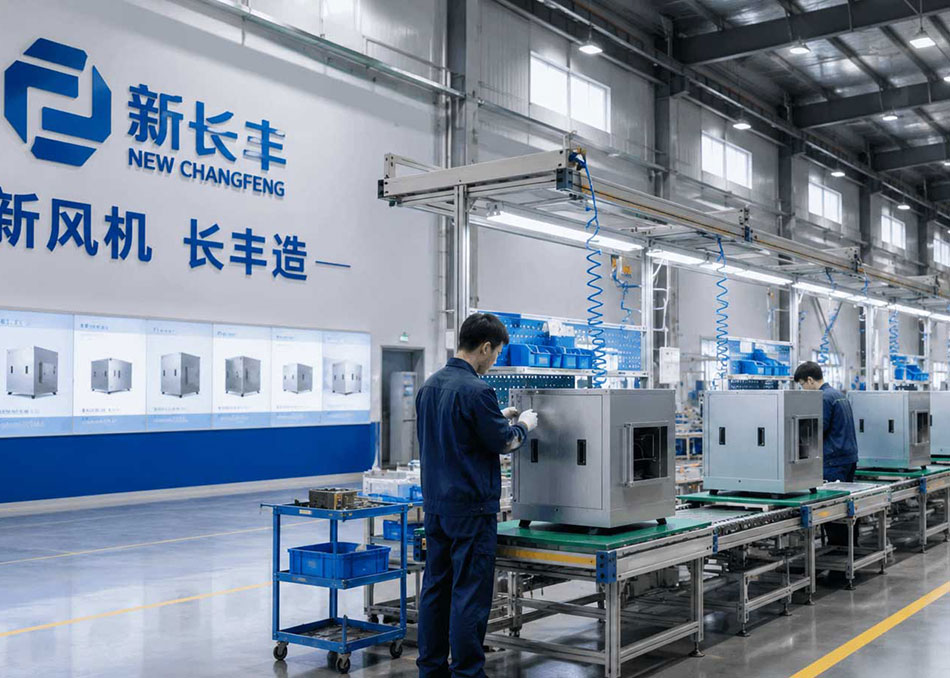
In a hotel kitchen, heat is not a minor discomfort—it is an operational hazard. Open flames, hot oil, steamers, and ovens combine to push work-station temperatures well beyond the human comfort zone. Cooks tire faster, concentration slips, and both output consistency and safety suffer. The common fixes—aiming a large fan at the line or hoping the central AC will drift in—rarely solve the problem. A fan just moves hot air around, while central cooling loses capacity quickly in a greasy, humid environment. Commercial kitchen air conditioners are purpose-built for this challenge. Their job is not to cool the entire kitchen to a pleasant temperature, but to deliver cold air precisely to the wok range, prep stations, and plating areas—what the industry calls “spot cooling” or “work-station cooling.” This guide walks hotel kitchen operators, engineering contractors, and procurement teams through the principles, selection criteria, installation, and maintenance of commercial kitchen air conditioners, so you can make a confident, cost-effective choice.
Why Hotel Kitchens Need a Dedicated Cooling Approach
Hotel kitchens differ from ordinary commercial kitchens in several important ways: meal service is concentrated into tight peak periods, the number of burners is high, exhaust systems are powerful, and staff density is significant. The result is a space with intense heat sources and strong exhaust simultaneously. Large volumes of air are pulled out continuously, creating a persistent negative pressure. If you simply install a comfort air conditioner, the cold air is often captured by the exhaust hood before it ever reaches the work station. Cooling capacity is wasted, the compressor runs under heavy load for long stretches, and failure rates climb.
Commercial kitchen air conditioners are designed around a different logic. They typically use a direct-blow or spot-cooling configuration, with a cabinet centrifugal fan or multi-wing centrifugal fan to project conditioned air over a defined distance. The air outlet is positioned to create a localized cool zone at the work station, rather than trying to condition the entire room. This approach respects the reality of kitchen airflow: you cannot out-cool a well-designed exhaust system, but you can protect the people who need it most.
Another key difference is the operating environment. Kitchen air is laden with grease vapor, moisture, and fine particulates. Standard air conditioners rely on filters and heat exchangers that clog quickly under these conditions. Commercial kitchen air conditioners usually incorporate more robust filtration, corrosion-resistant coils, and layouts that simplify cleaning. Some models also integrate with kitchen exhaust purifiers or use water-cooled condensers to reject heat without adding to the kitchen’s thermal load—an important detail in hotels where the kitchen sits in the core of the building.
How to Select the Right Commercial Kitchen Air Conditioner
Selection starts with the work station, not the room. The goal is to identify where staff spend the most time under heat stress: the wok range, the fryer station, the steamer area, the prep line, or the plating pass. Each location has a different heat profile and physical layout. A unit that works well over a wok range may be the wrong choice for a cold prep station. Mapping these zones first prevents oversizing, undersizing, and misplaced air outlets.
Next, consider the cooling method. Air-cooled units are simpler to install but discharge hot air into the kitchen or nearby space, which can be counterproductive if not ducted away. Water-cooled units reject heat to a water loop, keeping the kitchen cooler and reducing the load on the building’s HVAC system. For hotels with existing chilled-water infrastructure, water-cooled fresh air units or water-cooled kitchen air conditioners can be a natural fit. Evaporative cooling is another option in dry climates, though humidity control becomes a factor in coastal or tropical locations.
Airflow pattern and throw distance matter as much as nominal capacity. A unit with a strong cabinet centrifugal fan can project air across a wider work zone, but if the outlet is too close to the exhaust hood, the cold air will be captured before it reaches the cook. Adjustable louvers, multiple outlets, or a ducted design can help. Noise is another practical concern: a unit that is too loud will not be used consistently, and kitchen staff will simply turn it off during peak service. Look for models with low noise levels and vibration isolation, especially if the kitchen is near a dining area.
Finally, check the energy efficiency and maintenance requirements. Fan energy efficiency standards such as GB 19761 provide a useful benchmark for comparing fan performance, while GB/T 1236 covers fan performance testing. For kitchen fume-related equipment, GB 18483 sets emission requirements that may affect how you integrate cooling with exhaust purification. A unit that is easy to clean, with accessible filters and coils, will stay effective far longer than one that requires dismantling to service.
- Define the cooling zone: Identify specific work stations rather than trying to cool the whole kitchen.
- Match the cooling method to the building: Air-cooled, water-cooled, or evaporative—each has trade-offs in heat rejection and humidity.
- Verify airflow reach: Ensure the cold air actually arrives at the work station, not the exhaust hood.
- Prioritize cleanability: Grease and moisture are constant; easy maintenance protects performance.
- Check noise levels: A quiet unit is more likely to be used consistently during service.
Installation and Integration with Kitchen Ventilation
Installation is where good equipment can either shine or fail. The most common mistake is treating the kitchen air conditioner as a standalone appliance. In reality, it must be coordinated with the exhaust hood, make-up air system, and overall kitchen pressure balance. If the kitchen is under strong negative pressure, cold air will be pulled away from the work station regardless of how powerful the unit is. In some cases, the solution is to adjust make-up air volumes or introduce a dedicated fresh air path near the cooling unit.
Positioning the indoor unit is equally important. Mounting it too high may cause cold air to mix with rising heat before reaching the cook. Mounting it too low can interfere with movement or expose staff to direct cold drafts. The ideal height and angle depend on the work station layout, ceiling height, and the unit’s throw pattern. For wok ranges, a slightly angled outlet that blankets the upper body without blowing directly on the face is often preferred. For prep areas, a broader, gentler airflow may be more appropriate.
Drainage and condensation must also be planned. In humid kitchens, condensate production can be significant. Ensure drain lines are sloped correctly and routed to a suitable discharge point. If the unit uses a water-cooled condenser, verify the water quality and flow rate to avoid scaling and corrosion. Electrical connections should follow local codes and be protected from grease and moisture. Finally, label and document the installation so that future maintenance staff understand how the system integrates with the rest of the kitchen ventilation.
Maintenance Practices That Keep Cooling Performance High
Commercial kitchen air conditioners live in a harsh environment. Grease, moisture, and dust accumulate on filters, coils, and fans. Without regular maintenance, airflow drops, cooling capacity falls, and energy consumption rises. A simple monthly routine—inspecting and cleaning filters, checking drain pans, and verifying airflow—can prevent most performance problems. Coil cleaning should follow the manufacturer’s recommendations, using approved cleaners that do not corrode the fins.
Fan and motor components also need attention. Bearings may require lubrication, and belts or couplings should be checked for wear. Vibration or unusual noise often signals a developing issue. For water-cooled units, descaling the condenser loop periodically maintains heat transfer efficiency. In kitchens with heavy grease loads, consider adding a pre-filter or coordinating with the exhaust purification system to reduce the grease reaching the cooling unit.
Seasonal checks are equally valuable. Before peak summer service, test the unit under full load and confirm that the cold air still reaches the work station. After the peak season, a thorough cleaning and inspection can extend equipment life. Keep maintenance records; they help identify recurring issues and support warranty claims. Well-maintained units not only cool better but also last longer, improving the return on investment for hotel operators.
Frequently Asked Questions
Q: Can a commercial kitchen air conditioner cool the entire hotel kitchen?
A: It is not designed for whole-room cooling. The primary goal is work-station cooling—delivering cold air to the wok range, prep line, and plating areas. Cooling the entire kitchen would require a much larger system and would still struggle against powerful exhaust. Spot cooling is more energy-efficient and more effective where it matters.
Q: What is the difference between a commercial kitchen air conditioner and a regular air conditioner?
A: Commercial kitchen air conditioners are built for grease, moisture, and high ambient temperatures. They typically use more robust filtration, corrosion-resistant components, and a direct-blow or spot-cooling design. Regular comfort air conditioners clog faster and lose capacity quickly in kitchen environments, leading to higher maintenance and energy costs.
Q: Should I choose an air-cooled or water-cooled unit?
A: It depends on your building infrastructure and climate. Air-cooled units are simpler to install but discharge heat into the surrounding space. Water-cooled units reject heat to a water loop, keeping the kitchen cooler and reducing load on the building HVAC. If you have chilled water available, a water-cooled unit is often the better choice for hotel kitchens.
Q: How do I prevent cold air from being sucked into the exhaust hood?
A: Position the air outlet to direct cold air across the work station rather than toward the hood. Coordinate with your make-up air system to reduce excessive negative pressure. Adjustable louvers, ducted outlets, or multiple units can help ensure the cold air reaches the cook. In some cases, a slight positive pressure in the work zone improves results.
Q: What maintenance does a commercial kitchen air conditioner need?
A: Regular cleaning of filters, coils, and drain pans is essential. Check fans, motors, and belts for wear. For water-cooled units, descale the condenser loop periodically. A monthly inspection and a thorough pre-season service will keep performance high and extend equipment life.
Conclusion
Cooling a hotel kitchen is not about making the whole room comfortable—it is about protecting the people at the work stations. Commercial kitchen air conditioners, paired with a thoughtful selection and installation strategy, deliver cold air where it is needed most, improving staff stamina, safety, and output consistency. By focusing on work-station cooling, matching the cooling method to your building, integrating with kitchen ventilation, and maintaining the equipment diligently, you can turn a persistent pain point into a manageable, efficient part of your kitchen operation.
For hotel kitchen operators and contractors looking for reliable commercial kitchen air conditioners and ventilation solutions, XCFFJ offers a range of equipment designed for real kitchen conditions. Visit www.xcffj.com to explore options and discuss your project requirements.