
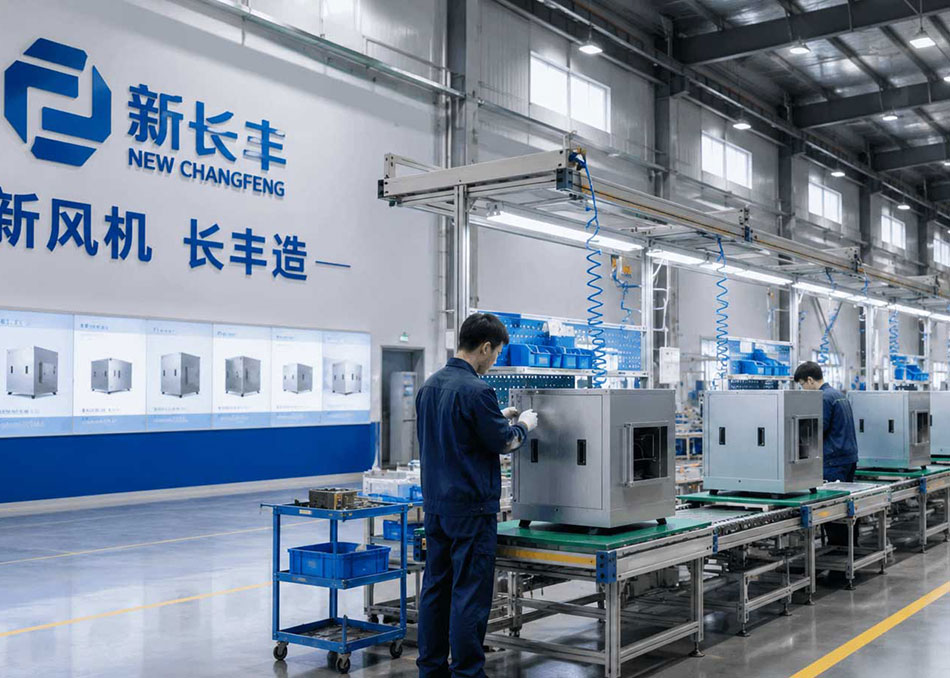
Foshan's vibrant food scene—from traditional eateries in the old town to modern commercial complexes—demands reliable kitchen exhaust systems that meet both operational needs and regulatory compliance. Yet many restaurant owners fall into common traps: assuming bigger airflow is always better, or prioritizing the lowest price. The result: lingering smoke, noise complaints from neighbors, and even fines for emission violations. The DT cabinet centrifugal fan, purpose-built for commercial kitchen exhaust, has become a preferred solution in Foshan thanks to its high static pressure, low noise, compact footprint, and ease of maintenance. But with countless brands and models on the market, how do you choose the right one? This article breaks down the key selection criteria based on real-world conditions and industry standards.
Why DT Cabinet Centrifugal Fans Are the Go-To for Commercial Kitchen Exhaust
Kitchen exhaust is fundamentally different from general factory ventilation. The challenges are unique: high grease concentration, significant duct resistance, long operating hours, and strict noise sensitivity in commercial settings. Axial fans deliver high airflow but lack the static pressure needed to overcome long duct runs and multiple elbows. Multi-blade centrifugal fans offer higher pressure but tend to be noisier and bulkier. The DT cabinet centrifugal fan strikes the right balance: its centrifugal impeller provides stable, high static pressure to ensure grease-laden air moves efficiently through the ductwork, while the cabinet's built-in sound insulation keeps noise levels within acceptable limits for commercial environments.
Moreover, the design aligns with industry standards such as GB/T 1236 (fan performance testing) and GB 19761 (fan energy efficiency). These standards ensure that the fan's performance is verifiable and that energy consumption is optimized—a critical factor for kitchens that run exhaust systems for 10–12 hours a day. Choosing a fan that meets these standards not only guarantees performance but also supports compliance with local environmental regulations, including GB 18483 for cooking fume emission limits.
Key Factors in Selecting a DT Cabinet Centrifugal Fan
Selecting the right fan isn't just about picking the largest model. It's about matching the fan's performance to your specific kitchen layout and cooking volume. Here are the critical parameters to evaluate:
- Airflow (CFM/m³/h): Calculate the total exhaust volume based on the number of cooking appliances, hood dimensions, and cooking intensity. Oversizing wastes energy; undersizing leads to poor smoke capture.
- Static Pressure (Pa): Account for duct length, number of bends, and the pressure drop across filters and exhaust hoods. A fan with insufficient static pressure will struggle to move air through the system effectively.
- Noise Level (dB(A)): Check the fan's noise rating at the operating point. For kitchens near dining areas or residential zones, choose a model with lower dB(A) or add silencers.
- Energy Efficiency (per GB 19761): Look for fans that meet or exceed the minimum efficiency grade. Higher efficiency reduces long-term operating costs.
- Construction and Maintenance: Ensure the fan is made of corrosion-resistant materials (e.g., galvanized steel or stainless steel) and that the motor and impeller are easily accessible for cleaning—essential given the grease buildup in kitchen ducts.
Remember, the fan must be paired with a properly sized duct system and, ideally, an electrostatic precipitator (ESP) or other purification equipment to meet emission standards. A well-designed system, not just a powerful fan, is the key to a clean and compliant kitchen.
Common Mistakes to Avoid in Fan Selection
Even experienced kitchen designers can make errors. Here are the most frequent pitfalls and how to avoid them:
- Overestimating Airflow Needs: A fan that's too large for the kitchen can cause excessive noise and energy waste. Use proper calculation methods (e.g., based on hood area and capture velocity) rather than guesswork.
- Ignoring Static Pressure: A high-CFM fan with low static pressure will fail in a long or complex duct system. Always calculate the total system pressure loss.
- Neglecting Noise Constraints: In mixed-use buildings or restaurants with outdoor seating, noise can be a deal-breaker. Check local noise ordinances and select a fan with appropriate sound levels.
- Choosing Price Over Quality: Cheap fans often have lower efficiency, higher noise, and shorter lifespan. Factor in maintenance and energy costs over the fan's life.
By avoiding these mistakes, you can ensure your exhaust system performs reliably, meets all regulations, and keeps your kitchen comfortable and safe.
Integrating Purification: The Role of DT Fans in a Complete System
In Foshan, where air quality regulations are increasingly strict, a standalone fan is rarely sufficient. The DT cabinet centrifugal fan works best as part of an integrated system that includes:
- Grease filters (baffle or mesh) to remove large particles before they reach the fan.
- An electrostatic precipitator (ESP) to capture fine oil mist and reduce odor.
- A variable frequency drive (VFD) to adjust fan speed based on cooking activity, saving energy during off-peak hours.
When designed correctly, this combination not only meets GB 18483 emission standards but also improves indoor air quality in the kitchen, reduces cleaning frequency of ductwork, and extends the fan's lifespan. The DT fan's compact design makes it easy to integrate into tight spaces, a common constraint in urban kitchens.
FAQ: DT Cabinet Centrifugal Fans for Kitchen Exhaust
Q: How do I calculate the required airflow for my kitchen?
A: A common method is to multiply the hood's capture area (length × width in meters) by a capture velocity of 0.5–0.7 m/s for commercial kitchens, then convert to m³/h. Alternatively, use the number of appliances and their heat output. For accurate sizing, consult a ventilation engineer who can account for ceiling height, cooking load, and local codes.
Q: Can I use a DT cabinet centrifugal fan for both exhaust and fresh air supply?
A: While DT fans are primarily designed for exhaust applications, they can be used in supply air systems if the static pressure and airflow requirements match. However, for kitchen supply air, consider using a dedicated fresh air unit (like XCFFJ's water-cooled fresh air units) to maintain balanced ventilation and avoid negative pressure that could hinder exhaust performance.
Q: How often should I maintain my DT cabinet centrifugal fan?
A: Regular maintenance is critical in kitchen environments. Inspect the fan every 3–6 months, cleaning the impeller and housing to remove grease buildup. Check the motor bearings and belt tension (if applicable) at the same time. A well-maintained fan not only performs better but also consumes less energy.
Conclusion
Choosing the right DT cabinet centrifugal fan for your Foshan kitchen is about more than just picking a model—it's about understanding your system's needs, adhering to standards, and planning for long-term efficiency. By focusing on static pressure, noise, energy efficiency, and proper integration with purification equipment, you can create an exhaust system that is both compliant and cost-effective. For professional guidance and a wide range of DT cabinet centrifugal fans, visit xcffj.com or contact XCFFJ's team to discuss your specific requirements.