
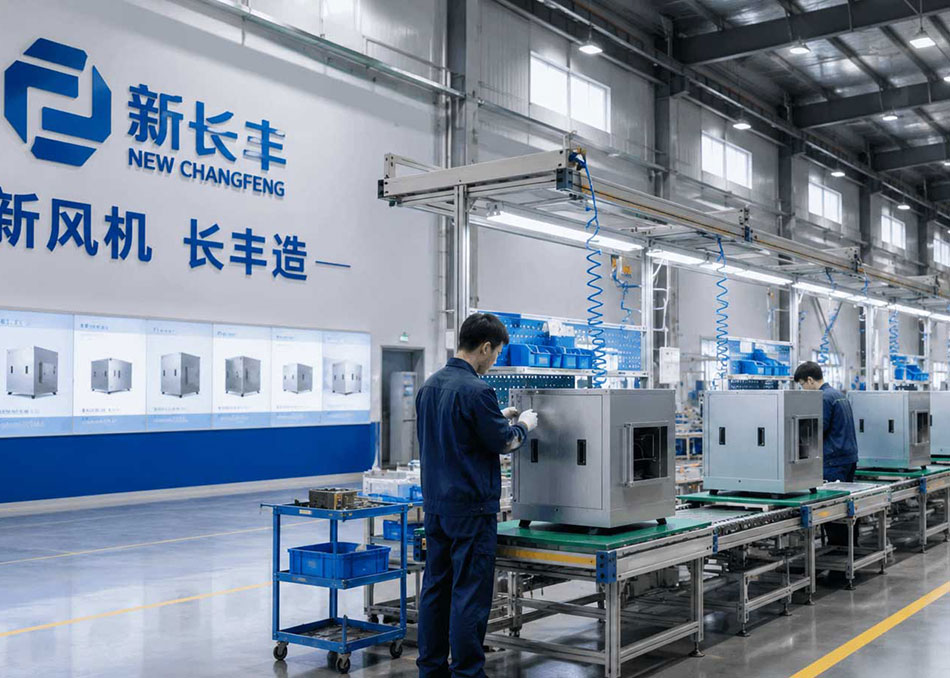
Commercial kitchens and internet cafes may seem like completely different environments, but from an HVAC engineering perspective, they share striking similarities. Both are densely occupied, semi-enclosed spaces with high internal heat loads and a tendency for air quality to deteriorate rapidly. In a commercial kitchen, open flames, steamers, and deep fryers generate continuous heat, while cooking fumes and humid air combine to make the perceived temperature far higher than the ambient reading. In an internet cafe, rows of computers, monitors, and lighting run for hours on end, and with people staying for long periods, CO₂ levels climb, air becomes stale, and summer stuffiness becomes a major complaint.
Many operators try to cope by adding an exhaust fan or a few wall-mounted fans. The result is often insufficient exhaust volume, chaotic make-up air paths, and localized negative pressure that actually pulls cooking fumes and odors in from adjacent areas. The truly effective approach is to first solve the negative pressure balance—ensuring air can get out and make-up air can get in—and then layer on cooling. This is exactly why kitchen heat solutions and internet cafe ventilation can share the same technical pathway.
A water-cooled fresh air unit is not simply a device that blows cold air. It plays a core role in kitchen negative pressure resolution and ventilation make-up air: it supplies fresh outdoor air that has been cooled through water evaporation, while providing a stable make-up air source for exhaust and smoke extraction systems. This transforms the air organization of the entire space from turbulent disorder into controlled, directional flow.
Why Internet Cafes Need Water-Cooled Fresh Air Units for Ventilation and Cooling
Internet cafes are typically characterized by three things: many people, many machines, and few windows. A medium-sized cafe with dozens of gaming stations can have a heat load comparable to a small office, but without the benefit of dedicated HVAC design. Computers and monitors emit sensible heat continuously, while each person adds latent heat through respiration and perspiration. Without proper ventilation, the space becomes a heat trap.
Traditional split air conditioners can lower the temperature reading, but they recirculate indoor air rather than bringing in fresh air. As a result, CO₂ and body odors accumulate, and the environment remains stuffy even if the thermostat says otherwise. A water-cooled fresh air unit addresses this by drawing in outdoor air, passing it through an evaporative cooling medium, and delivering it indoors. The evaporative process naturally cools the air while adding a small amount of moisture, which can be beneficial in dry climates. More importantly, it creates a positive pressure zone that helps push stale air out through designated exhaust points.
For internet cafe owners, the practical benefits are clear:
- Improved air quality: Continuous fresh air supply dilutes CO₂ and odors, keeping the space comfortable for long gaming sessions.
- Energy-efficient cooling: Evaporative cooling consumes far less electricity than conventional compressor-based systems, reducing operating costs.
- Negative pressure control: By balancing supply and exhaust, the unit prevents unwanted infiltration from kitchens, restrooms, or other odor sources.
- Scalable design: Multiple units can be zoned to match different seating areas or peak occupancy periods.
The Shared Engineering Logic: Negative Pressure and Make-Up Air in Kitchens and Internet Cafes
In a commercial kitchen, the exhaust hood captures fumes and heat, but it can only function effectively if make-up air is supplied to replace what is exhausted. Without adequate make-up air, the kitchen develops negative pressure relative to the dining area. This causes doors to be hard to open, exhaust hoods to lose capture efficiency, and cooking odors to migrate into the dining room. The same principle applies to internet cafes: if exhaust fans are installed without a planned make-up air path, the space becomes negatively pressurized, drawing in odors from adjacent spaces and reducing the effectiveness of the exhaust itself.
The water-cooled fresh air unit solves this by acting as a dedicated make-up air source. It delivers tempered fresh air directly into the occupied zone, creating a controlled pressure differential. In a kitchen, this means the exhaust hood can pull fumes more efficiently because there is a steady supply of replacement air. In an internet cafe, it means stale air is pushed out through planned exhaust points rather than leaking in from undesirable sources.
This is why we emphasize kitchen negative pressure resolution · ventilation make-up air as a combined strategy. The water-cooled fresh air unit is not an isolated cooling appliance—it is a key component in a balanced ventilation system. When integrated with exhaust fans, negative pressure fans, or kitchen exhaust purifiers, it helps achieve a coordinated airflow pattern that improves both comfort and air quality.
How Water-Cooled Fresh Air Units Work and Where They Fit
At the heart of a water-cooled fresh air unit is an evaporative cooling pad or media. Outdoor air is drawn through the media by a centrifugal fan, and as water evaporates from the pad surface, the air temperature drops. The cooled air is then delivered into the space through ductwork or direct discharge. Unlike refrigerant-based air conditioning, this process does not use compressors or chemical refrigerants, making it simpler and more environmentally friendly.
In internet cafes, the unit can be installed on a rooftop, in a wall-mounted configuration, or indoors with ducting. It can operate independently or in conjunction with existing exhaust systems. For kitchens, the unit can be positioned to supply make-up air near the cooking line, reducing the load on the exhaust hood and improving capture efficiency. It is important to note that water-cooled fresh air units are not a substitute for kitchen exhaust hoods or electrostatic fume purifiers—they complement them by providing the necessary make-up air.
Key selection considerations include:
- Air volume matching: The unit's airflow should be sized to match the exhaust volume, ensuring balanced pressure.
- Installation location: Intake should be away from exhaust outlets, grease, and odor sources.
- Water quality and maintenance: Regular cleaning of evaporative media and water distribution systems is essential for consistent performance.
- Duct design: Proper duct sizing and layout minimize pressure loss and ensure even air distribution.
- Controls: Variable-speed fans and automated water management can optimize energy use and comfort.
Practical Applications and Benefits for Internet Cafes and Commercial Kitchens
For internet cafes, the most common pain points are summer heat, stale air, and high electricity bills. A water-cooled fresh air unit directly addresses these by providing cooled fresh air at a fraction of the energy cost of conventional air conditioning. It also helps maintain a slight positive pressure, which keeps out dust and odors from outside. In regions with dry heat, the cooling effect is particularly noticeable; in humid climates, the unit still provides ventilation and air movement, which improves perceived comfort.
In commercial kitchens, the unit supports negative pressure resolution by supplying make-up air to the cooking area. This reduces the likelihood of fumes escaping into the dining area and helps the exhaust system operate at its designed capacity. When used alongside a kitchen exhaust purifier, it ensures that the air exhausted to the outside meets environmental standards, such as GB 18483 for kitchen fume emission.
Other settings that benefit from this approach include school canteens, hotel kitchens, warehouse logistics areas, and factory workshops. In all these cases, the combination of fresh air supply, evaporative cooling, and balanced pressure creates a healthier and more comfortable environment.
FAQ
Q: Can a water-cooled fresh air unit replace a traditional air conditioner in an internet cafe?
A: Not entirely. A water-cooled fresh air unit is designed to supply cooled fresh air and manage ventilation, but its cooling capacity depends on the ambient wet-bulb temperature. In very hot and humid conditions, it may not achieve the same temperature drop as a compressor-based air conditioner. However, it can significantly reduce the cooling load on existing air conditioners and improve air quality. For best results, use it as part of an integrated HVAC strategy.
Q: How does the water-cooled fresh air unit help with kitchen negative pressure?
A: By supplying a controlled volume of make-up air into the kitchen, the unit balances the air exhausted by the hood. This prevents excessive negative pressure, which can cause doors to be difficult to open, reduce hood capture efficiency, and draw odors from other areas. The result is a more stable and efficient exhaust system.
Q: What maintenance is required for a water-cooled fresh air unit?
A: Regular maintenance includes cleaning or replacing the evaporative cooling pads, checking the water distribution system for scale or blockages, inspecting the fan and motor, and ensuring the intake and ductwork are free of debris. The frequency depends on the environment—dusty or greasy locations may require more frequent servicing. Following the manufacturer's guidelines will ensure reliable performance and longevity.
Q: Is a water-cooled fresh air unit suitable for both kitchens and internet cafes?
A: Yes, the core principle of providing cooled fresh air and balancing pressure applies to both. However, the specific model, airflow capacity, and installation design should be tailored to the space. For kitchens, corrosion-resistant materials and grease filters may be necessary. For internet cafes, noise levels and air distribution are key considerations. Consulting a ventilation specialist is recommended for proper sizing.
Conclusion
Whether you manage a busy internet cafe or a commercial kitchen, the challenges of heat, stale air, and unbalanced pressure are best solved with a holistic approach. A water-cooled fresh air unit offers an energy-efficient way to introduce cooled fresh air, resolve negative pressure issues, and improve overall comfort. By integrating it with exhaust systems and following sound design principles, you can create a healthier and more productive environment.
To explore how XCFFJ's water-cooled fresh air units can be tailored to your specific ventilation and cooling needs, visit our website or contact our technical team for a consultation.