
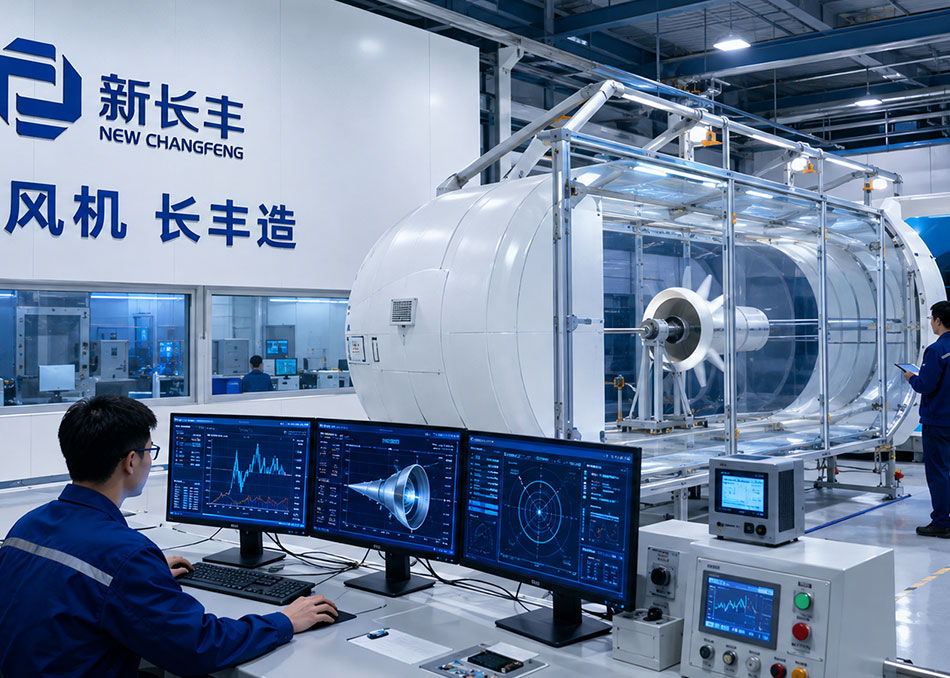
As a manufacturing hub, Dongguan is home to countless factories where workshops face persistent challenges from high temperatures, dust, and odors. Among the various ventilation solutions, the centrifugal fan stands out as the core equipment in factory fume extraction and purification systems, thanks to its high static pressure, heat resistance, and corrosion resistance. However, with a wide array of products on the market, factory managers and procurement professionals often struggle to make a scientifically sound selection that avoids common pitfalls. This article provides a practical guide to selecting centrifugal fans, covering technical parameters, application scenarios, and installation maintenance.
The Role of Centrifugal Fans in Factory Ventilation
Centrifugal fans generate airflow by spinning an impeller, which throws air outward radially, producing a higher static pressure compared to axial fans. This makes them ideal for applications that require overcoming duct resistance, conveying air over long distances, or exhausting high-temperature fumes.
In factory workshops, centrifugal fans are commonly used for:
- Extracting smoke and dust from welding, painting, and other processes.
- Exhausting high-temperature waste gases from heat treatment furnaces and drying equipment.
- Combining general ventilation with local exhaust systems.
Because they deliver higher static pressure at the same airflow rate, centrifugal fans are better suited for exhaust systems with long duct runs and multiple bends. Consequently, in Dongguan's electronics, hardware, and plastics manufacturing sectors, centrifugal fans are the preferred choice for fume extraction and purification.
Four Key Parameters to Define Before Selection
Selection should not be based solely on motor power; it requires a comprehensive understanding of your operating conditions. The following four core parameters must be discussed with your supplier:
- Airflow (Q): Determine the total airflow needed based on workshop volume, air change rate, or process smoke generation. The unit is typically m³/h.
- Static Pressure (P): Calculate the total resistance of the duct system, including friction losses and local resistances (elbows, dampers, etc.). The fan must provide sufficient static pressure to overcome this resistance.
- Medium Temperature: Identify the maximum temperature of the air or gas being handled. High-temperature applications require fans with appropriate heat-resistant materials and motor cooling provisions.
- Corrosiveness and Particulates: If the air contains corrosive gases or abrasive dust, you may need special coatings, impeller materials, or a dedicated dust-removal fan design.
Matching the Fan Type to Your Application
Centrifugal fans come in various configurations, each suited to specific tasks. For general ventilation and fume extraction, forward-curved (multi-blade) fans are compact and cost-effective, but they are less efficient for high-static-pressure systems. Backward-curved fans offer higher efficiency and are better for continuous operation with moderate static pressure. For heavy-duty applications like boiler induced draft or high-temperature exhaust, radial-blade fans provide robust performance and are more resistant to wear.
In Dongguan's factories, where processes like welding and painting generate fine particulates, an appropriate filtration or purification system should be integrated with the fan. For example, a centrifugal fan can be paired with a cartridge filter or an electrostatic precipitator to ensure the discharged air meets local environmental standards.
Installation and Maintenance Considerations
Proper installation is critical to fan performance and longevity. Ensure the fan is mounted on a stable foundation with adequate vibration isolation to reduce noise and structural stress. The ductwork should be properly sized and supported to avoid excessive pressure drops. Regular maintenance—such as checking belt tension, lubricating bearings, and cleaning the impeller—can significantly extend the fan's service life. Always follow the manufacturer's recommendations for inspection intervals and spare parts.
FAQ
Q: How do I determine the required airflow for my workshop?
A: Calculate the workshop volume (length × width × height) and multiply by the recommended air changes per hour (ACH). For general factory ventilation, 10–15 ACH is common, but processes with heavy smoke or fumes may require 20 ACH or more. Consult with an engineer to refine the value based on your specific operations.
Q: Can a centrifugal fan handle high-temperature exhaust gases?
A: Yes, but you must select a fan designed for high temperatures. Typically, fans with a heat-resistant impeller and a motor located outside the airstream (with shaft cooling) can handle temperatures up to 200°C or higher. Always verify the maximum allowable temperature with the manufacturer.
Q: What is the difference between forward-curved and backward-curved centrifugal fans?
A: Forward-curved fans have more blades and operate at lower speeds, making them compact and economical for low-to-moderate static pressure. Backward-curved fans are more efficient, have a non-overloading power curve, and are better for high-static-pressure systems and continuous operation. Choose based on your system's resistance and energy efficiency goals.
In summary, selecting the right centrifugal fan for factory ventilation and fume extraction in Dongguan involves evaluating your airflow, static pressure, temperature, and air quality requirements. By understanding these parameters and matching them to the appropriate fan type, you can ensure efficient, reliable, and compliant operation. For more detailed guidance, consult with a reputable ventilation equipment supplier who can provide tailored recommendations based on your specific workshop conditions.