
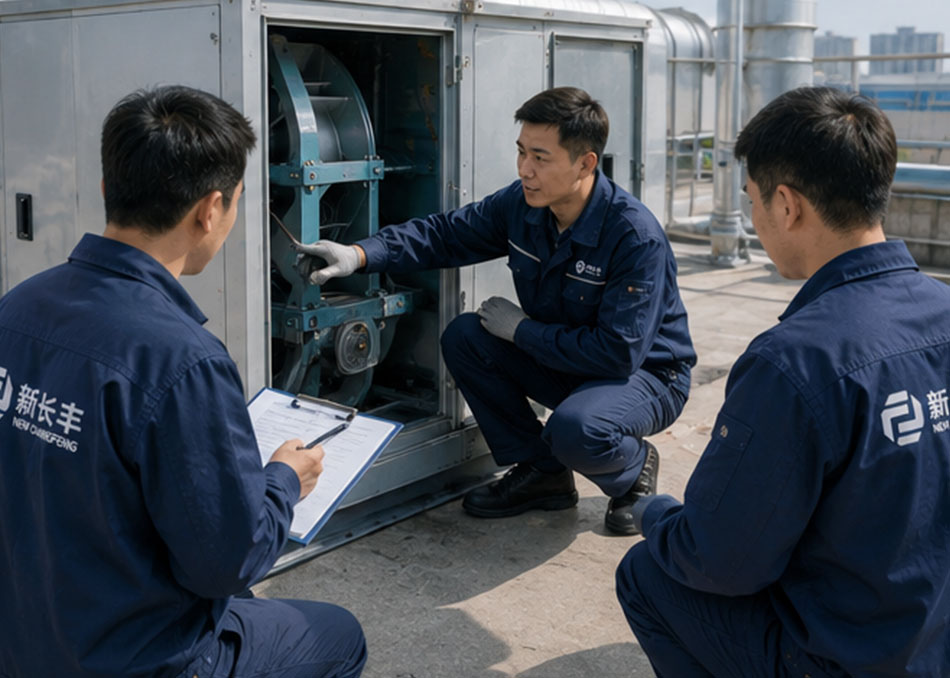
School canteens put far more sustained stress on their exhaust systems than most commercial kitchens. With breakfast, lunch, and dinner peaks layered on top of one another, multiple burners firing at once, and heavy loads of oil mist, moisture, and odour, any weakness in the exhaust equipment quickly becomes a problem — a hot, choking kitchen at best, and fume spillover into dining areas or environmental complaints at worst. The DT cabinet centrifugal fan is the workhorse of canteen exhaust and purification systems, and its condition directly determines both extraction performance and fume purification efficiency. This guide covers the fundamentals, daily maintenance, periodic servicing, and common issues in a practical, actionable way.
Understanding the DT Cabinet Centrifugal Fan’s Role in Canteen Exhaust
The DT cabinet centrifugal fan is a type of cabinet-style centrifugal fan. Its centrifugal impeller and motor are housed within a single enclosure, driven either by belt or direct coupling. Compared with ordinary axial fans, the centrifugal design delivers higher pressure, making it far better suited to canteen exhaust systems with long duct runs, numerous bends, and the combined resistance of fume purifiers and silencers. In a typical school canteen system, the fan is installed either upstream or downstream of the fume purifier and acts as the main exhaust fan, discharging purified flue gas into a riser or roof outlet.
From a system perspective, the DT cabinet centrifugal fan performs three essential tasks. First, it establishes sufficient negative pressure to draw cooking fumes steadily into the hood. Second, it overcomes the resistance of ducts and purification equipment to keep exhaust flowing freely. Third, it maintains overall kitchen air organisation, preventing fumes from migrating into dining areas. Failure in any one of these tasks shows up as weak extraction, lingering odours, or visible smoke where it should not be.
Because school canteens operate on fixed meal schedules, the fan typically runs for several concentrated hours each day. That duty cycle makes regular maintenance not just advisable but essential to avoid breakdowns during peak service.
Daily Maintenance: Keeping the Fan Ready for Every Meal Service
Daily checks are simple but high-impact. Before the first meal service, inspect the fan enclosure for unusual vibration, rattling, or abnormal noise. Listen for bearing whine or scraping sounds that could indicate impeller imbalance or foreign objects. Check the drive belt (if belt-driven) for proper tension and signs of wear — a slipping belt reduces fan speed and extraction capacity. Confirm that the impeller rotates freely by hand (with power locked out) and that no debris has accumulated.
During operation, monitor the motor current and compare it against normal readings. A gradual increase in current often points to grease buildup on the impeller or increased system resistance from a clogged purifier. Also check the drainage system for condensed oil and water; blocked drains can cause liquid to pool inside the cabinet, leading to corrosion and imbalance.
- Inspect for abnormal vibration, noise, or overheating.
- Verify belt tension and condition (belt-driven models).
- Check motor current against baseline.
- Ensure condensate drains flow freely.
- Confirm no fume leakage at duct connections or access doors.
After each meal service, allow the fan to run for a few minutes to clear residual fumes, then shut down and wipe external surfaces. This simple habit reduces grease deposition and keeps the cabinet cleaner between deeper services.
Periodic Servicing: A Schedule That Matches Canteen Workloads
School canteens should follow a tiered maintenance schedule. Weekly tasks include cleaning the impeller and interior of the cabinet if grease is visible, checking all fasteners for tightness, and inspecting electrical connections for signs of overheating. Monthly, remove and clean the impeller more thoroughly, check bearing lubrication (re-grease or replace bearings as needed), and inspect the fan casing for corrosion or cracks. Quarterly, perform a more comprehensive service: check impeller balance, verify alignment, inspect the motor and wiring, and test the system’s overall airflow using appropriate instruments.
Annually, before the start of a new school year, arrange a professional overhaul. This should include removing the impeller for deep cleaning and dynamic balancing, replacing worn belts and bearings, inspecting and cleaning the fume purifier, and checking the entire duct system for leaks or blockages. It is also a good time to verify that the fan’s performance still meets the system’s requirements, especially if the canteen has expanded or the ductwork has been modified.
For belt-driven fans, belt replacement is a common periodic task. Always replace belts as a matched set and maintain the manufacturer’s specified tension. Over-tensioning damages bearings; under-tensioning causes slippage and loss of performance.
Common Problems and How to Address Them
One of the most frequent complaints in school canteens is reduced extraction — the kitchen feels smoky even though the fan is running. This is often caused by a dirty impeller, a clogged fume purifier, or blocked ductwork. Cleaning the impeller and purifier, and checking for duct obstructions, usually restores performance. Another common issue is excessive noise or vibration. This can stem from impeller imbalance due to grease buildup, worn bearings, loose mounting bolts, or debris inside the cabinet. Addressing these requires cleaning, balancing, and tightening as appropriate.
Motor overheating may indicate overloading from increased system resistance, insufficient ventilation around the motor, or electrical faults. Check for airflow restrictions and ensure the motor cooling paths are clear. Fume leakage around the cabinet or duct joints is a serious issue — it can degrade indoor air quality and trigger complaints. Inspect gaskets, seals, and access doors, and replace any deteriorated components.
Finally, if the fan continues to underperform after cleaning and adjustment, the system may have been modified beyond the fan’s original design point. In that case, consult the manufacturer to assess whether a different fan model or system rebalancing is required.
FAQ
Q: How often should the DT cabinet centrifugal fan be cleaned in a school canteen?
A: At minimum, inspect weekly and clean the impeller and cabinet interior monthly. If the canteen operates at high intensity with heavy oil loads, increase cleaning frequency to every two weeks for the impeller and interior. Annual professional deep cleaning is strongly recommended.
Q: What are the signs that the fan needs immediate attention?
A: Watch for sudden increases in vibration or noise, a noticeable drop in extraction at the hood, motor current spikes, unusual odours from the motor, or visible fume leakage. Any of these warrants an immediate shutdown and inspection.
Q: Can I replace the fan with a larger model to solve persistent extraction problems?
A: Not without a proper system evaluation. Increasing fan size without addressing duct design, purifier resistance, or makeup air can worsen performance and increase energy consumption. Always diagnose the root cause first — often cleaning and balancing restore adequate performance.
Maintaining DT cabinet centrifugal fans in school canteens is a matter of disciplined routine and timely professional service. By understanding the fan’s role, following daily and periodic maintenance schedules, and addressing problems promptly, facility managers can ensure reliable fume extraction, efficient purification, and a comfortable dining environment. For specific maintenance guidance or to discuss system upgrades, consult XCFFJ’s technical team — we specialise in ventilation and purification solutions for commercial kitchens and institutional facilities.