
In the daily operation of commercial kitchens, a subtle yet critical conflict often goes unnoticed: while exhaust fans aggressively pull out smoke, grease, and heat, they simultaneously create a pronounced negative pressure indoors. When negative pressure becomes excessive, it compromises exhaust efficiency, causes smoke and odors to backflow, and can even make kitchen doors difficult to open. More seriously, insufficient make-up air leaves kitchen staff working in an oxygen-deprived, sweltering environment, hampering productivity and health. Relying solely on natural infiltration often fails to meet the ventilation needs of a tightly sealed kitchen. This is where installing a high-efficiency water-cooled fresh air unit, paired with an appropriately selected centrifugal fan, becomes the key to resolving the negative pressure problem.
Why Commercial Kitchens Need Water-Cooled Fresh Air Make-Up
Commercial kitchens are dense heat sources. When ranges, steamers, and ovens operate simultaneously, indoor temperatures can rise rapidly. Traditional exhaust systems only handle the "out" side; without addressing the "in" side, the kitchen falls into high negative pressure. This vacuum weakens the capture efficiency of exhaust hoods, allowing grease-laden smoke to drift into dining areas while accelerating grease buildup and corrosion on walls and equipment.
A water-cooled fresh air unit leverages the principle of evaporative cooling—water absorbs heat as it evaporates—to cool outdoor air before delivering it into the kitchen. This serves dual purposes: it replenishes the air removed by exhaust fans, balancing indoor pressure, and it significantly lowers the temperature in the work zone, alleviating heat and stuffiness.
- Negative Pressure Balancing: Ensures the exhaust system operates at peak efficiency, preventing smoke backflow and cross-contamination of odors.
- Cooling & Oxygenation: Supplies cooled, fresh air to the high-temperature kitchen, enhancing comfort and air quality.
- Energy Efficiency: Compared to traditional compressor-based air conditioning, evaporative cooling offers lower operating costs in open, large-space environments.
Key Considerations for Selecting the Centrifugal Fan in a Water-Cooled Fresh Air Unit
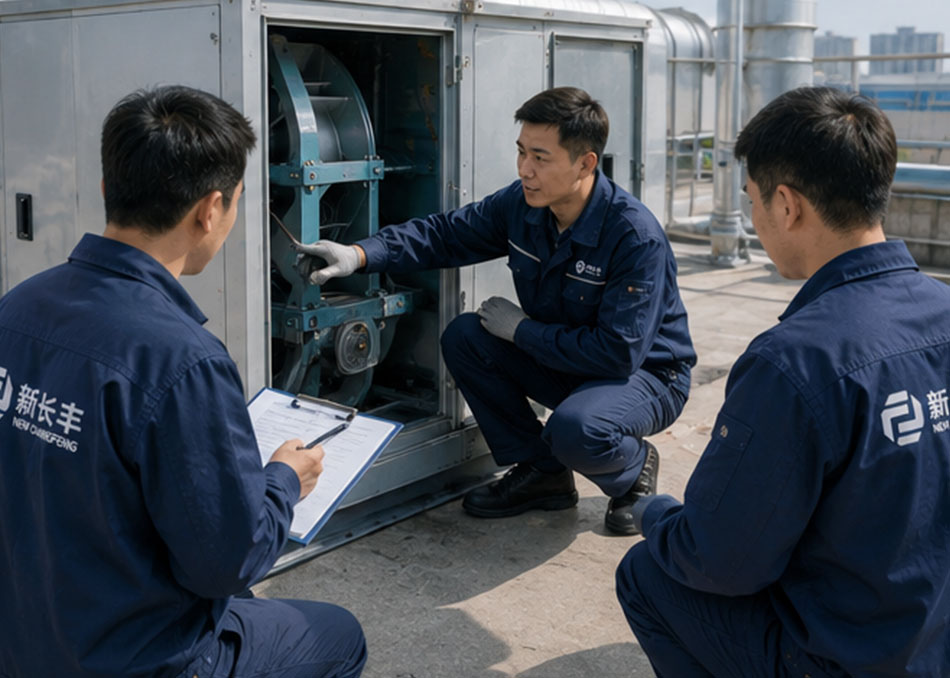
The centrifugal fan is the heart of the water-cooled fresh air unit. Its performance directly determines the unit's ability to overcome duct resistance and deliver the required airflow. When selecting the fan for kitchen make-up air applications, several technical factors must be evaluated:
- Airflow vs. Static Pressure: The fan must supply sufficient airflow to offset exhaust volume while generating enough static pressure to push air through ductwork, filters, and the evaporative cooling media. A fan with inadequate static pressure will underperform, leaving the kitchen in negative pressure.
- Material and Corrosion Resistance: Kitchen environments are laden with grease, humidity, and sometimes corrosive cleaning agents. The fan impeller and housing should be constructed from materials that resist corrosion—such as galvanized steel or coated aluminum—to ensure longevity and reliable operation.
- Noise Levels: While kitchens are inherently noisy, excessive fan noise can contribute to an uncomfortable working environment. Selecting a fan with balanced impeller design and appropriate RPM can help minimize acoustic impact.
- Energy Efficiency: Fans run for extended hours during service periods. Choosing a high-efficiency centrifugal fan, ideally meeting or exceeding relevant energy performance standards, reduces operational costs and environmental footprint.
- Compliance with Standards: Ensure the fan and the fresh air unit comply with applicable industry standards, such as GB/T 1236 for fan performance testing and GB 19761 for fan energy efficiency. This guarantees reliable, verifiable performance.
Installation and Integration Best Practices
Proper installation is as critical as the fan selection itself. The water-cooled fresh air unit should be positioned to deliver make-up air directly to the cooking zone, ideally at a height and angle that does not disrupt exhaust hood capture. Ductwork should be sized correctly to minimize pressure losses, and dampers or variable speed controls can be integrated to adjust airflow based on real-time exhaust demand.
Regular maintenance—cleaning evaporative media, inspecting the fan for grease accumulation, and checking belt tension (if applicable)—ensures the system continues to perform efficiently. A well-maintained water-cooled fresh air unit not only resolves negative pressure but also contributes to a safer, more productive kitchen environment.
Frequently Asked Questions
Q: How do I know if my kitchen has a negative pressure problem?
A: Common signs include difficulty opening doors, drafts from windows or vents, exhaust hoods not capturing smoke effectively, and a noticeable influx of outdoor air through gaps. A simple test is to close all doors and windows, turn on the exhaust system, and observe if doors become harder to open from the outside—this indicates significant negative pressure.
Q: Can a water-cooled fresh air unit replace my existing exhaust system?
A: No. The fresh air unit is designed to supply make-up air, not to replace the exhaust system. Both must work in tandem: exhaust removes contaminated air, while the fresh air unit provides clean, tempered replacement air to balance pressure and improve comfort.
Q: What size water-cooled fresh air unit do I need for my kitchen?
A: Sizing depends on the total exhaust airflow of your kitchen hoods. As a rule of thumb, the make-up air volume should be approximately 80–90% of the exhaust volume to maintain a slight negative pressure while ensuring adequate ventilation. Consult with a ventilation engineer to perform a detailed load calculation based on your specific kitchen layout, cooking equipment, and local codes.
Investing in a properly designed water-cooled fresh air unit with a correctly selected centrifugal fan is a decisive step toward eliminating negative pressure issues, enhancing kitchen comfort, and protecting your exhaust system's performance. For expert guidance on selecting the right unit for your commercial kitchen, contact XCFFJ today—we specialize in industrial and commercial ventilation solutions that keep your operations running smoothly.