
Commercial kitchens often struggle with ventilation—not simply because exhaust is inadequate, but because the kitchen is under excessive negative pressure. Even with grease filters and exhaust fans in place, operators face lingering heat, oil smoke spillage, doors pulled tight against frames, flames drawn toward the exhaust, and odors migrating into dining areas. These symptoms typically indicate an imbalance: the exhaust system removes large volumes of air without a reliable makeup air path. The solution lies in balancing exhaust with makeup air. Water-cooled fresh air units provide both cooling and air supply, making them ideal for makeup air in kitchens. This article explores how these units address negative pressure, key selection criteria, and integration with exhaust systems, with reference to the XCFFJ brand approach.
How Negative Pressure Forms in Kitchens and Why It Must Be Addressed
Kitchen exhaust systems—comprising grease filters and exhaust fans—draw cooking fumes from hoods and discharge them outdoors. According to GB 18483 (Emission Standard of Cooking Fume), commercial kitchens must install appropriate purification and discharge equipment, with exhaust volume typically determined by the number of burners, hood size, and capture velocity. However, many projects fail to design a matching makeup air volume, or rely solely on natural infiltration through gaps around doors and windows. Natural makeup air faces high resistance and unstable paths, resulting in actual supply far below exhaust volume. Indoor air is continuously depleted, and negative pressure intensifies.
Excessive negative pressure leads to multiple issues: hot and humid air cannot escape, causing discomfort; oil smoke escapes through gaps, deteriorating indoor air quality; doors become difficult to open, affecting workflow; and flames may be drawn toward exhaust, reducing cooking efficiency and posing safety risks. Therefore, solving negative pressure is not just about comfort—it's about compliance, safety, and operational efficiency.
The Role of Water-Cooled Fresh Air Units in Makeup Air
Water-cooled fresh air units are designed to supply tempered fresh air while cooling it via water evaporation or chilled water. In kitchen applications, they serve as dedicated makeup air units, introducing filtered, cooled outdoor air to balance exhaust and maintain slight negative pressure (relative to adjacent areas) without excessive depression.
Unlike simple supply fans, water-cooled fresh air units integrate cooling, filtration, and airflow control. They can reduce the temperature of incoming air, mitigating the heat load from outdoor air—especially beneficial in hot climates or during summer. This helps maintain a more comfortable kitchen environment while addressing negative pressure. The units are typically installed on rooftops or external walls, connected to ductwork that distributes air to strategic locations within the kitchen.
Key advantages include:
- Balanced ventilation: By supplying air at a controlled rate, negative pressure is kept within an acceptable range (e.g., 5-10 Pa negative relative to dining areas), preventing smoke spillage and door issues.
- Temperature control: Evaporative cooling or chilled water cooling reduces supply air temperature, improving comfort without overburdening the kitchen HVAC.
- Filtration: Built-in filters remove particulates, ensuring supply air is clean and reducing contamination of kitchen surfaces.
- Energy efficiency: Water-cooled units can be more efficient than refrigerant-based systems, especially when integrated with building chilled water loops.
Selection and Sizing Considerations
Proper selection of water-cooled fresh air units is critical. The makeup air volume should be approximately 80-90% of the exhaust volume to maintain slight negative pressure. This ratio prevents over-pressurization (which can cause odors to migrate) while ensuring adequate replacement of exhausted air. The unit's airflow capacity must match the calculated makeup air requirement, considering duct resistance and system effects.
Cooling capacity should be sized to handle the sensible and latent heat of the outdoor air, based on local climate data. For evaporative cooling units, effectiveness depends on wet-bulb depression; in humid climates, chilled water cooling may be more effective. Filtration efficiency should align with kitchen hygiene requirements, typically using primary and secondary filters (e.g., G4+F8).
Additional factors include:
- Static pressure: Must overcome ductwork, fittings, and terminal devices; calculate carefully to avoid undersized fans.
- Noise levels: Select low-noise models and incorporate sound attenuators if needed, especially for units near dining areas.
- Control and modulation: Variable frequency drives (VFDs) allow airflow adjustment based on kitchen demand, saving energy.
- Compliance: Ensure units meet relevant standards such as GB/T 1236 for fan performance and GB 19761 for fan energy efficiency.
Integration with Kitchen Exhaust Systems
Water-cooled fresh air units must be integrated with the exhaust system to achieve balanced ventilation. A common approach is to interlock the makeup air unit with exhaust fans, so that when exhaust fans operate, the makeup air unit starts automatically. Airflow balancing dampers and pressure sensors can maintain the desired pressure differential.
Duct design should ensure uniform air distribution and avoid short-circuiting (where supply air is immediately exhausted). Supply air outlets should be located away from exhaust hoods, typically near the floor or at low level to displace hot air upward. In kitchens with multiple hoods, zoning may be necessary, with separate makeup air units for different areas.
Regular maintenance is essential: clean or replace filters, check water systems for scaling, and inspect belts and bearings. Proper maintenance ensures consistent performance and energy efficiency.
XCFFJ's Approach to Kitchen Negative Pressure Solutions
XCFFJ offers water-cooled fresh air units designed specifically for commercial kitchen applications. These units combine efficient cooling, robust filtration, and reliable airflow to address negative pressure challenges. With a focus on practical engineering, XCFFJ provides support in system design, selection, and integration.
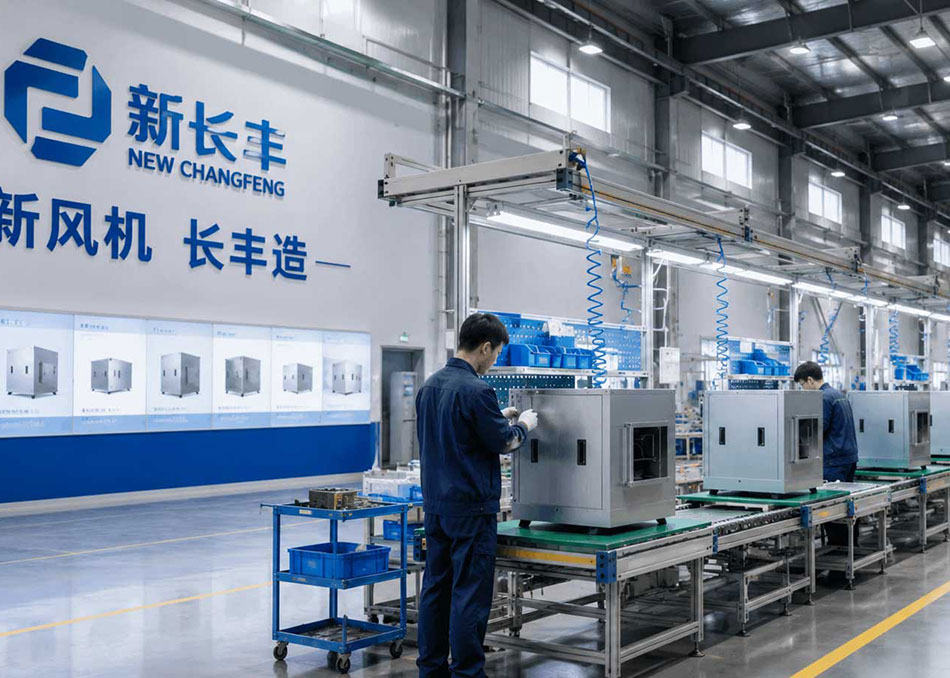
For projects requiring comprehensive ventilation solutions, XCFFJ also manufactures a range of complementary products, including cabinet centrifugal fans, negative pressure fans, and kitchen exhaust purifiers, enabling a coordinated approach to kitchen ventilation.
Frequently Asked Questions
Q: What is the ideal negative pressure for a commercial kitchen?
A: A slight negative pressure of about 5-10 Pa relative to adjacent areas is generally recommended. This prevents odors from escaping while avoiding excessive negative pressure that can cause door operation issues and flame disturbance.
Q: Can water-cooled fresh air units be used in existing kitchens?
A: Yes, they can be retrofitted. However, a thorough assessment of the existing exhaust system and ductwork is necessary to ensure compatibility and proper balancing.
Q: How often should filters be cleaned or replaced?
A: Typically, primary filters should be cleaned monthly and replaced quarterly, while secondary filters may last 6-12 months depending on kitchen usage. Follow the manufacturer's recommendations.
Q: What if the kitchen is in a humid climate?
A: In humid climates, evaporative cooling may be less effective. Consider chilled water cooling or a hybrid system to achieve desired temperature and humidity control.
Addressing negative pressure in commercial kitchens is essential for comfort, safety, and compliance. Water-cooled fresh air units provide an effective solution by supplying cooled, filtered makeup air. By carefully selecting and integrating these units, operators can achieve balanced ventilation and a healthier kitchen environment. For expert guidance on your specific project, contact XCFFJ to explore tailored solutions.