
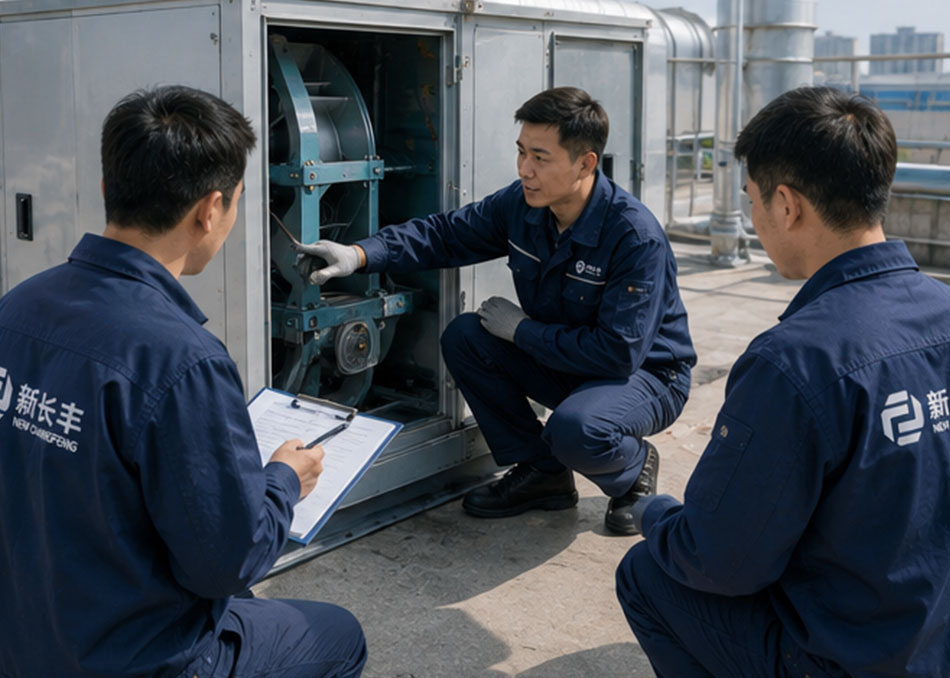
In small restaurant kitchens, exhaust problems often stem not from the absence of fans but from their incorrect placement. Many operators have experienced this: when the stove is fired up, instead of being drawn out, cooking fumes drift into the dining area. The hood looks large enough, ductwork is connected, yet the kitchen remains stuffy and smoky. The root cause frequently lies in the installation position of axial fans—when the roles of supply air, make-up air, and exhaust air are not clearly defined, and fans are installed in the wrong places, the system cannot function smoothly. This article focuses on the specific scenario of small restaurant exhaust, clarifying the positioning logic, installation key points, and common pitfalls of axial fans to help kitchen operators and engineers avoid detours.
Clarifying the Role: What Axial Fans Actually Do in Small Restaurants
In the ventilation system of a small restaurant, the primary task of capturing and purifying cooking fumes is typically handled by an exhaust hood working in conjunction with a centrifugal exhaust fan and an electrostatic fume purifier. Axial fans, characterized by high airflow volume, relatively low static pressure, compact structure, and easy installation, mainly serve the roles of make-up air and auxiliary exhaust. When the exhaust system extracts a large amount of air from the kitchen, negative pressure forms indoors. Without timely introduction of fresh air, consequences include poor exhaust efficiency, unstable stove flames, and difficulty in opening doors. Installing axial fans at appropriate locations to introduce outdoor fresh air can effectively balance indoor pressure and ensure smooth operation of the exhaust system.
In other words, in the context of small restaurant exhaust, the core value of axial fans lies in the make-up air and ventilation aspects of "exhaust purification · ventilation make-up air." Mistaking them for the main fume exhaust equipment and connecting them directly to the fume duct not only fails to purify fumes but also leads to grease accumulation on fan blades, motor burnout, and secondary pollution. Understanding this fundamental distinction is the first step toward correct installation.
Installation Location: Where Should Axial Fans Be Placed?
The installation position of axial fans must be determined based on their function. For make-up air, the fan should be positioned to deliver fresh air directly into the kitchen, preferably near the stove area but not interfering with the exhaust hood's capture zone. Typical locations include wall openings or dedicated fresh air inlets on the wall opposite the exhaust hood. This creates a cross-ventilation pattern that helps push fumes toward the hood. It is advisable to install the fan at a height slightly above the breathing zone (e.g., 1.5–2 meters above the floor) to avoid blowing directly on staff or affecting the flame.
For auxiliary exhaust, axial fans can be installed on walls or roofs to remove residual heat and moisture from the kitchen. However, they should not be connected to the fume duct; instead, they should serve as general ventilation. In small restaurants, a common mistake is to install the axial fan too close to the exhaust hood or directly above the stove, which disrupts the airflow pattern and causes fumes to escape. Another mistake is to place the fan at a location where it draws air from the dining area, creating cross-contamination. Proper placement requires considering the overall airflow direction—from clean areas to polluted areas—and ensuring a short, unobstructed path for make-up air.
Additionally, the fan should be installed away from grease-laden areas to reduce maintenance. If the kitchen layout permits, installing the axial fan on an exterior wall with a weather hood and insect screen is recommended. For noise-sensitive environments, selecting a low-noise model or adding vibration isolation mounts can help. Always refer to the fan's installation manual and local building codes for specific requirements.
Common Pitfalls and Practical Tips
Many installation errors stem from a lack of system thinking. Here are some common pitfalls and tips:
- Using axial fans as the main fume exhaust: Axial fans are not designed for grease-laden air; they lack the static pressure to overcome duct resistance and are prone to grease buildup. Always use a centrifugal fan for fume exhaust.
- Ignoring make-up air: Without a balanced air supply, the exhaust system will underperform. Calculate the required make-up air volume (typically 80–90% of exhaust volume) and select axial fans accordingly.
- Placing the fan too close to the hood: This can disturb the hood's capture velocity. Keep a reasonable distance and direct make-up air toward the floor or away from the hood.
- Neglecting maintenance access: Install the fan where it can be easily reached for cleaning and servicing. Grease and dust accumulation can reduce performance and pose fire risks.
- Overlooking noise and vibration: Use rubber isolators and ensure rigid mounting to prevent noise transmission. In dining areas, consider installing the fan away from seating.
By avoiding these pitfalls, small restaurant operators can achieve efficient ventilation, improved air quality, and a more comfortable working environment.
FAQ
Q: Can I use an axial fan to exhaust cooking fumes directly from the hood?
A: No. Axial fans are not suitable for grease-laden fume exhaust. They lack the necessary static pressure and are not designed to handle grease, which can lead to motor failure and fire hazards. Use a centrifugal fan specifically designed for fume exhaust, along with a fume purifier.
Q: How do I determine the right size of axial fan for make-up air?
A: The make-up air volume should be balanced with the exhaust volume, typically 80–90% of the exhaust airflow. Calculate the exhaust volume based on hood size and cooking equipment, then select an axial fan that delivers the required airflow at the available static pressure. Consult a ventilation engineer for accurate sizing.
Q: Where should I install the axial fan to avoid noise in the dining area?
A: Install the fan on an exterior wall away from dining areas, preferably on the kitchen side. Use vibration isolators and consider a low-noise model. If the fan must be near the dining area, install a sound attenuator or enclose the fan in a acoustic housing.
Q: What maintenance does an axial fan need in a restaurant kitchen?
A: Regularly clean the fan blades and housing to prevent dust and grease accumulation. Check belts (if applicable) and bearings for wear. Ensure the fan is securely mounted and electrical connections are safe. In grease-prone environments, consider more frequent cleaning.
Proper installation of axial fans is crucial for a well-functioning ventilation system in small restaurants. By understanding their role as make-up air and auxiliary exhaust, choosing the right location, and avoiding common mistakes, you can create a comfortable and safe kitchen environment. For expert advice and high-quality ventilation equipment, trust XCFFJ—your partner in industrial and commercial ventilation solutions. Visit our website to explore our range of axial fans and other products tailored to your needs.