
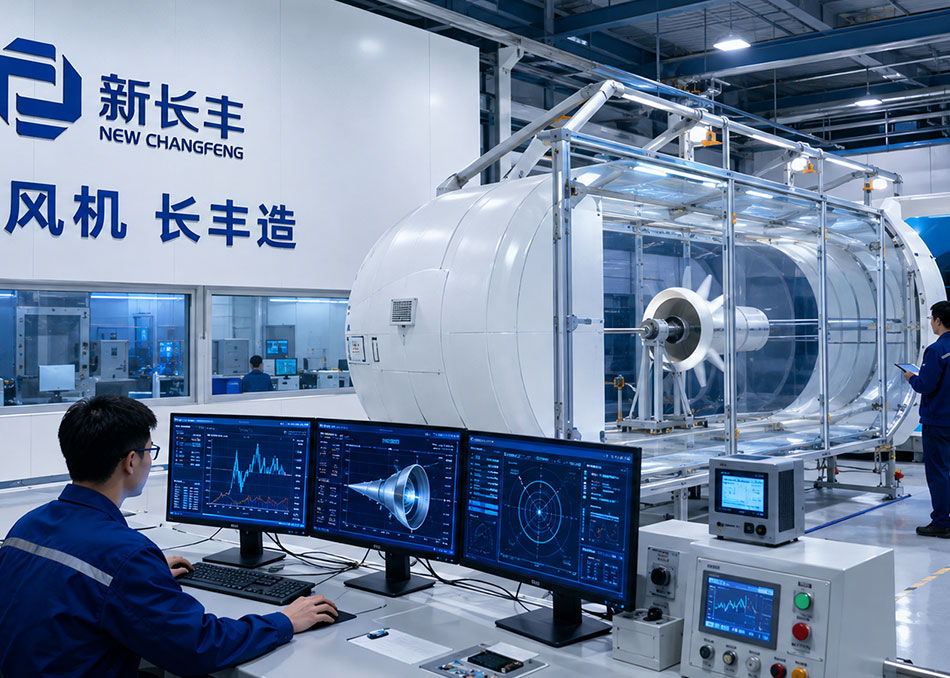
Hot, stuffy workshops and leaking kitchen fumes often share a common root cause: air has no clear path in or out. When managers face high temperatures, lingering odors and grease-laden exhaust, the instinct is to add air conditioning or more fans. Yet the results are frequently disappointing because the space never achieves a stable air exchange cycle. A ventilation and cooling retrofit succeeds not by chilling one corner, but by establishing reliable intake and exhaust routes that push hot, polluted air out while pulling fresh air in. Axial fans sit at the center of that air exchange system.
Why Air Exchange Comes Before Cooling
In factories, warehouses and commercial kitchens, heat, humidity, fumes and odors tend to appear together. Adding cooling without fixing ventilation simply recirculates the same stale air. The real objective is to create a pressure balance: exhaust fans remove contaminated air, and makeup air replaces it in a controlled way. Without makeup air, exhaust fans starve, airflow drops, and fumes can backdraft into adjacent spaces.
This is why a retrofit should start with an air exchange strategy. Identify where heat and pollutants concentrate, determine how much air must move, and map the path from intake to exhaust. Only then does equipment selection make sense.
How Axial Fans Work and Where They Fit
An axial fan moves air parallel to its shaft: air enters along the axis and discharges along the same axis. This design typically delivers high airflow with moderate static pressure in a compact footprint, making it well suited to ducted supply and exhaust, wall-mounted exhaust, and roof exhaust applications.
In practice, axial fans serve several roles in air exchange ventilation:
- Whole-workshop air exchange — wall or roof-mounted units that cycle large volumes of air through the space.
- Localized supply air — directing airflow toward workstations where operators need relief.
- Kitchen exhaust and makeup air — supporting fume purification systems by balancing exhaust and replacement air.
Fan performance should be evaluated according to standards such as GB/T 1236 for aerodynamic testing and GB 19761 for energy efficiency. These frameworks help buyers compare airflow, pressure and efficiency on a like-for-like basis rather than relying on marketing claims.
System Positioning: Axial Fans Do Not Work Alone
Axial fans handle air exchange. Fume purification, cooling and dehumidification usually require additional equipment such as electrostatic fume purifiers, water-cooled fresh air units or evaporative air coolers. Placing each device in the correct system position is what makes a retrofit work: exhaust pulls contaminants out, purification cleans the airstream, and makeup air replaces what leaves.
For commercial kitchens, exhaust systems must also respect emission requirements such as GB 18483, which sets limits on fume concentration and purification efficiency. In buildings with smoke control requirements, GB 51251 governs smoke and heat exhaust design. Axial fans used in these systems must be selected with the right temperature rating and airflow direction.
Practical Retrofit Steps
A structured approach reduces guesswork and avoids costly rework:
- Survey the space — measure temperature gradients, identify pollutant sources and note existing openings.
- Define airflow paths — decide where air enters and exits, and avoid short-circuiting between them.
- Size the fans — match airflow and static pressure to duct resistance without oversizing.
- Balance exhaust and makeup air — maintain slight negative pressure in kitchens and pollutant-heavy zones.
- Control noise — use vibration isolation, flexible connectors and appropriate mounting to keep noise within acceptable limits.
- Commission and verify — confirm actual airflow and adjust dampers or fan speeds as needed.
Common Pitfalls to Avoid
Many retrofits underperform for predictable reasons. Oversized exhaust without makeup air causes negative pressure that pulls fumes back indoors. Undersized ductwork raises resistance and cuts airflow. Mixing axial and centrifugal fans without considering their different pressure characteristics can leave the system unbalanced. Ignoring energy efficiency leads to higher operating costs over the equipment's life.
Selecting axial fans based on verified performance data, and integrating them into a complete air exchange design, delivers more reliable results than adding equipment piece by piece.
FAQ
Q: What is the difference between an axial fan and a centrifugal fan for ventilation?
A: Axial fans move air parallel to the shaft and typically provide high airflow at moderate pressure, which suits wall, roof and ducted air exchange. Centrifugal fans generally produce higher pressure and are often used where duct systems are long or resistance is high. The right choice depends on the system's airflow and pressure requirements.
Q: Can an axial fan alone solve kitchen fume problems?
A: Not by itself. Axial fans handle exhaust and makeup air, but grease and odor removal requires a fume purification stage, such as an electrostatic purifier. A complete system combines capture, purification, exhaust and makeup air.
Q: How do I know what size axial fan I need?
A: Sizing depends on the volume of the space, required air changes, duct resistance and the desired pressure balance. Performance should be verified against standards like GB/T 1236, and energy use considered under GB 19761. A qualified ventilation supplier can calculate the right combination.
Q: Why does my workshop still feel hot after installing exhaust fans?
A: Exhaust without adequate makeup air reduces airflow and can create negative pressure. The space needs a balanced supply path so fresh air can replace what is removed. Adding or resizing intake fans often resolves the problem.
Conclusion
Effective workshop ventilation and cooling starts with air exchange, not air conditioning. Axial fans provide the airflow backbone for moving heat, fumes and stale air out while drawing fresh air in. When specified with verified performance data and integrated with purification and cooling equipment, they form a dependable system for factories, warehouses and commercial kitchens. To discuss a retrofit for your facility, contact XCFFJ for a ventilation assessment and equipment recommendation.