
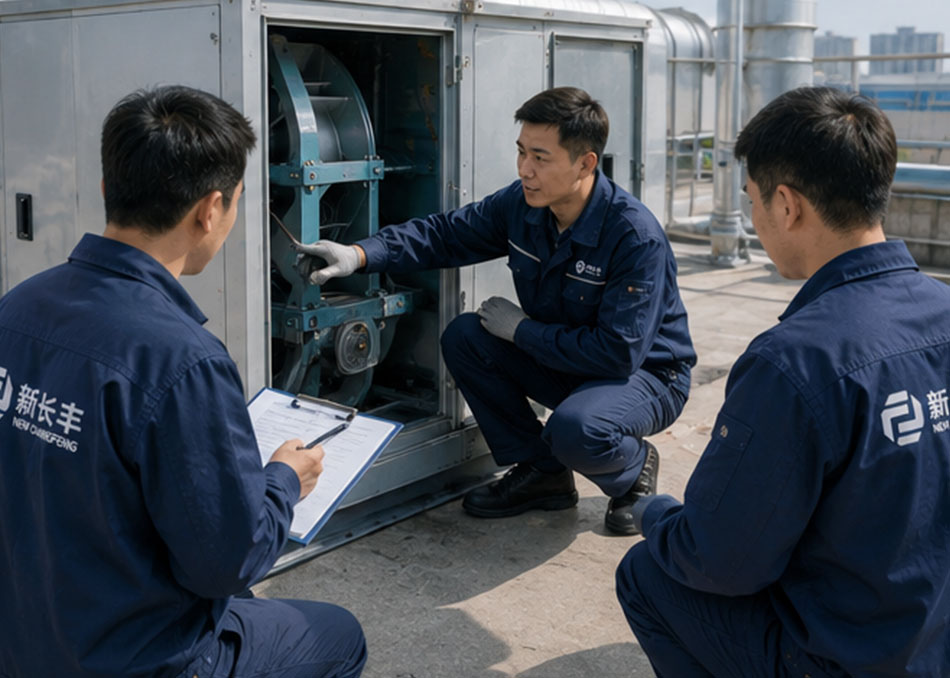
Internet cafés are high-density public spaces where computers generate continuous heat and customers stay for extended periods. As a result, indoor temperatures tend to rise quickly and air quality deteriorates. During summer, the load on air conditioning systems spikes, leading to high electricity bills. Relying solely on air conditioning often fails to balance ventilation and cooling. Traditional exhaust fans can circulate air, but they do not introduce treated, clean fresh air, which can create negative pressure problems. This is where water-cooled fresh air units come in—they combine efficient cooling with fresh air supply, making them an ideal solution for internet cafés. This article explores the core working principles of water-cooled fresh air units, their value in internet café applications, and how proper make-up air can resolve negative pressure issues, particularly in commercial kitchens.
Core Working Principle of Water-Cooled Fresh Air Units
A water-cooled fresh air unit uses the principle of evaporative cooling to treat outdoor air before delivering it indoors. The process is straightforward: hot outdoor air passes through a wet pad (also called a water curtain). As water evaporates, it absorbs a significant amount of heat, causing the air temperature to drop noticeably. At the same time, the wet pad filters out dust and some airborne contaminants, resulting in clean, cool fresh air. According to the testing methods outlined in GB/T 1236 (Industrial Fans—Performance Testing Using Standardized Airways), the airflow rate and cooling effect of water-cooled fresh air units must be rigorously verified to ensure they meet design specifications under specific operating conditions.
The unit consists of several key components: a wet pad, a water pump, a fan, and a control system. The water pump distributes water uniformly to the top of the wet pad, keeping it saturated. The fan draws outdoor air through the pad, where evaporation occurs. The cooled and filtered air is then supplied into the indoor space. This process not only lowers the air temperature but also increases humidity, which can be beneficial in dry climates. However, it is essential to consider the ambient humidity level—evaporative cooling works best in dry conditions.
Why Internet Cafés Need Both Cooling and Make-Up Air
Internet cafés face a unique challenge: high internal heat gains from computers and occupants, combined with the need for adequate ventilation. Air conditioners can handle cooling, but they recirculate indoor air and do not bring in fresh outdoor air. Without a dedicated fresh air supply, CO₂ levels rise, and the air becomes stuffy. Traditional exhaust fans remove stale air but can create negative pressure if the make-up air is insufficient. Negative pressure can cause air to be drawn in through unintended openings, such as doors and windows, bringing in dust, odors, and even exhaust fumes from adjacent areas.
A water-cooled fresh air unit addresses both issues simultaneously. It supplies a continuous stream of cooled, filtered outdoor air, which helps maintain a positive or neutral indoor pressure. This balanced ventilation prevents the infiltration of unfiltered air and ensures a comfortable environment for customers and staff. Moreover, because the unit cools the incoming air, it reduces the load on the air conditioning system, leading to lower energy consumption and cost savings.
Solving Negative Pressure in Commercial Kitchens with Make-Up Air
Negative pressure is a common problem in commercial kitchens, where powerful exhaust hoods remove cooking fumes, smoke, and heat. If the volume of exhaust air is not matched by an equal volume of make-up air, the kitchen becomes negatively pressurized. This can cause doors to slam, make it difficult to open them, and draw in untreated air from dining areas or outside. More critically, it can compromise the efficiency of the exhaust system and lead to poor indoor air quality.
Water-cooled fresh air units are an effective solution for providing make-up air in kitchen environments. By introducing cooled, filtered outdoor air directly into the kitchen or adjacent spaces, they balance the air pressure and maintain proper ventilation. This not only improves comfort but also enhances the performance of the exhaust system. According to GB 18483 (Emission Standard of Cooking Fume for Catering Industry), proper ventilation and make-up air are essential for controlling fume emissions and ensuring a safe working environment.
When designing a make-up air system, it is important to calculate the required airflow based on the exhaust rate of the kitchen hoods. The make-up air should be delivered at a controlled temperature to avoid discomfort, which is where the cooling capability of the water-cooled fresh air unit becomes valuable. In hot climates, supplying unconditioned make-up air can raise the kitchen temperature, but a water-cooled unit pre-cools the air, making it more tolerable.
Key Considerations for Selecting and Installing Water-Cooled Fresh Air Units
When choosing a water-cooled fresh air unit for an internet café or commercial kitchen, several factors should be considered:
- Cooling capacity: The unit must be capable of reducing the incoming air temperature to a comfortable level, considering the outdoor climate and the internal heat load.
- Airflow rate: The volume of fresh air supplied should meet ventilation requirements and balance the exhaust airflow to avoid negative pressure.
- Filter efficiency: The wet pad should effectively remove dust and particulates to ensure clean air delivery.
- Energy efficiency: Look for units with low power consumption and high water efficiency to minimize operating costs.
- Noise level: In internet cafés, low noise is crucial to maintain a comfortable environment for customers.
Proper installation is equally important. The unit should be positioned to allow easy access for maintenance, and the water supply and drainage systems must be correctly connected. Regular cleaning of the wet pad and water reservoir is necessary to prevent mold and bacterial growth, ensuring hygienic operation. Following the manufacturer's guidelines and relevant standards, such as GB 19761 (Minimum Allowable Values of Energy Efficiency and Energy Efficiency Grades for Fans), can help ensure optimal performance and compliance.
Frequently Asked Questions
Q: How does a water-cooled fresh air unit differ from an air conditioner?
A: An air conditioner uses a refrigeration cycle to cool and dehumidify recirculated indoor air, whereas a water-cooled fresh air unit draws outdoor air, cools it through evaporation, and supplies it indoors. The latter provides both cooling and fresh air ventilation, while an air conditioner only cools. In dry climates, evaporative cooling is highly effective and more energy-efficient than traditional air conditioning.
Q: Can a water-cooled fresh air unit be used in a commercial kitchen?
A: Yes, it is well-suited for commercial kitchens as it provides make-up air to balance negative pressure caused by exhaust hoods. The cooling effect also helps maintain a more comfortable working temperature. However, it is essential to ensure that the unit is installed correctly and that the airflow is sufficient to match the exhaust rate. In humid climates, its cooling performance may be reduced, so a hybrid system might be considered.
Q: What maintenance does a water-cooled fresh air unit require?
A: Regular maintenance includes cleaning or replacing the wet pad, checking the water pump and water distribution system, cleaning the water reservoir to prevent scale and algae buildup, and inspecting the fan and motor. The frequency depends on usage and air quality, but a monthly check is generally recommended. Proper maintenance ensures consistent performance and prolongs the unit's lifespan.
Conclusion
Water-cooled fresh air units offer a practical and cost-effective solution for internet cafés and commercial kitchens, addressing both ventilation and cooling needs. By understanding their working principle and the importance of balanced make-up air, facility managers can improve indoor air quality, enhance comfort, and reduce energy costs. Whether you are upgrading an existing ventilation system or designing a new one, consider integrating a water-cooled fresh air unit to achieve optimal results. For more information about our range of ventilation and cooling products, please visit our website or contact our team.