
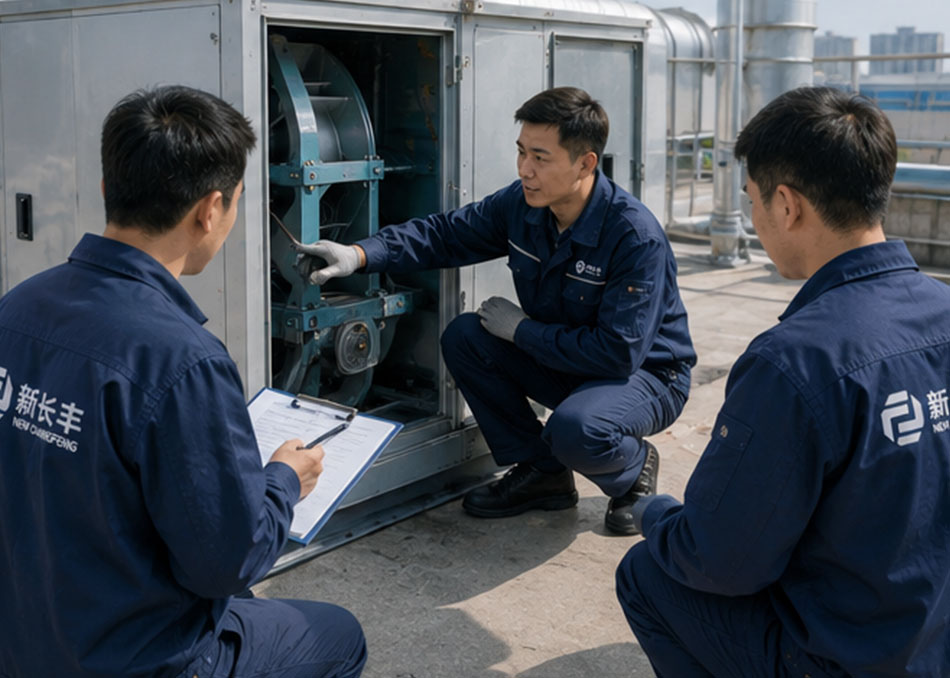
Internet cafés are high-density, high-heat commercial spaces where ventilation and cooling are constant headaches for operators. In summer, computers, monitors, lighting, and human occupancy push indoor temperatures past 30°C, while CO₂ and humidity accumulate, leaving the air stale and oppressive. Traditional air conditioners cool but do not refresh the air; exhaust fans alone fail to create effective airflow in a sealed environment. In recent years, water-cooled fresh air units have emerged as an ideal solution, combining cooling, ventilation, and energy efficiency. But with China's diverse climate zones, how do you choose the right system? This article breaks down the selection process from technical principles, scenario fit, and key purchasing criteria.
The Core Value of Water-Cooled Fresh Air Units in Internet Cafés
A water-cooled fresh air unit integrates evaporative cooling with mechanical ventilation. Outdoor air passes through a wet pad or spray system, where water evaporation absorbs heat, dropping the air temperature before it is delivered indoors, while stale indoor air is simultaneously exhausted. In a high-heat, high-humidity environment like an internet café, this technology delivers three key benefits:
- Efficient cooling and makeup air: The supply air temperature can be several degrees lower than the outdoor dry-bulb temperature (exact figures depend on ambient humidity), providing comfortable conditions before the air conditioner kicks in or during AC off-cycles, thereby reducing the cooling load.
- Improved air quality: Continuous introduction of filtered, cooled fresh air dilutes indoor CO₂, smoke, and odors, reducing the incidence of "internet café syndrome"—headaches, fatigue, and eye irritation caused by poor ventilation.
- Energy savings: Evaporative cooling consumes far less electricity than compressor-based cooling, making it a cost-effective supplement to air conditioning, especially in dry climates.
Climate Considerations: Matching the Unit to Your Region
China's climate varies dramatically from north to south, and water-cooled fresh air units perform differently under different humidity conditions. The cooling effect relies on water evaporation, which is more efficient in dry air. In arid northern regions (e.g., Beijing, Xinjiang), the temperature drop can be significant, making these units highly effective. In humid southern regions (e.g., Guangzhou, Shanghai), the cooling effect is reduced, but the unit still provides valuable ventilation and makeup air. For such areas, consider units with adjustable water flow or hybrid modes that can operate as a standard fresh air fan when evaporative cooling is less effective.
Key Selection Criteria for Internet Café Applications
When choosing a water-cooled fresh air unit for an internet café, focus on these technical parameters:
- Airflow and static pressure: Calculate the required fresh air volume based on room size, occupancy (typically 20–30 m³/h per person), and heat load from equipment. Ensure the unit can deliver adequate airflow against the static pressure of your ductwork.
- Filtration efficiency: Look for units with multi-stage filtration (e.g., G4 pre-filter plus F7 bag filter) to remove dust and PM2.5, protecting both occupants and equipment.
- Noise level: Internet cafés need a quiet environment. Check the unit's noise rating at operating speed; choose models with low-noise fans or variable speed drives.
- Water quality and maintenance: Evaporative cooling systems require a water supply and regular cleaning of the wet pad to prevent scale and bacterial growth. Consider units with easy-access panels and auto-flush features.
- Energy efficiency: Compare the unit's energy efficiency ratio (EER) and look for compliance with GB 19761 (fan energy efficiency standard). A higher efficiency unit will save on operating costs over time.
Integration with Existing HVAC and Kitchen Exhaust
In internet cafés located within mixed-use buildings, especially those with a kitchen or food service area, the ventilation system must also address negative pressure issues. Kitchen exhaust fans can create negative pressure that pulls odors and smoke into the dining area. A water-cooled fresh air unit can provide positive pressure makeup air to balance the exhaust, preventing backflow and improving overall indoor air quality. When integrating, ensure the fresh air supply is controlled to match the exhaust rate, using pressure sensors or variable-speed drives for automatic balancing.
Installation and Layout Best Practices
Proper installation is crucial for performance. Position the unit to draw outdoor air from a clean, shaded location, away from exhaust vents. Ductwork should be insulated to prevent condensation and energy loss. Supply diffusers should be placed to create a sweeping airflow pattern, avoiding direct drafts on patrons. For existing buildings, consider ceiling-mounted or wall-mounted units with minimal ductwork to reduce installation complexity and cost.
FAQ
Q: Can a water-cooled fresh air unit replace an air conditioner in an internet café?
A: Not entirely. In dry climates, it can handle most of the cooling load, but in humid conditions or during peak heat, it should be used as a supplement to air conditioning. It excels at providing fresh, filtered air and reducing AC load, not as a standalone replacement.
Q: How often does the wet pad need to be replaced?
A: Typically every 1–2 years, depending on water quality and usage. Regular cleaning (every 1–3 months) is essential to prevent mineral buildup and bacteria growth. Some units have replaceable pad cartridges for easy maintenance.
Q: What size unit do I need for a 100 m² internet café?
A: Size depends on ceiling height, occupancy, and equipment heat load. A rough guideline is 20–30 air changes per hour for high-density spaces. For a 100 m² area with 3m ceilings, you might need 6,000–9,000 m³/h fresh air capacity. Always consult a professional for a detailed load calculation.
Conclusion
Choosing the right water-cooled fresh air unit for your internet café requires a careful assessment of your local climate, room layout, and operational needs. By focusing on airflow, filtration, noise, and energy efficiency, and by integrating the unit with your existing HVAC and exhaust systems, you can create a comfortable, healthy environment that keeps customers coming back. For expert advice and a tailored solution, contact XCFFJ—we specialize in industrial and commercial ventilation systems designed for demanding applications.