
Internet cafés and factory workshops may seem like different industries, but they share strikingly similar ventilation and cooling pain points: high occupant density, significant heat generation from equipment, relatively enclosed spaces, and insufficient fresh air supply. Many operators instinctively turn to exhaust fans or conventional air conditioning, only to find electricity bills rising while stuffiness and poor air quality persist. The root cause often lies not in exhaust but in supply—the lack of a system that continuously introduces cooled fresh air and maintains proper airflow organization. Water-cooled fresh air units play a key role here, working in tandem with negative-pressure exhaust equipment to create a complete ventilation chain that both extracts stale air and supplies fresh air. This article draws on real-world scenarios in internet cafés and factories to outline selection strategies and engineering considerations for water-cooled fresh air units.
Why Exhaust Alone Falls Short in Internet Cafés
Internet cafés are典型 high-density occupancies where heat from people, monitors, and PC towers accumulates, creating concentrated internal heat loads. If only exhaust fans are used to extract air, the space becomes negatively pressurized, and outdoor air can only infiltrate through uncontrollable paths such as door gaps and window seams. The supply volume is insufficient and unevenly distributed—areas near the entrance may feel okay, but interior seating zones remain stuffy. Excessive negative pressure also brings side effects: odors from restrooms backdrafting, kitchen fumes migrating, doors becoming difficult to open, and even interference with the make-up air for smoke exhaust systems.
From a ventilation engineering perspective, the rational approach is to establish a balance of mechanical exhaust and mechanical supply. The exhaust side removes contaminated air and residual heat; the supply side, handled by water-cooled fresh air units, introduces filtered and cooled outdoor air. This not only improves thermal comfort but also ensures proper airflow organization, preventing stagnant zones and short-circuiting.
How Water-Cooled Fresh Air Units Work
Water-cooled fresh air units combine evaporative cooling with mechanical ventilation. Outdoor air is drawn through a cooling pad or coil where water evaporation absorbs heat, reducing the air temperature before it is supplied to the space. Unlike conventional air conditioning, these units consume significantly less energy because they rely on the latent heat of evaporation rather than compressor-based refrigeration. They also introduce large volumes of fresh air, which dilutes indoor pollutants and helps maintain acceptable CO2 levels—a critical factor in crowded internet cafés.
When integrated with negative-pressure exhaust fans, the units ensure a slight positive pressure in the occupied zone relative to adjacent areas, preventing the ingress of untreated air from restrooms or kitchens. This is particularly important in internet cafés that share buildings with restaurants or other odor sources. The units can also be equipped with filters to remove dust and particulate matter, further enhancing indoor air quality.
Selection and Engineering Considerations
Proper sizing of water-cooled fresh air units requires an understanding of the space's heat load, occupancy, and ventilation requirements. While specific airflow and cooling capacity figures depend on the manufacturer's data, engineers should consider the following:
- Heat load calculation: Account for sensible and latent heat from occupants, lighting, and equipment. Internet cafés typically have high internal gains, so the cooling capacity of the fresh air unit must be sufficient to offset them while maintaining comfortable conditions.
- Air change rate: Ensure adequate outdoor air supply per person, in line with local ventilation standards. For internet cafés, a common guideline is to provide at least 30 m³/h of fresh air per person, though local codes may vary.
- Duct design and distribution: Proper duct sizing and diffuser placement are essential to avoid drafts and ensure uniform temperature and air quality throughout the space. Poor distribution can lead to hot spots and complaints even with adequate total airflow.
- Exhaust balance: The exhaust system should be sized to remove slightly less air than the supply, maintaining a small positive pressure in the occupied space. This prevents infiltration of untreated air and ensures the fresh air unit's cooling effect is not wasted.
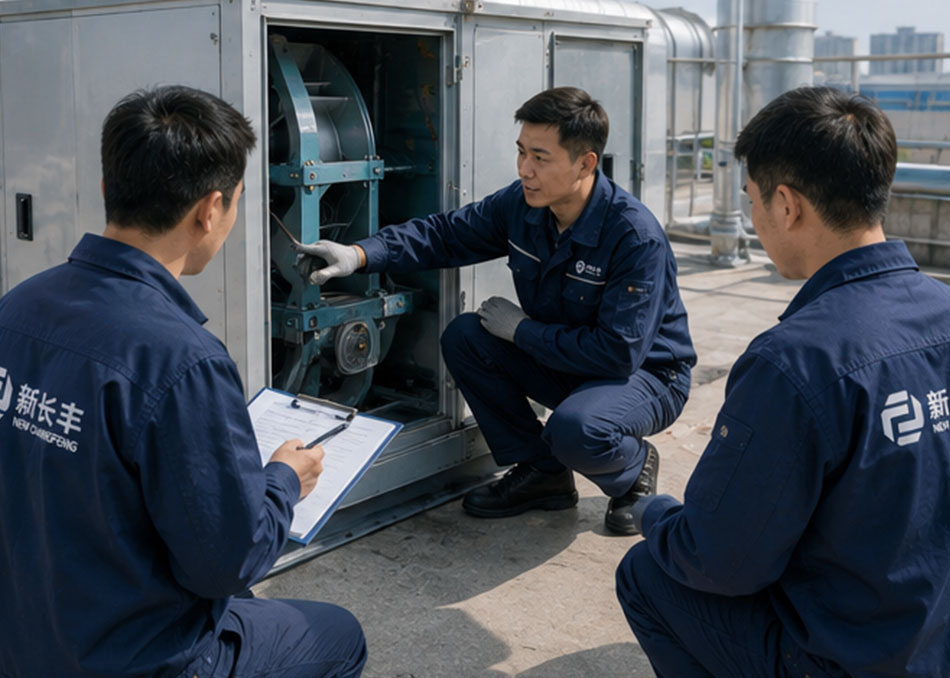
- Maintenance access: Water-cooled units require regular water quality management, pad cleaning or replacement, and filter maintenance. Design layouts that allow easy access for service to sustain performance over time.
In factory settings, similar principles apply, but the scale and contaminant profile may differ. Water-cooled fresh air units can be used to supply cooled air to workstations while exhaust systems capture heat and pollutants at the source. The key is to avoid over-reliance on exhaust alone and to treat the supply side as an integral part of the ventilation strategy.
FAQ
Q: Can a water-cooled fresh air unit replace traditional air conditioning in an internet café?
A: It depends on the climate and the required indoor conditions. Water-cooled fresh air units are highly effective in hot, dry climates and can significantly reduce cooling energy use. However, in humid regions, their cooling capability is limited because evaporative cooling relies on low humidity. In such cases, they are best used as a pre-cooling stage or in combination with conventional AC to handle latent loads. For internet cafés, they are ideal for improving ventilation and reducing stuffiness, but may not achieve the same temperature reduction as refrigerant-based systems in all conditions.
Q: How do I prevent negative pressure problems when using exhaust fans?
A: The solution is to balance mechanical exhaust with mechanical supply. Install a water-cooled fresh air unit sized to provide slightly more outdoor air than the exhaust volume, creating a small positive pressure in the occupied space. This prevents backdrafting from restrooms or kitchens and ensures that the cooled fresh air reaches all areas. Use adjustable dampers and variable-speed fans to fine-tune the balance as conditions change.
Q: What maintenance does a water-cooled fresh air unit require?
A: Regular maintenance includes checking and cleaning the cooling pads or coils to prevent scale and biofilm buildup, which can reduce efficiency and harbor bacteria. The water supply should be filtered and treated if necessary. Filters should be cleaned or replaced according to the manufacturer's schedule. Fans and motors should be inspected for debris and lubrication. In dusty environments, more frequent cleaning may be needed. Proper maintenance ensures consistent cooling performance and air quality.
Water-cooled fresh air units offer a practical, energy-efficient solution for improving ventilation and cooling in internet cafés and factories. By combining evaporative cooling with balanced mechanical ventilation, they address the root cause of stuffiness and poor air quality—insufficient fresh air supply. When selecting and designing a system, consider heat loads, air change rates, duct design, and maintenance access to ensure optimal performance. For tailored advice on integrating water-cooled fresh air units into your facility, consult with ventilation professionals who can assess your specific needs and recommend appropriate equipment.