
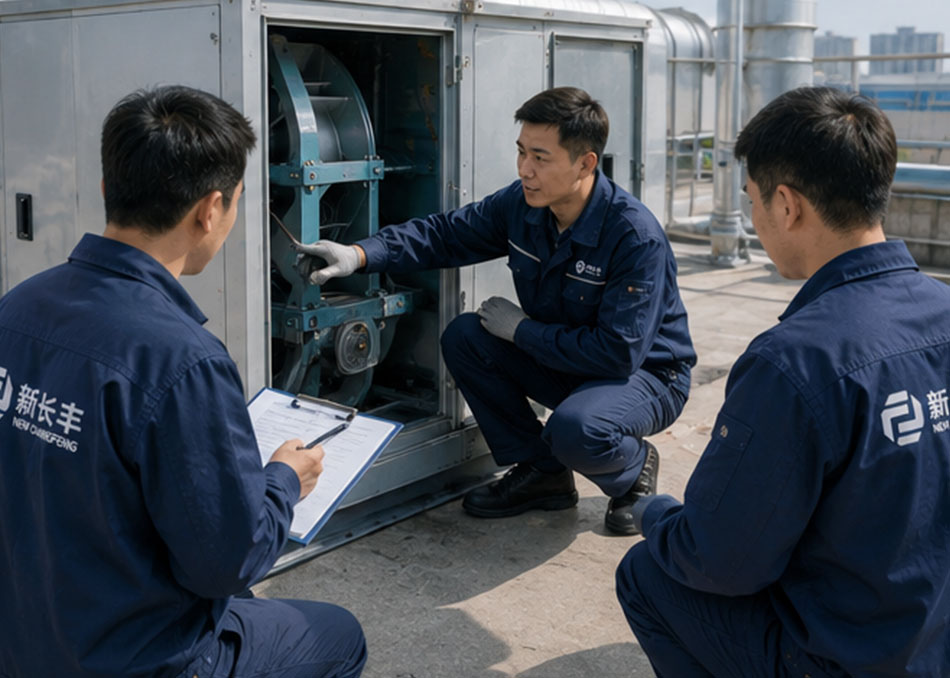
In factory workshops, heat, dust, fumes, and odors often coexist—especially on production lines involving welding, painting, injection molding, or heat treatment. When ventilation and smoke extraction are inadequate, worker health suffers, equipment lifespan shortens, and safety risks escalate. Many plant managers default to axial or negative-pressure fans for fume extraction, only to find results disappointing: insufficient static pressure, smoke backflow, and oil accumulation in ducts. In applications that must overcome duct resistance and move contaminated air over long distances, centrifugal fans are the more appropriate core equipment. This article explores the selection logic and manufacturer criteria for centrifugal fans in factory smoke extraction and purification scenarios.
Why Factory Smoke Extraction Needs Centrifugal Fans
Factory exhaust systems typically comprise capture hoods, ductwork, purification units, and a fan—the system's power source. Unlike axial fans, where airflow is parallel to the impeller axis, centrifugal fans draw air in axially and discharge it radially, imparting greater kinetic energy and static pressure. This makes them ideal for systems with multiple duct bends, long runs, and high-resistance purification devices.
In welding fume, grinding dust, and oil mist applications, ducts accumulate residue over time, steadily increasing system resistance. If a fan lacks sufficient pressure reserve, exhaust volume drops quickly, leaving the workshop hazy. Centrifugal fans' high-pressure characteristics adapt well to such resistance fluctuations, ensuring long-term stable operation. Additionally, the fan can be selected based on the medium's properties—such as corrosion-resistant materials for acidic fumes or spark-resistant construction for combustible dust—making it a versatile solution.
Key Selection Criteria for Factory Smoke Exhaust Fans
Choosing the right centrifugal fan requires a systematic approach. First, calculate the total system resistance, including hood losses, duct friction, elbows, and the pressure drop across the purifier (e.g., electrostatic precipitator or activated carbon filter). This determines the required fan static pressure, with a safety margin of 10–15% for future fouling. Second, estimate the required airflow rate based on the number of emission points, capture velocity, and room air changes per hour. Third, consider the operating temperature and air composition—high-temperature fumes may need a high-temperature motor or cooling wheel, while corrosive gases demand stainless steel or FRP construction.
Performance testing to GB/T 1236 ensures reliable ratings, while energy efficiency compliance with GB 19761 helps control operating costs. For smoke exhaust systems in commercial kitchens or industrial facilities, adherence to GB 18483 (fume emission) and GB 51251 (smoke and heat exhaust) is essential. A reputable manufacturer will provide a selection curve and verify the duty point, avoiding over- or under-sizing.
Centrifugal Fan Types for Different Factory Scenarios
Factory environments vary widely. For general dust and fume extraction, a backward-curved centrifugal fan offers high efficiency and low noise. For heavy dust loads, a radial-blade fan with a wear-resistant lining may be more durable. In confined spaces, a compact inline centrifugal fan can save footprint. For roof-mounted exhaust, a centrifugal roof ventilator (upblast style) is a common choice, effectively discharging contaminated air above the roofline.
In welding shops, portable fume extractors often integrate a small centrifugal fan to capture fumes at the source. In paint booths, explosion-proof centrifugal fans are mandatory. By matching the fan type to the specific application, you maximize performance and longevity.
How to Evaluate a Centrifugal Fan Manufacturer
Selecting a reliable manufacturer is as critical as choosing the right fan. Look for producers with a proven track record in industrial ventilation, ideally with in-house testing facilities that comply with AMCA or GB/T 1236 standards. Ask for performance curves and third-party test reports. Evaluate their customization ability: can they supply special coatings, higher-temperature motors, or non-standard voltages? Review after-sales support—prompt availability of spare parts and technical guidance for installation and maintenance are vital.
Also consider energy efficiency. A fan that operates 24/7 can consume significant power; a premium high-efficiency model may cost more upfront but pay back through lower energy bills. Check that the manufacturer provides clear documentation, including installation manuals and wiring diagrams. Visiting the factory or requesting references from similar installations can provide added confidence.
Common Pitfalls to Avoid in Factory Ventilation Fan Selection
One frequent mistake is using a single large fan for multiple branches without balancing dampers, leading to uneven airflow. Another is ignoring the pressure drop of the purification device, resulting in poor capture at the hoods. Do not underestimate duct cleanliness—regular cleaning schedules should be part of your maintenance plan. Also, avoid selecting a fan solely on airflow without checking static pressure capability; a fan that moves plenty of air at zero resistance will stall in a real duct system.
Finally, always verify noise levels. High-pressure centrifugal fans can be loud; consider sound attenuators or locating fans on the roof or in a dedicated fan room. Proper installation with vibration isolators reduces structure-borne noise and extends equipment life.
Frequently Asked Questions
Q: Can an axial fan be used for factory smoke extraction?
A: Axial fans are suitable for low-resistance, high-volume applications like general ventilation. For ducted smoke extraction with purifiers and long runs, they often fail due to insufficient static pressure, leading to poor capture and backflow. A centrifugal fan is the recommended choice for such systems.
Q: How do I determine the required static pressure for my exhaust system?
A: Calculate the total resistance of all components—hoods, ducts, elbows, dampers, and the purification unit. Add a 10–15% safety margin for future fouling. A professional fan manufacturer can assist with a detailed calculation and recommend a suitable model.
Q: What maintenance does a centrifugal fan need in a dusty environment?
A: Regular inspection of the impeller for dust buildup, checking belt tension (if belt-driven), and lubricating bearings per the manufacturer's schedule. Clean the fan housing and ductwork periodically to prevent performance degradation. For corrosive or sticky fumes, consider coated impellers or easy-access cleanout ports.
Investing in the right centrifugal fan for your factory's smoke extraction and purification is a decision that pays off in worker safety, regulatory compliance, and operational efficiency. By understanding your system's requirements and evaluating manufacturers thoroughly, you can ensure a reliable, long-lasting ventilation solution.
For tailored advice or to discuss your specific factory ventilation challenge, contact a qualified ventilation specialist or reach out to XCFFJ for professional guidance and high-quality centrifugal fan solutions.