
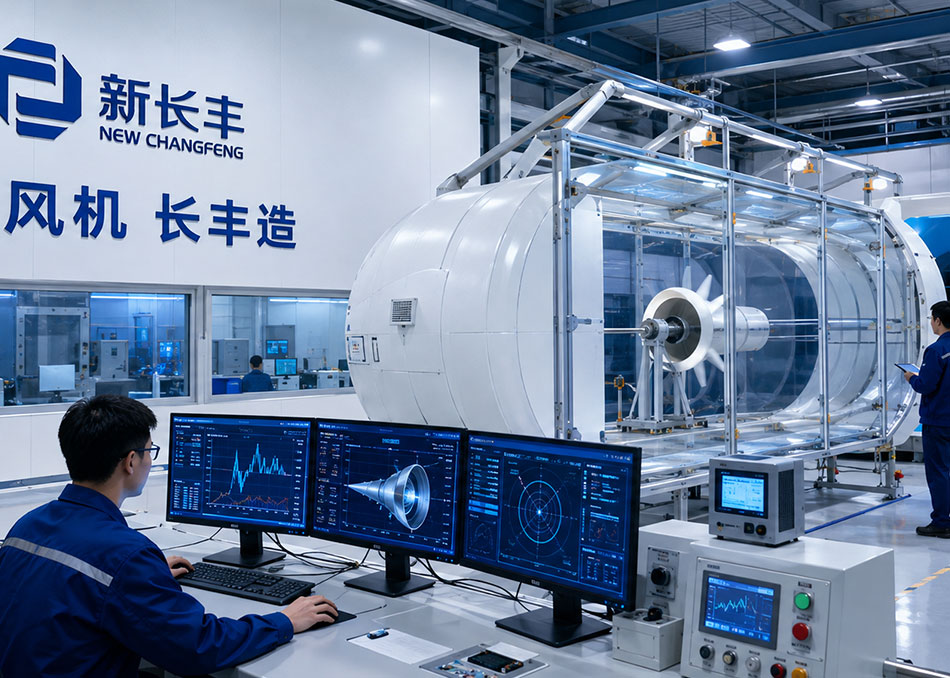
Mahjong clubs share a ventilation problem with many enclosed commercial spaces: high occupant density, sealed rooms, and odors that never seem to leave. Four players to a table, several tables running for hours, and the air inside becomes a slow loop of exhaled breath, tobacco smoke, and perspiration. Players feel stuffy and headachy; owners field complaints about "no air movement." The instinctive fix—adding exhaust fans to pull air out—often makes things worse. With no planned make-up air, the room goes negative, the fans lose real capacity against rising resistance, and outside air enters wherever it can: door gaps, restroom ducts, drain lines. The result is higher noise, higher energy use, and backdrafts that bring new odors in rather than pushing stale air out. A water-cooled fresh air unit addresses this by supplying filtered, evaporatively cooled outdoor air to establish slight positive pressure—replacing what is exhausted and doing it at a more comfortable supply temperature. This guide covers the principles, selection criteria, and installation practices that matter when specifying one for a mahjong club.
Why Make-Up Air Matters More Than Exhaust Alone
Ventilation is air exchange, not one-way extraction. Every cubic meter of air an exhaust fan removes must be replaced by an equal volume from somewhere. In a well-sealed mahjong club with many partitioned rooms, that "somewhere" is usually door gaps and restroom exhaust paths—exactly where you don't want air flowing. Under negative pressure, an exhaust fan's actual delivered airflow drops noticeably below its rated curve, because the fan is now working against a higher system resistance. It runs louder, draws more power, and moves less air. The perceived ventilation problem persists even though the equipment is running constantly.
A water-cooled fresh air unit reverses the logic. The unit draws outdoor air, passes it through an evaporative cooling module, and delivers it into the room at a lower dry-bulb temperature. The room then sits at a slight positive pressure relative to corridors and restrooms, so stale air leaves through planned exhaust paths and door gaps in a controlled direction. Make-up air and exhaust become a matched pair rather than competing forces. For club operators, the practical outcome is steadier air exchange, less door-slam and backdraft noise, and a supply air temperature that doesn't undo the comfort gains.
- Balanced design: Size supply and exhaust together; a supply-only or exhaust-only approach rarely performs as intended in sealed rooms.
- Pressure direction: Aim for slight positive pressure in gaming rooms so odors migrate toward restrooms and corridors, not into neighboring rooms.
- Fan operating point: Specify fans against actual system resistance, not free-air ratings; this is where real-world airflow and noise are decided.
- Reference standards: Fan performance testing per GB/T 1236 and fan energy efficiency per GB 19761 provide a common basis for comparing quoted data.
How a Water-Cooled Fresh Air Unit Works in a Mahjong Club
The unit is essentially a packaged supply-air system with an evaporative cooling stage. Outdoor air enters through a filter, passes an evaporative cooling pad or module where water evaporation absorbs sensible heat, and is delivered by a centrifugal fan through ductwork to the gaming rooms. Because evaporative cooling lowers the air temperature without a vapor-compression refrigeration cycle, power draw is typically modest relative to the delivered airflow—an important consideration for clubs running the system through long operating hours.
In practice, the cooling effect depends on ambient wet-bulb conditions. On hot, dry days the temperature drop across the pad is largest; in humid weather the achievable drop narrows. This is a characteristic of evaporative cooling, not a defect, and it should be reflected in expectations and in selection. Many clubs pair the unit with the existing exhaust system, adjusting exhaust airflow so the room holds a slight positive pressure. Where tobacco smoke is present, additional filtration or dedicated exhaust near seating zones may be warranted to keep odors from spreading between rooms.
Duct layout matters as much as the unit itself. Short, well-supported runs with gradual transitions and balanced branch dampers keep static pressure demand reasonable. Undersized or convoluted ductwork forces the fan to run at a poor operating point, which shows up as noise at the diffusers and uneven air distribution between tables.
Selection Criteria Buyers Should Verify
Mahjong clubs vary widely in room count, ceiling height, occupancy, and sealing. Rather than picking a unit by nominal airflow alone, work from a simple ventilation calculation: estimate occupants per room, apply a per-person outdoor air allowance plus a floor-area allowance, and add exhaust for restrooms and any smoking areas. The resulting supply airflow becomes the design target, and the unit should be selected at a static pressure that matches the actual duct system.
Ask suppliers for performance data presented in a form consistent with GB/T 1236 testing, and check energy efficiency against GB 19761 where applicable. Confirm the evaporative cooling medium, water quality requirements, drain and overflow provisions, and filter access. Noise is a frequent complaint in gaming rooms, so request sound pressure data at a stated distance and consider whether the unit will be installed indoors, on a roof, or in a service corridor. For units serving multiple rooms, zone dampers and a simple control scheme that allows airflow balancing are practical necessities.
- Airflow at real static pressure: Compare units at the design external static pressure, not at free delivery.
- Cooling performance vs. climate: Review expected temperature drop across the wet-bulb range for your location.
- Filtration and maintenance access: Filter changes and pad inspection should be possible without dismantling ductwork.
- Water management: Confirm drain, overflow, and water treatment provisions to avoid scale and stagnation.
- Controls and balancing: Variable speed or damper-based balancing helps match supply to occupancy and exhaust.
Installation, Commissioning, and Maintenance Practices
Commissioning is where a good selection either delivers or disappoints. After installation, measure supply airflow at each diffuser and adjust branch dampers so rooms receive the intended share. Then set exhaust airflow to hold a slight positive pressure in gaming rooms—verify with a simple pressure gauge or smoke pencil at door gaps. If the room pulls air inward from corridors, reduce exhaust or increase supply until the direction reverses. This step alone resolves many "the ventilation doesn't work" complaints.
Maintenance is straightforward but must be scheduled. Filters load gradually and quietly raise system resistance, which reduces airflow and can push the fan toward a noisier operating point. Evaporative pads need periodic cleaning or replacement and should be dried out according to the manufacturer's guidance to limit biological growth. Water lines, drains, and overflow trays deserve routine inspection. In clubs that operate late, a maintenance calendar tied to filter pressure drop and pad condition is more reliable than fixed intervals alone.
For smoke control provisions in larger or mixed-use buildings, coordination with smoke and heat exhaust design per GB 51251 is necessary; supply-air systems should not conflict with smoke exhaust modes. Where the club includes food service, kitchen exhaust should be handled by dedicated purification equipment in line with GB 18483, separate from the gaming-room ventilation strategy.
Frequently Asked Questions
Q: Can I just add a stronger exhaust fan instead of a fresh air unit?
A: A stronger exhaust fan in a sealed room increases negative pressure, which pulls air in through door gaps and restroom paths and reduces the fan's effective airflow. Without planned make-up air, the room exchanges air in uncontrolled directions and comfort rarely improves. A supply unit that establishes slight positive pressure gives the exhaust system something to work against and makes exchange predictable.
Q: Does evaporative cooling work in humid climates?
A: The achievable temperature drop depends on wet-bulb conditions, so humid weather reduces the cooling effect compared with dry heat. The unit still provides ventilation and make-up air, which is its primary function in a mahjong club. Review climate data with your supplier and treat the cooling benefit as climate-dependent rather than fixed.
Q: How do I know the quoted airflow is realistic?
A: Ask for performance data at the external static pressure your duct system will actually impose, presented consistently with GB/T 1236 testing, and check efficiency information against GB 19761 where applicable. Free-air airflow figures are not a reliable basis for selection in ducted installations.
Q: Will the unit be noisy inside the gaming rooms?
A: Noise depends on the fan operating point, duct design, and where the unit is installed. Request sound data at a stated distance, keep duct velocities reasonable, use gradual transitions, and consider locating the unit in a service area or on the roof with properly attenuated ductwork. Balancing the system also reduces the chance of noisy, over-pressurized diffusers.
For mahjong clubs, the ventilation problem is rarely solved by extraction alone. Matching supply and exhaust, establishing slight positive pressure, and delivering cooled outdoor air through a well-designed duct system addresses the root cause rather than the symptom. XCFFJ manufactures water-cooled fresh air units and related ventilation equipment for commercial spaces, and can help you match unit selection to room layout, occupancy, and climate. To discuss your project, visit www.xcffj.com or contact our team with your room schedule and duct layout.