
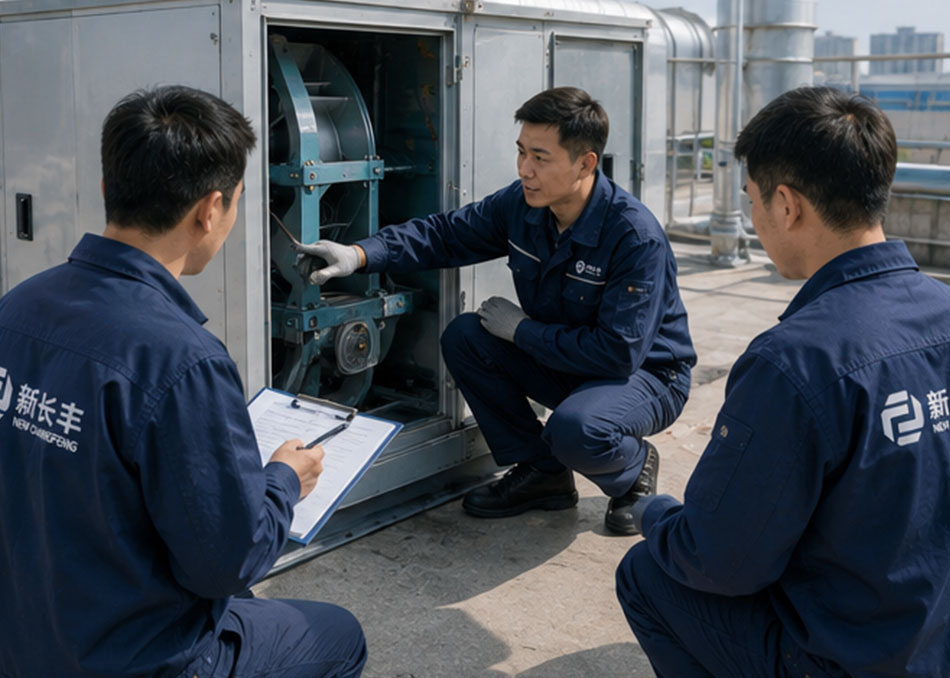
When a commercial kitchen exhaust system kicks on, the exhaust hood above the cooking stations extracts a large volume of indoor air. If make-up air cannot keep pace, a strong negative pressure forms almost instantly: flames on the burners get pulled off-center, grease-laden air escapes into the dining area, doors become hard to open, and the exhaust fan works harder than it should. The water-cooled fresh air unit is a key piece of equipment for resolving this conflict—it supplies fresh air that has been cooled through evaporation while maintaining the balance between supply and exhaust. But many kitchens install the unit and then neglect it for long periods, leading to reduced airflow, scaling on the evaporative media, odor backflow, and recurring negative pressure problems. This article looks at the practical scenario of negative pressure control in commercial kitchens and outlines the maintenance essentials for water-cooled fresh air units.
Understanding Negative Pressure: Why Kitchens Need Water-Cooled Fresh Air Units for Make-Up Air
Commercial kitchen exhaust systems are sized based on the projected area of the exhaust hood and the number of cooking burners. Once the exhaust fan starts, kitchen air is continuously extracted. According to the basic principle of ventilation balance, the exhaust volume must be matched by an equal supply air volume; otherwise, the indoor static pressure drops below outdoor pressure, creating negative pressure. Excessive negative pressure triggers a chain of problems: insufficient oxygen for combustion, reduced grease capture efficiency, odor migration into adjacent areas, and increased vibration in the exhaust ductwork.
The water-cooled fresh air unit supplies make-up air while simultaneously cooling it through evaporation, making it more suitable for hot kitchen environments than a standard supply fan. The core principle is to pass fresh air through a wetted evaporative heat exchange medium, where water evaporation absorbs heat and lowers the supply air temperature before the fan delivers it indoors. This process is highly sensitive to equipment condition—clogged filters, scaled media, or abnormal water levels directly weaken the make-up air capacity, and negative pressure problems resurface. Therefore, maintenance is not optional; it is an integral part of negative pressure control.
Common Maintenance Pain Points in Kitchen Negative Pressure Scenarios
In the daily operation of a commercial kitchen, the water-cooled fresh air unit faces harsh conditions: grease, moisture, dust, and continuous heat. Several maintenance issues are particularly common and directly affect the unit's ability to counteract negative pressure.
- Clogged filters: Grease and dust accumulate on the intake filters, reducing airflow and forcing the fan to work harder. This lowers make-up air volume and exacerbates negative pressure.
- Scaling on the evaporative media: Hard water deposits scale on the cooling pad or evaporative medium, reducing heat exchange efficiency and airflow. The unit may still run, but its cooling and air supply performance decline.
- Abnormal water level: Low water levels lead to dry spots on the media, reducing cooling effectiveness; high water levels can cause carryover and water leakage. Both conditions compromise performance and reliability.
- Dirty water tank and circulation system: Stagnant water and debris promote biological growth and odors, which can be drawn into the kitchen, creating unpleasant smells and potential hygiene issues.
- Loose or worn fan belts and bearings: These cause vibration, noise, and reduced airflow, further undermining the unit's ability to maintain pressure balance.
These issues rarely appear overnight; they develop gradually and often go unnoticed until the negative pressure problem becomes severe. A proactive maintenance schedule is essential to prevent them.
Maintenance Essentials for Water-Cooled Fresh Air Units
To ensure reliable negative pressure control, maintenance should cover the entire air path and water system. The following practices are recommended based on common industry standards and practical experience.
- Filter cleaning and replacement: Inspect intake filters regularly—at least monthly in heavy-use kitchens—and clean or replace them according to the manufacturer's instructions. Clogged filters are one of the fastest ways to lose make-up air capacity.
- Evaporative media inspection and descaling: Check the cooling pad or evaporative medium for scale, algae, and physical damage. Clean with appropriate descaling agents and replace media when efficiency drops. In areas with hard water, more frequent descaling may be necessary.
- Water system maintenance: Verify water level controls, float valves, and drain lines. Clean the water tank and circulation pump regularly to prevent sludge buildup. Ensure water quality is suitable; consider water treatment if scaling is persistent.
- Fan and drive inspection: Check fan blades for balance and cleanliness, inspect belts for tension and wear, and lubricate bearings as specified. Excessive vibration or noise should be addressed promptly.
- Airflow and pressure checks: Periodically measure the supply air volume and static pressure to confirm the unit is delivering the designed make-up air. This helps detect gradual degradation before it affects kitchen pressure balance.
- Duct and damper inspection: Ensure supply ducts are clean and dampers operate freely. Blockages or incorrect damper positions can starve the kitchen of make-up air.
Establishing a maintenance log with dates and actions taken helps track performance and plan future service. Many negative pressure complaints can be traced back to skipped maintenance steps.
Integrating Maintenance with Negative Pressure Control Strategy
Maintenance alone is not enough; it should be part of a broader negative pressure control strategy. The water-cooled fresh air unit must be correctly sized and balanced with the exhaust system. Over time, changes in kitchen layout, cooking equipment, or exhaust hood configuration can alter the required make-up air volume. Regular assessments ensure the unit remains appropriately matched.
Additionally, consider the interaction between the water-cooled fresh air unit and the exhaust system controls. Some kitchens use variable-frequency drives or pressure sensors to modulate fan speeds. Maintenance should include verification that control sequences are functioning correctly and that sensors are calibrated. A well-maintained unit with proper controls will maintain stable negative pressure, improving comfort, safety, and energy efficiency.
Training kitchen staff to recognize early signs of trouble—such as reduced airflow, unusual noises, or water leaks—can prevent small issues from becoming major disruptions. Simple daily checks, like confirming the unit is running and water is flowing, go a long way.
Frequently Asked Questions
Q: How often should I clean the filters on my water-cooled fresh air unit?
A: In a typical commercial kitchen, filters should be inspected at least monthly and cleaned or replaced as needed. High-volume kitchens with heavy grease or dust may require more frequent attention—every two weeks or even weekly. Always follow the manufacturer's recommendations for your specific model.
Q: What are the signs that the evaporative media needs descaling or replacement?
A: Visible white scale deposits, reduced cooling performance, uneven airflow, or water carryover are common signs. If cleaning does not restore performance, or if the media is physically degraded, replacement is necessary. In hard water areas, descaling may be needed more often.
Q: Can negative pressure problems be solved just by maintaining the water-cooled fresh air unit?
A: Maintenance is crucial, but negative pressure control also depends on proper system design, balancing, and integration with the exhaust system. If the unit is undersized or the exhaust volume has increased, maintenance alone may not suffice. A holistic assessment by a ventilation professional is recommended.
Q: How does a water-cooled fresh air unit differ from a standard make-up air fan in kitchen applications?
A: A water-cooled fresh air unit provides evaporative cooling in addition to make-up air, which helps maintain a more comfortable kitchen temperature. It is particularly beneficial in hot climates or kitchens with high heat loads. Standard fans supply air without cooling, which may be insufficient in such environments.
Proper maintenance of water-cooled fresh air units is essential for solving negative pressure in commercial kitchens. By understanding the role of make-up air, addressing common pain points, and following a structured maintenance routine, kitchen operators can ensure reliable performance, improved working conditions, and compliance with ventilation standards. For tailored advice on selecting and maintaining water-cooled fresh air units for your kitchen, consult a qualified ventilation specialist or contact XCFFJ for product-specific guidance.