
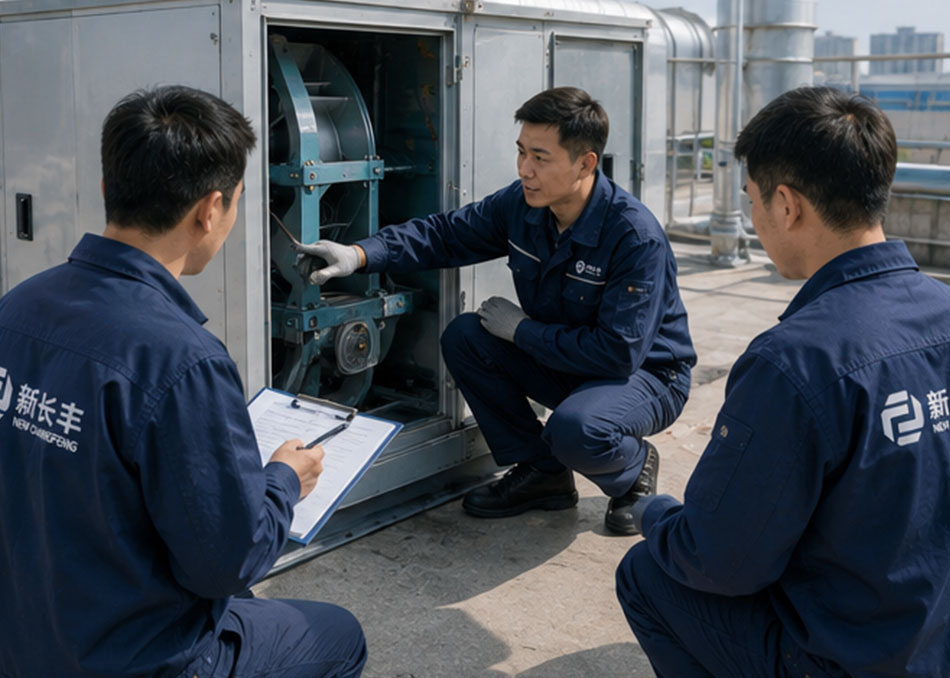
In commercial kitchens, ventilation problems often stem not from inadequate exhaust but from insufficient make-up air. When exhaust hoods and fans run at full capacity, a strong negative pressure develops inside the kitchen, making doors hard to open, pulling flames away from burners, causing grease-laden air to spill into dining areas, and even drawing odors from floor drains. A water-cooled fresh air unit addresses this by supplying tempered make-up air while simultaneously cooling it. However, these units operate under high temperature, high humidity, and heavy grease loading. Without proper maintenance, problems such as reduced airflow, condensate leakage, and odor backflow will gradually appear. This article explains the causes of negative pressure in kitchens and provides a systematic maintenance guide for water-cooled fresh air units.
Why Kitchens Need Make-Up Air: Causes and Consequences of Negative Pressure
According to GB 51251 (Standard for Smoke Control and Exhaust Systems in Buildings) and general ventilation design principles, kitchen exhaust systems must be provided with a corresponding make-up air path, and the make-up air volume should match the exhaust volume. In reality, many kitchens focus only on exhaust hoods and fans while neglecting make-up air design, or the make-up air inlet area is insufficient and the path is obstructed, leaving the kitchen under strong negative pressure.
The consequences are multifaceted:
- Reduced combustion efficiency: Burner flames are drawn toward the exhaust hood, leading to incomplete combustion and higher gas consumption.
- Grease and fume spillage: Hood capture efficiency drops, and cooking fumes escape into dining areas, affecting the dining environment and customer experience.
- Door and odor issues: Doors become difficult to open, floor drains release odors, and water seals in drain pipes are broken.
- Poor worker comfort: Kitchens become hot and stuffy in summer, increasing staff turnover.
The role of a water-cooled fresh air unit is to provide "organized make-up air": outdoor air is drawn in, cooled via a water-cooled heat exchange process, and then supplied to the kitchen. This not only balances the exhaust but also improves the working environment.
How Water-Cooled Fresh Air Units Work in Kitchen Make-Up Air
A water-cooled fresh air unit typically consists of a cooling coil, fan, filter, and condensate drainage system. Outdoor air passes through the filter, then across the water-cooled coil where heat and moisture are exchanged, and is finally supplied to the kitchen by the fan. The cooling water absorbs heat from the air, and the cooled air is delivered at a lower temperature, helping to reduce the kitchen's internal temperature.
In kitchen make-up air applications, the unit must be selected to match the exhaust volume and the required supply air temperature. It should be integrated with the exhaust system controls to maintain a slight negative pressure (relative to adjacent areas) without excessive negative pressure. Proper design and installation are prerequisites for effective operation, but long-term performance depends on regular maintenance.
Maintenance Essentials for Water-Cooled Fresh Air Units
Due to the harsh operating conditions, water-cooled fresh air units require a structured maintenance schedule. The following key points should be addressed:
- Filter cleaning and replacement: Filters accumulate grease and dust quickly. Clogged filters reduce airflow and cooling efficiency. Inspect and clean or replace filters regularly—at least monthly in heavy-use kitchens, more often if conditions are severe.
- Coil cleaning: The water-cooled coil can become fouled on both the air side and the water side. Air-side fouling reduces heat transfer and can harbor bacteria; water-side scaling reduces cooling capacity. Periodic cleaning with appropriate detergents and flushing is necessary. Consult the manufacturer's instructions for coil cleaning procedures.
- Condensate drainage: Ensure the drain pan, drain pipe, and trap are clean and free-flowing. Standing water can breed bacteria and cause odors. Check for leaks and blockages regularly.
- Fan and motor inspection: Check fan blades for balance and cleanliness, and inspect motor bearings for wear. Lubricate bearings as recommended. Verify that electrical connections are tight and that the motor is not overheating.
- Water system maintenance: For water-cooled units, the cooling water circuit must be maintained. Check for leaks, verify water flow and temperature, and treat water to prevent scaling and corrosion. If a cooling tower is used, ensure it is clean and operating efficiently.
- Control system check: Verify that sensors (temperature, pressure, airflow) are calibrated and that the control sequence maintains the desired make-up air volume and kitchen pressure.
- Odor prevention: Stagnant water and organic buildup can cause odors. Regular cleaning and disinfection of the unit, especially the drain pan and coil, are essential. Ensure that the unit does not draw air from contaminated sources.
A preventive maintenance schedule should be established based on manufacturer recommendations and actual operating conditions. Keep maintenance records to track performance and identify recurring issues.
Common Issues and Troubleshooting
Even with regular maintenance, problems may arise. Here are some common issues and their potential causes:
- Reduced airflow: Clogged filter, dirty coil, fan belt slippage, or duct obstruction.
- Insufficient cooling: Scale buildup in the coil, low water flow, high water temperature, or air bypass around the coil.
- Water leakage: Blocked condensate drain, damaged drain pan, or loose pipe connections.
- Odor: Biological growth in the unit, stagnant water, or backflow from the exhaust system.
- Excessive noise or vibration: Fan imbalance, worn bearings, or loose mounting.
Addressing these issues promptly prevents more serious failures and maintains kitchen ventilation performance.
Frequently Asked Questions
Q: How often should I clean the water-cooled fresh air unit?
A: The frequency depends on the kitchen's operating hours and grease loading. In general, clean or replace filters monthly, clean the coil every 3–6 months, and inspect the drain pan and water system quarterly. Establish a schedule based on your specific conditions and manufacturer guidelines.
Q: Can I use a water-cooled fresh air unit in winter?
A: Yes, but in cold climates, precautions must be taken to prevent freezing of the water coil and condensate lines. Some units offer options for winter operation, such as drain-down or antifreeze controls. Consult the manufacturer for cold-weather operation.
Q: What are the signs that my kitchen has negative pressure problems?
A: Common signs include doors that are hard to open, flames pulled toward the hood, odors in the dining area, and floor drain odors. A simple test is to observe whether air rushes in when you open a door to the kitchen. If so, the make-up air is insufficient.
Q: Can a water-cooled fresh air unit also act as an air conditioner?
A: It provides cooled fresh air but is not a substitute for a full air-conditioning system. It is designed for ventilation and temperature reduction, improving comfort while balancing exhaust. For precise temperature control, additional air conditioning may be needed.
Conclusion
Water-cooled fresh air units are an effective solution for kitchen negative pressure and high temperatures, but their performance hinges on proper maintenance. By understanding the causes of negative pressure, following a structured maintenance routine, and addressing issues promptly, you can ensure reliable operation and a comfortable, safe kitchen environment. For tailored advice on selecting and maintaining water-cooled fresh air units for your commercial kitchen, contact XCFFJ—our team can help you design a ventilation system that meets your needs.