
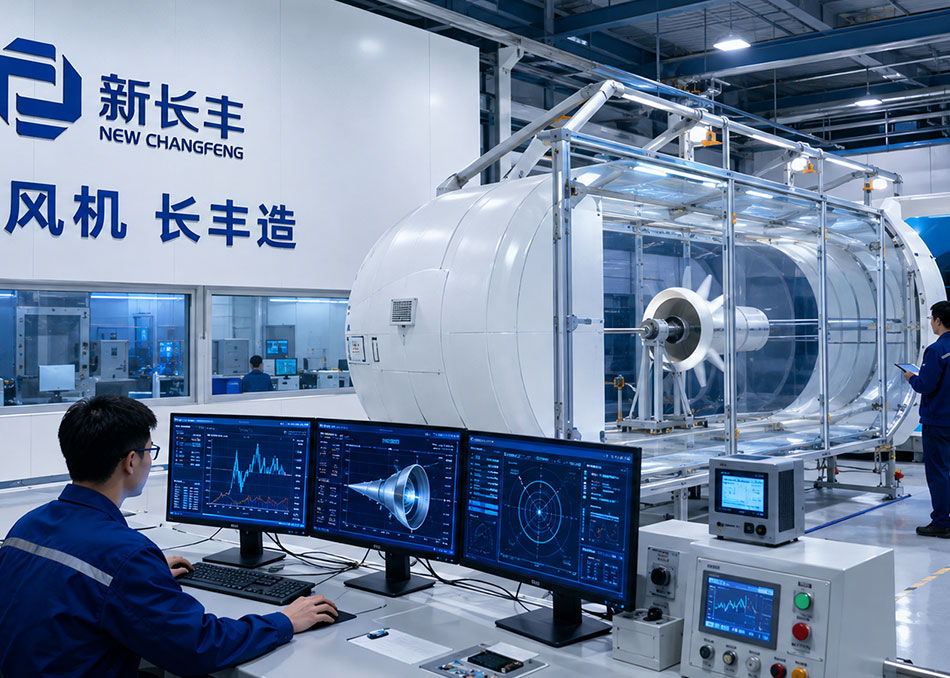
Mahjong clubs present a ventilation challenge that few other commercial spaces match: high occupant density, long operating hours, and persistently low air-exchange rates. Four players per table, indoor smoking, body heat, and respiratory moisture all accumulate in tightly sealed private rooms, producing that familiar stale, stuffy, faintly smoky atmosphere. Many operators respond by installing more air conditioning — but air conditioning only recirculates and cools the existing indoor air. It does nothing to bring in fresh outdoor air or expel contaminated air. The real determinant of comfort in a mahjong club is the dynamic balance between makeup air supply and exhaust. A water-cooled fresh air unit sits on the supply side of that balance, delivering filtered, temperature-reduced outdoor air while helping maintain a slight positive pressure or near-neutral state indoors.
Why Makeup Air and Air Exchange Matter More Than Cooling
When exhaust volume exceeds makeup air volume, the space goes into negative pressure. Door gaps whistle, exterior doors become difficult to push open, and odors from kitchens or restrooms are drawn back into occupied areas. When makeup air exceeds exhaust, cooled air spills outside, energy consumption climbs, and smoke migrates into adjacent rooms. Neither condition is acceptable in a mahjong club, where private rooms sit side by side and doors open and close constantly.
From a ventilation engineering standpoint, a water-cooled fresh air unit combines evaporative cooling with mechanical supply. Air passes through a wet curtain or spray heat-exchange section, where sensible heat is reduced, then a fan delivers the treated air into the room. This unit does not work alone. It pairs with exhaust-side equipment — negative pressure fans, cabinet centrifugal fans, or axial fans — to form a complete ventilation system. Recognizing that the maintenance target is the entire makeup-air and exhaust chain, not just one machine, is the foundation of any effective service program.
In practice, mahjong clubs typically adopt an exhaust-led, supply-assisted configuration. The exhaust side removes smoke, moisture, and carbon dioxide; the water-cooled fresh air unit supplies filtered outdoor air to replace what is exhausted. When the two sides are properly balanced, the space stays comfortable without excessive cooling load, and smoke does not drift into corridors or neighboring rooms.
How a Water-Cooled Fresh Air Unit Works in This Application
The unit draws outdoor air through a filtration stage, then across an evaporative cooling medium. As water evaporates, it absorbs heat from the air stream, lowering the dry-bulb temperature of the incoming air without the refrigerant cycle used by conventional air conditioning. The cooled, filtered air is then supplied to the occupied space. Because the unit operates on the supply side, it directly counteracts the negative pressure that exhaust fans create.
This operating principle has practical implications for maintenance. The cooling medium, water distribution system, filtration, and fan assembly all affect performance. A clogged filter reduces airflow, which shifts the pressure balance and forces exhaust fans to work harder. Scale buildup on the wet curtain reduces evaporative efficiency, raising supply air temperature. A worn fan belt or dirty impeller lowers supply volume, again disturbing the balance. Each component degrades differently, and each has a maintenance interval that should be respected.
- Filtration: Inspect and clean or replace filters on a schedule matched to local outdoor air quality. In dusty or high-pollen areas, intervals may need to be shorter.
- Evaporative medium: Check for scale, algae, and physical deterioration. Water quality directly affects service life.
- Water distribution: Verify even wetting of the medium, inspect nozzles and pump operation, and check for leaks or blockages.
- Fan and drive: Listen for unusual noise, check belt tension and bearing condition, and clean impeller deposits that can cause imbalance.
- Drainage and water tank: Ensure proper drainage, prevent standing water, and clean the tank to discourage biological growth.
- Controls and sensors: Confirm that any temperature or humidity control responds correctly and that safety interlocks function.
Maintenance Priorities for Mahjong Club Installations
Mahjong clubs operate long hours, often seven days a week, and the ventilation system runs continuously during business hours. This duty cycle accelerates wear compared to intermittent use. Establish a routine that includes daily visual checks, weekly cleaning tasks, monthly inspections of mechanical components, and seasonal deep servicing. Keep a simple log so that recurring issues — a filter that clogs too quickly, a pump that loses prime, a belt that stretches — can be identified and corrected at the root.
Because the unit is part of a balanced system, maintenance should also include the exhaust side. Exhaust fans, whether negative pressure or cabinet centrifugal types, accumulate dust and grease on their impellers. Reduced exhaust volume will shift the room toward positive pressure, causing odors to migrate outward. Conversely, if the water-cooled fresh air unit's supply volume drops, the room swings toward negative pressure and door-draft problems return. Checking both sides during the same service visit is more efficient and more reliable than treating them separately.
Noise complaints are common in mahjong clubs, where concentration and conversation matter. Bearing wear, loose mounting, unbalanced impellers, and ductwork resonances are frequent culprits. Addressing these during routine maintenance prevents them from becoming guest-facing problems. Where local codes or project specifications apply, reference standards such as GB/T 1236 for fan performance testing and GB 19761 for fan energy efficiency can guide acceptance checks and efficiency assessments. For kitchen exhaust interfaces in clubs that serve food, GB 18483 provides the emission framework, and where smoke exhaust systems are part of the building design, GB 51251 applies.
Balancing Air Exchange Without Overcooling
Operators sometimes assume that more supply air means better comfort. In a mahjong club, oversupply wastes cooling energy and can push smoke into corridors. Undersupply leaves the room stale and may create negative pressure that pulls odors from adjacent spaces. The goal is a controlled balance: enough exhaust to remove contaminants, enough treated makeup air to replace it, and a room condition that remains slightly positive or near neutral relative to surrounding areas.
Adjusting this balance is not a one-time task. Seasonal changes in outdoor temperature and humidity affect evaporative cooling performance. Changes in occupancy — busier evenings, quieter afternoons — affect internal heat and moisture loads. A practical approach is to establish baseline fan settings after commissioning, then verify room pressure and air quality periodically. Simple smoke pencil or differential pressure checks at doorways can reveal whether the space is under negative pressure.
Water-cooled fresh air units are not a substitute for a properly designed exhaust system, and they are not intended to cool an entire club on their own. Their role is to supply treated fresh air and help maintain pressure balance. When that role is understood and maintained, the result is a more comfortable, more pleasant environment with lower complaint rates and more repeat business.
Frequently Asked Questions
Q: How often should a water-cooled fresh air unit be serviced in a mahjong club?
A: Because mahjong clubs typically run long daily hours, a practical schedule includes daily visual checks of airflow and water flow, weekly cleaning of filters and water-related components, monthly inspection of fans, belts, and bearings, and a thorough seasonal service before peak cooling periods. Local air quality and water hardness may require more frequent attention.
Q: Why does my mahjong club still feel stuffy even with the fresh air unit running?
A: Stuffy conditions usually indicate an imbalance between supply and exhaust. If exhaust volume is too low relative to supply, or supply volume has dropped due to a clogged filter or dirty evaporative medium, the air exchange rate falls. Check both the water-cooled fresh air unit and the exhaust fans, and verify room pressure at doorways.
Q: Can I use a water-cooled fresh air unit without exhaust fans?
A: No. A water-cooled fresh air unit supplies outdoor air, but without exhaust, contaminated air has nowhere to go and will migrate to adjacent spaces or remain in the room. The unit is designed to work as part of a balanced system that includes exhaust-side equipment such as negative pressure fans or cabinet centrifugal fans.
Q: What causes smoke to drift into other rooms in a mahjong club?
A: Smoke migration is typically a pressure problem. If a room is under positive pressure relative to the corridor, air — and smoke with it — will flow outward when doors open. This can happen when exhaust volume is insufficient or when makeup air is excessive. Balancing the system so each room remains slightly negative to the corridor, while still receiving adequate fresh air, is the usual solution.
Q: Does the evaporative cooling medium need special water treatment?
A: Water quality strongly affects medium life and cooling performance. Hard water promotes scale; stagnant water encourages algae and biological growth. Regular draining, cleaning, and — where appropriate — water treatment or filtration help maintain performance. Always follow the manufacturer's guidance for the specific unit.
Summary
In mahjong clubs, comfort depends less on cooling capacity than on a well-balanced makeup air and exhaust system. The water-cooled fresh air unit supplies filtered, temperature-reduced outdoor air and helps maintain pressure balance, but it only performs reliably when its filters, evaporative medium, water system, and fan assembly are maintained on a consistent schedule — and when the exhaust side is checked with equal care. Treating the ventilation system as an integrated chain, rather than a collection of separate machines, is the most effective way to keep guests comfortable and operations running smoothly.
For project-specific guidance on selecting and maintaining water-cooled fresh air units, negative pressure fans, cabinet centrifugal fans, and related ventilation equipment, visit www.xcffj.com or contact XCFFJ directly to discuss your mahjong club or commercial ventilation requirements.